Share

“Fertilizer Shortage War: Strait of Hormuz Shakes the World — From Fertilizer to the Dining Table, a Crisis Undermining Global Food Security” — Article by SO OK TRADING
Last updated: 9 Mar 2026
742 Views

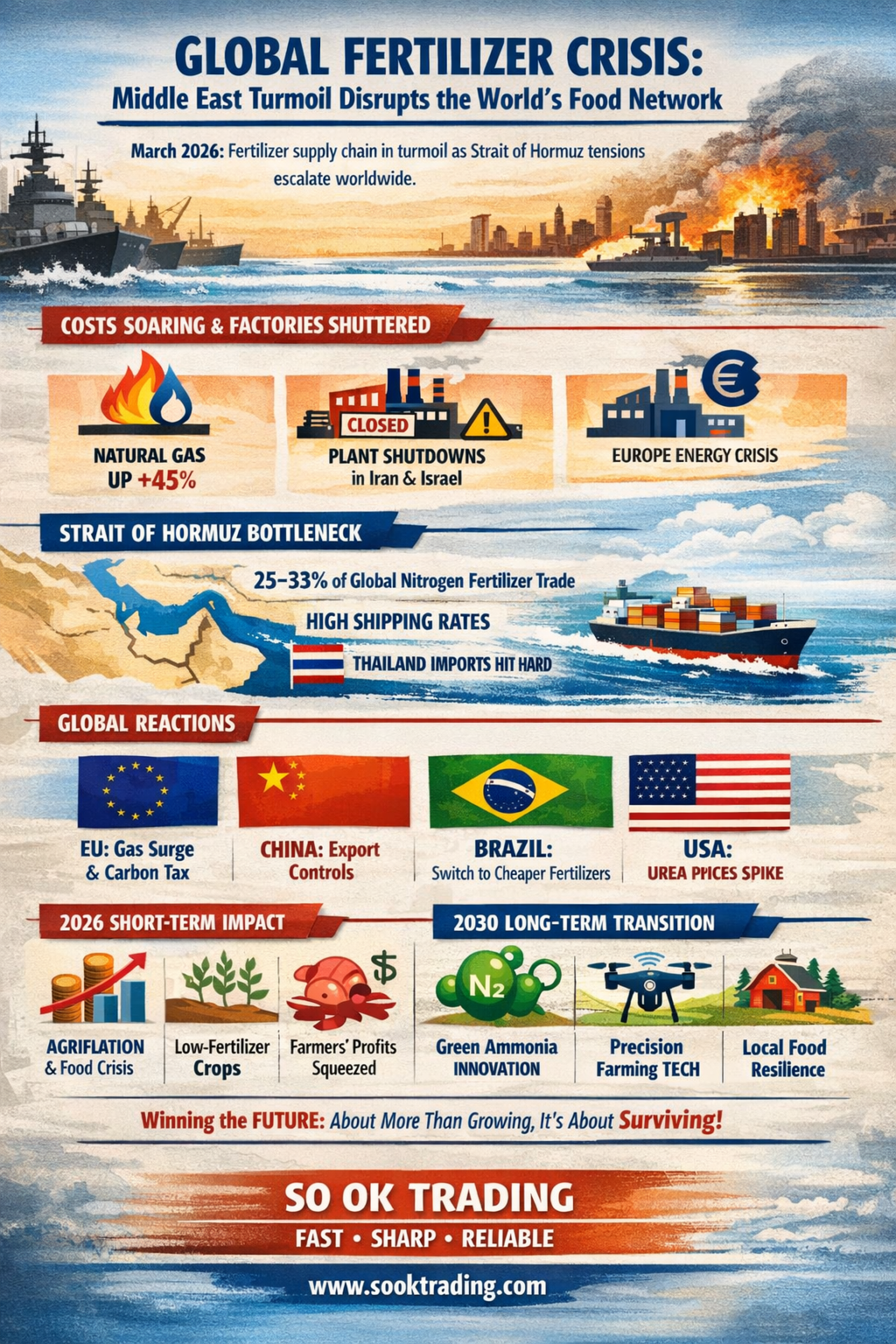
Global Fertilizer Crisis: Middle East Conflict Shakes the World’s Food Chain

In March 2026, the world is facing the largest fertilizer crisis in decades. Rising tensions in the Middle East, especially around the Strait of Hormuz, have sent shockwaves through the global fertilizer and food supply chain.

Rising Costs – Factories Disrupted

Natural gas prices up 45%: Gas is the key feedstock for ammonia and urea. The surge has put immense pressure on fertilizer producers worldwide.
Factory shutdowns: Plants in Iran and Israel have reduced output or halted operations, causing immediate shortages in global markets.
Energy crunch in Europe: Facilities that previously shut down during the Russia–Ukraine gas crisis may face closures again due to soaring costs.
Logistics Bottleneck – Strait of Hormuz

Critical chokepoint: 25–33% of global nitrogen fertilizer trade passes through this strait. Any disruption impacts Asia and Europe directly.
Shipping costs surge: Vessels rerouting around the Cape of Good Hope face weeks of delays and skyrocketing insurance premiums.
Impact on Thailand: As a net fertilizer importer, Thailand bears the brunt of higher transport costs and inflated prices.
Global Impact

Europe: Double shock from gas prices and the new Carbon Border Adjustment Mechanism (CBAM).
China: Restricts phosphate exports to stabilize domestic prices.
Brazil: Farmers shift to ammonium sulfate as a cheaper alternative to urea.
India: Faces heightened food security risks due to disrupted imports.
United States: Urea prices at New Orleans port jumped over 10% in just one week.
Short-Term Outlook (2026)

Agriflation: Fertilizer, energy, and logistics costs rise simultaneously.
Crop adjustments: Farmers turn to “low-fertilizer” crops such as beans and local varieties.
Fertilizer affordability crisis: Developing nations risk losing access to chemical fertilizers.
Profit squeeze: Higher selling prices fail to offset surging input costs.
Long-Term Outlook (2030)

Green Ammonia: Accelerated investment in clean fertilizer alternatives.
Precision Agriculture: AI, drones, and soil sensors become standard practice.
Genetic Innovation: Development of nitrogen-fixing crops reduces reliance on chemical fertilizers.
Regionalization: Food systems shift toward greater self-reliance at the regional level.
 

The Middle East conflict is not only an energy crisis but also a catalyst pushing the world into a new era of permanent food inflation (Agflation). Nations and farmers will no longer compete on cultivation skills alone, but on cost efficiency and access to critical inputs.

SO OK TRADING: Your Trusted Business Partner
SO OK TRADING — FAST • SHARP • RELIABLE
www.sooktrading.com


Related Content
มันอัดเม็ด สินค้าดาวรุ่งจากไทย บุกไกลยังตลาด ตะวันออกกลาง และอาฟริกา และเกร็ดความรู้มันเส้น
มันอัดเม็ดหรือที่เรียกว่า มันเม็ดผลิตโดยการอัดมันเส้นโดยเครื่องอัดภายใต้สภาวะความร้อนและความดัน หลังจากอัดแล้วจะมีลักษณะเป็นท่อนยาว ประมาณ 2-3 ซม. เส้นผ่าศูนย์ กลางประมาณ 1 ซม. ความชื้นประมาณร้อยละ 14 ซึ่งจะส่งออกไปต่างประเทศเพื่อใช้เป็นวัตถุดิบสำหรับอาหารสัตว์ เนื่องจาก มันเม็ดจะมีีปริมาณแป้งสูง (มากกว่า ร้อยละ 65) จึงใช้้เป็นแหล่งอาหารให้พลังงานของสัตว์ เนื่องจากมันเม็ดมีส่งได้ตลอดปีและราคาไม่สูงขึ้นเมื่อเทียบกับผลิตผลของธัญพืชต่าง ๆ ดังนั้น หลายประเทศจึงนิยมใช้มันเม็ดของไทยในอุตสาหกรรม อาหารสัตว์ มันเม็ดมีปริมาณการส่งออก ประมาณ 5 ล้านตันต่อปี ข้อได้เปรียบที่สำคัญของมันเม็ด คือ สามารถขนส่งได้ง่าย (ไม่มีฝุ่นเหมือนมันเส้น) ขนย้ายได้สะดวกสามารถใช้เครื่องจักร ในการขนส่งได้เช่นเดียวกับเมล็ดธัญพืชต่าง ๆ
16 Dec 2025
เกร็ดความรู้ ผลไม้ไทย By So Ok
ผลไม้ไทยส่งออกหลักๆ คือ ทุเรียน, ลำไย, มังคุด, มะม่วง, และมะพร้าว โดยมี ประเทศจีน เป็นตลาดส่งออกอันดับ 1 ที่สำคัญที่สุดสำหรับผลไม้สดหลายชนิด เช่น ทุเรียน มังคุด และมะพร้าว รองลงมาคือ ฮ่องกง เวียดนาม อินโดนีเซีย และเกาหลีใต้ โดยไทยเป็นผู้ส่งออกผลไม้รายใหญ่ครองส่วนแบ่งตลาดสูง และมีการขยายตลาดไปยังตะวันออกกลางและยุโรปมากขึ้น. ผลไม้ดาวเด่นและตลาดหลัก ทุเรียน: "ราชาแห่งผลไม้" ครองตลาดจีน (97.4%) และเป็นสินค้าส่งออกหลัก. ลำไย: นิยมในจีน (73.1%), อินโดนีเซีย, เวียดนาม. มังคุด: เป็นที่ต้องการสูงในจีน (91.0%), เวียดนาม, เกาหลีใต้. มะพร้าวอ่อน: ตลาดหลักคือจีน (82.7%), สหรัฐฯ, ฮ่องกง. มะม่วง: ตลาดสำคัญคือเกาหลีใต้ (61.8%), มาเลเซีย, ญี่ปุ่น. ตลาดและโอกาสการส่งออก ตลาดเอเชีย: จีน (ตลาดใหญ่ที่สุด), ฮ่องกง, เวียดนาม, อินโดนีเซีย เป็นตลาดหลักที่สำคัญ. ตลาดใหม่: มีการขยายไปสหรัฐฯ, ตะวันออกกลาง (เช่น สหรัฐอาหรับเอมิเรตส์) และยุโรป. ความต้องการ: ผลไม้สดแช่เย็น/แข็ง (โดยเฉพาะทุเรียนที่แกะเนื้อ) และผลไม้อบแห้ง เช่น ทุเรียนอบกรอบ มะม่วงอบแห้ง ได้รับความนิยม. แนวโน้มและการแข่งขัน ไทยยังคงเป็นผู้ส่งออกผลไม้สำคัญ แต่ต้องเผชิญการแข่งขันสูงขึ้น โดยเฉพาะในตลาดจีนจากคู่แข่งรายใหม่ (เวียดนาม, ฟิลิปปินส์). ·“ประเทศเวียดนาม และจีน เป็นประเทศคู่ค้า. ผลไม้ที่สาคัญของไทย จึงมีผู้ส่งออกผลไม้. รายใหม่เพิ่มขึ้นอย่างต่อเนื่อง”. “ทุเรียน มังคุด มะพร้าว และมะม่วง จะส่งออก. ได้สูงในช่วงฤดูร้อนและฤดูฝน ·สำหรับส้มโอและชมพู่ก็อาจจะมีโอกาสเติบโต ในตลาดจีนเช่นกัน เนื่องจากส้มโอไทยมีคุณภาพสูง และชมพู่ก็เริ่มขยายตลาดในจีนมากขึ้น ทำให้ชาวจีนรู้จักชมพู่ไทยมากขึ้นกว่าเดิม
13 Dec 2025
From Northern Thai Plantations to Your Cup: Premium Thai Pure Green Tea BY SO OK TRADING
Thai Green Tea 2026 – From Local Leaves to Global Lifestyle Thai green tea is transforming from a traditional beverage into a global health product. With premium cultivars, distinctive flavors, and a rapidly expanding export market, SO OK TRADING stands as your trusted partner in delivering high-quality Thai green tea to consumers worldwide.
18 Jan 2026
This website uses cookies for best user experience, to find out more you can go to our Privacy Policy and Cookies Policy
Compare product
0/4
Remove all
Compare
Powered By MakeWebEasy Logo MakeWebEasy