Thai Tapioca Chips: Seizing Opportunities, Advancing into Innovation and the Global Green Economy
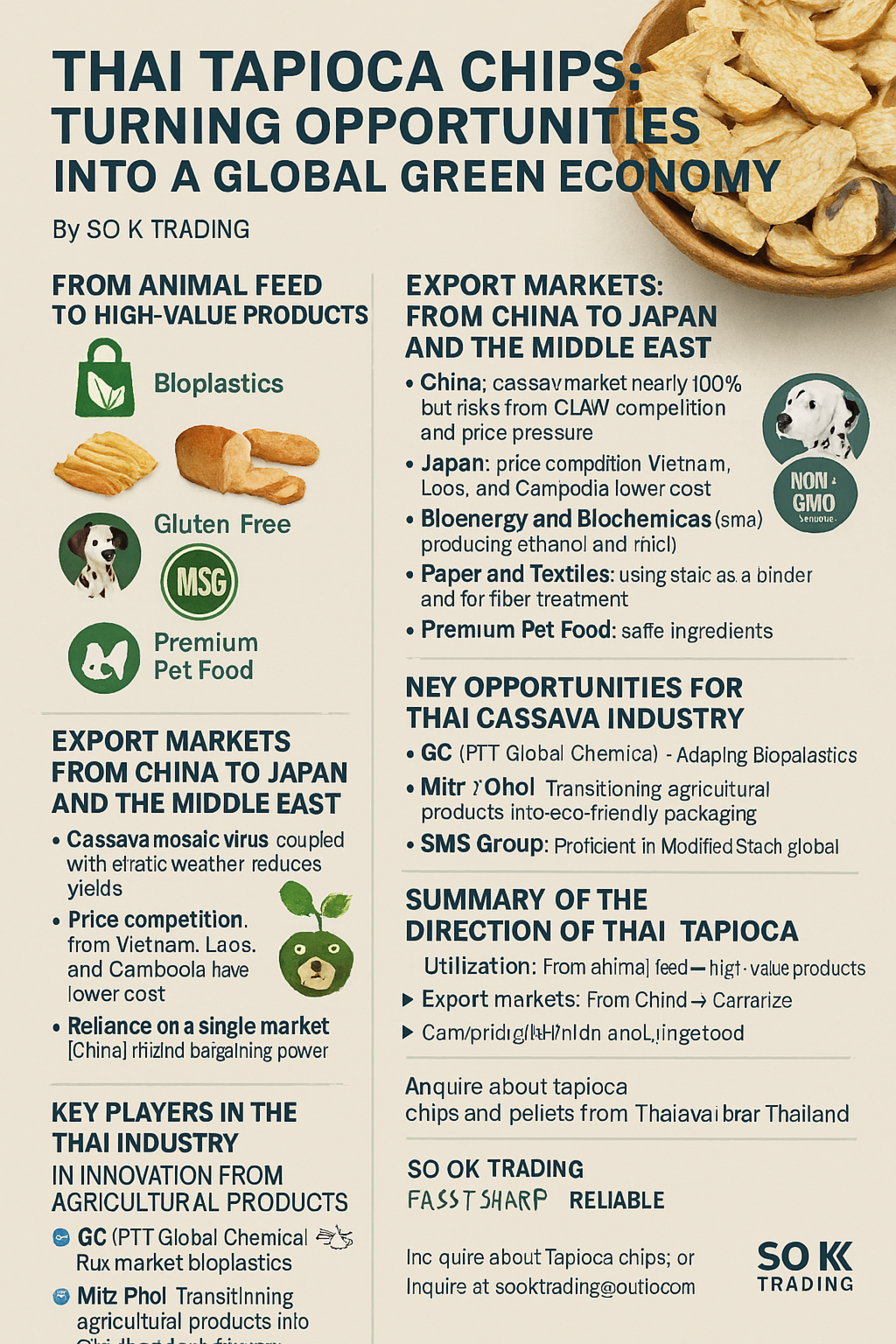
“Thai Tapioca Chips: Seizing Opportunities, Advancing into Innovation and the Global Green Economy”
Article by SO OK TRADING
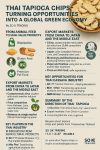
Tapioca chips, once widely recognized as a raw material for animal feed, are now being elevated from a “basic agricultural product” into a “high-value innovation” that connects to health foods, clean energy, and eco-friendly packaging.
From Animal Feed to High-Value Products
Traditional Role: A carbohydrate source in animal feed and a feedstock for ethanol production
New Roles:
Bioplastics → biodegradable shopping bags and sustainable packaging
Gluten-Free Foods → pasta, bakery products, and health foods
Biochemicals → sweeteners, lysine, MSG
Premium Pet Food → Non-GMO, safe, and high-quality ingredients
Export Markets: From China to Japan and the Middle East
China: Dominates nearly 100% of exports but faces risks from CLMV competition and price pressure
Japan: Expanding from modified starch into high-value products such as health foods and premium pet food
Middle East: Saudi Arabia and UAE are adopting Thai tapioca chips for food security, with Thailand building trust through MOUs and forward contracts
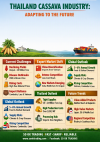
Challenges Facing Thailand’s Cassava Industry
Cassava mosaic disease and erratic weather reducing yields
Price competition from Vietnam, Laos, and Cambodia with lower production costs
Heavy reliance on China, limiting bargaining power
New Opportunities for Thai Cassava
Bioplastics → global market growing at 26% annually
Premium Gluten-Free Foods → targeting health-conscious consumers in Japan and Europe
Bioenergy & Biochemicals → ethanol, sweeteners, amino acids
Paper & Textiles → starch used as binder and fiber treatment
Premium Pet Food → rapidly growing market focused on safety
Key Thai Industry Players
GC (PTT Global Chemical) → leading bioplastics development
Mitr Phol → transforming agricultural products into eco-friendly packaging
SMS Group → global exporter of modified starch
UBE (Ubon Bio Ethanol) → producing ethanol and organic tapioca flour
Strategic Direction of Thai Cassava
Utilization: shifting from animal feed to high-value products
Export Markets: diversifying from China to Japan and the Middle East
Challenges: mosaic disease, CLMV competition, and reliance on a single market
Tapioca chips are no longer just “agricultural products” but are becoming a strategic innovation capable of generating immense added value for Thailand’s economy in 2025–2026 and beyond.
For inquiries or quotations:
www.sooktrading.com
sooktrading@outlook.com
SO OK TRADING: Your Business Partner
FAST • SHARP • RELIABLE