Share

Thai Tapioca Chips: Seizing Opportunities, Advancing into Innovation and the Global Green Economy
Last updated: 4 Mar 2026
1735 Views

“Thai Tapioca Chips: Seizing Opportunities, Advancing into Innovation and the Global Green Economy”

Article by SO OK TRADING

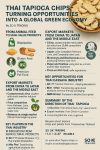
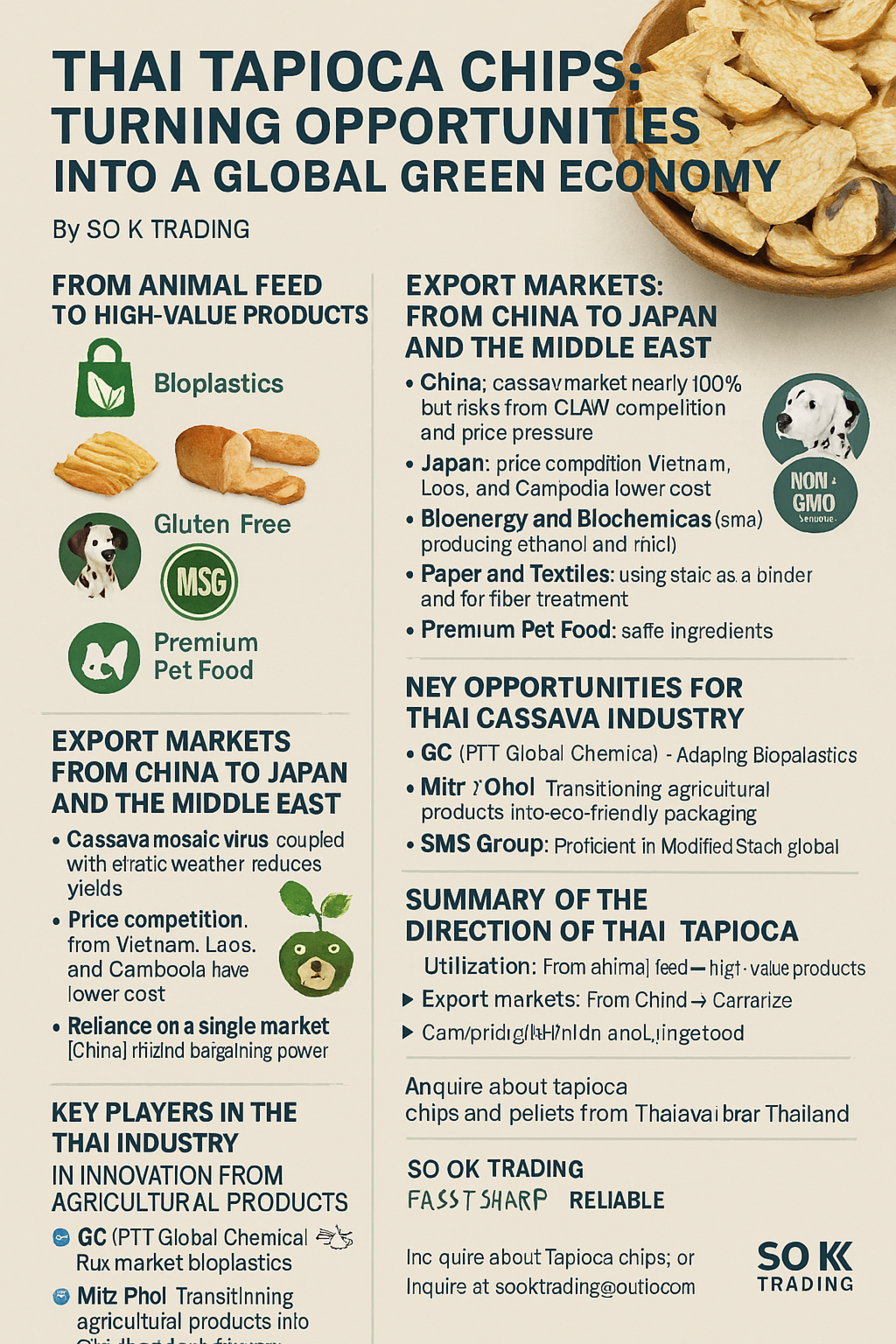
Tapioca chips, once widely recognized as a raw material for animal feed, are now being elevated from a “basic agricultural product” into a “high-value innovation” that connects to health foods, clean energy, and eco-friendly packaging.


From Animal Feed to High-Value Products

Traditional Role: A carbohydrate source in animal feed and a feedstock for ethanol production
New Roles:
Bioplastics → biodegradable shopping bags and sustainable packaging
Gluten-Free Foods → pasta, bakery products, and health foods
Biochemicals → sweeteners, lysine, MSG
Premium Pet Food → Non-GMO, safe, and high-quality ingredients
 

Export Markets: From China to Japan and the Middle East

China: Dominates nearly 100% of exports but faces risks from CLMV competition and price pressure
Japan: Expanding from modified starch into high-value products such as health foods and premium pet food
Middle East: Saudi Arabia and UAE are adopting Thai tapioca chips for food security, with Thailand building trust through MOUs and forward contracts
 

Challenges Facing Thailand’s Cassava Industry

Cassava mosaic disease and erratic weather reducing yields
Price competition from Vietnam, Laos, and Cambodia with lower production costs
Heavy reliance on China, limiting bargaining power
 

New Opportunities for Thai Cassava

Bioplastics → global market growing at 26% annually
Premium Gluten-Free Foods → targeting health-conscious consumers in Japan and Europe
Bioenergy & Biochemicals → ethanol, sweeteners, amino acids
Paper & Textiles → starch used as binder and fiber treatment
Premium Pet Food → rapidly growing market focused on safety
 

Key Thai Industry Players

GC (PTT Global Chemical) → leading bioplastics development
Mitr Phol → transforming agricultural products into eco-friendly packaging
SMS Group → global exporter of modified starch
UBE (Ubon Bio Ethanol) → producing ethanol and organic tapioca flour
 

Strategic Direction of Thai Cassava

Utilization: shifting from animal feed to high-value products
Export Markets: diversifying from China to Japan and the Middle East
Challenges: mosaic disease, CLMV competition, and reliance on a single market
Tapioca chips are no longer just “agricultural products” but are becoming a strategic innovation capable of generating immense added value for Thailand’s economy in 2025–2026 and beyond.


For inquiries or quotations:
www.sooktrading.com
sooktrading@outlook.com

SO OK TRADING: Your Business Partner
FAST • SHARP • RELIABLE


Related Content
Trend agricultural product from Thailand cassava starch , natural rubber
Thailand's cassava starch and natural rubber sectors are trending towards higher value, diversified use (like bioplastics, food ingredients), driven by global demand for sustainable materials, food security, and links to booming markets like China, though challenges include land scarcity and disease for rubber, with innovation focused on agroforestry and bio-based products to maintain leadership. Cassava Starch Trends Value-Added Products: Shift from raw chips to native starch, modified starch, and cassava flour (for gluten-free foods, pharmaceuticals). Bioplastics & Biofuels: Growing use in bioplastics and biofuels, supported by government R&D, positioning Thailand as a potential bioplastic hub. Key Markets: Strong demand from China for animal feed, alcohol, and food; growing food & beverage sector globally. Market Position: Thailand dominates global exports, especially native starch, despite some market fluctuations. Natural Rubber Trends Global Dominance: Remains the world's largest supplier, a key commodity. Diversification: Focus on intermediate rubber goods (gloves, tires) and exploring agroforestry systems for resilience and multiple products. Challenges: Land constraints, climate change impacts, disease, and labor costs affect supply, leading to a shrinking cultivation area. Innovation: Agroforestry (mixed crops with rubber) enhances farm diversity and sustainability, countering challenges. Overarching Themes Sustainability: Bio-based economy (BCG model) drives innovation in cassava and rubber to create high-value, green products. Market Reliance: Heavy dependence on China for cassava, requiring market diversification. Resilience: Need for innovation (like agroforestry for rubber) to overcome environmental and supply chain pressures.
4 Jan 2026
มันอัดเม็ด สินค้าดาวรุ่งจากไทย บุกไกลยังตลาด ตะวันออกกลาง และอาฟริกา และเกร็ดความรู้มันเส้น
มันอัดเม็ดหรือที่เรียกว่า มันเม็ดผลิตโดยการอัดมันเส้นโดยเครื่องอัดภายใต้สภาวะความร้อนและความดัน หลังจากอัดแล้วจะมีลักษณะเป็นท่อนยาว ประมาณ 2-3 ซม. เส้นผ่าศูนย์ กลางประมาณ 1 ซม. ความชื้นประมาณร้อยละ 14 ซึ่งจะส่งออกไปต่างประเทศเพื่อใช้เป็นวัตถุดิบสำหรับอาหารสัตว์ เนื่องจาก มันเม็ดจะมีีปริมาณแป้งสูง (มากกว่า ร้อยละ 65) จึงใช้้เป็นแหล่งอาหารให้พลังงานของสัตว์ เนื่องจากมันเม็ดมีส่งได้ตลอดปีและราคาไม่สูงขึ้นเมื่อเทียบกับผลิตผลของธัญพืชต่าง ๆ ดังนั้น หลายประเทศจึงนิยมใช้มันเม็ดของไทยในอุตสาหกรรม อาหารสัตว์ มันเม็ดมีปริมาณการส่งออก ประมาณ 5 ล้านตันต่อปี ข้อได้เปรียบที่สำคัญของมันเม็ด คือ สามารถขนส่งได้ง่าย (ไม่มีฝุ่นเหมือนมันเส้น) ขนย้ายได้สะดวกสามารถใช้เครื่องจักร ในการขนส่งได้เช่นเดียวกับเมล็ดธัญพืชต่าง ๆ
16 Dec 2025
This website uses cookies for best user experience, to find out more you can go to our Privacy Policy and Cookies Policy
Powered By MakeWebEasy Logo MakeWebEasy