“2026: The Year of Transition to a Green Economy and Smart Agriculture — Green Energy is Survival, Agriculture is Prosperity. Thailand is ready to conquer global markets with Wood Pellets, Cassava, and Durian, the rising stars the world demands.”
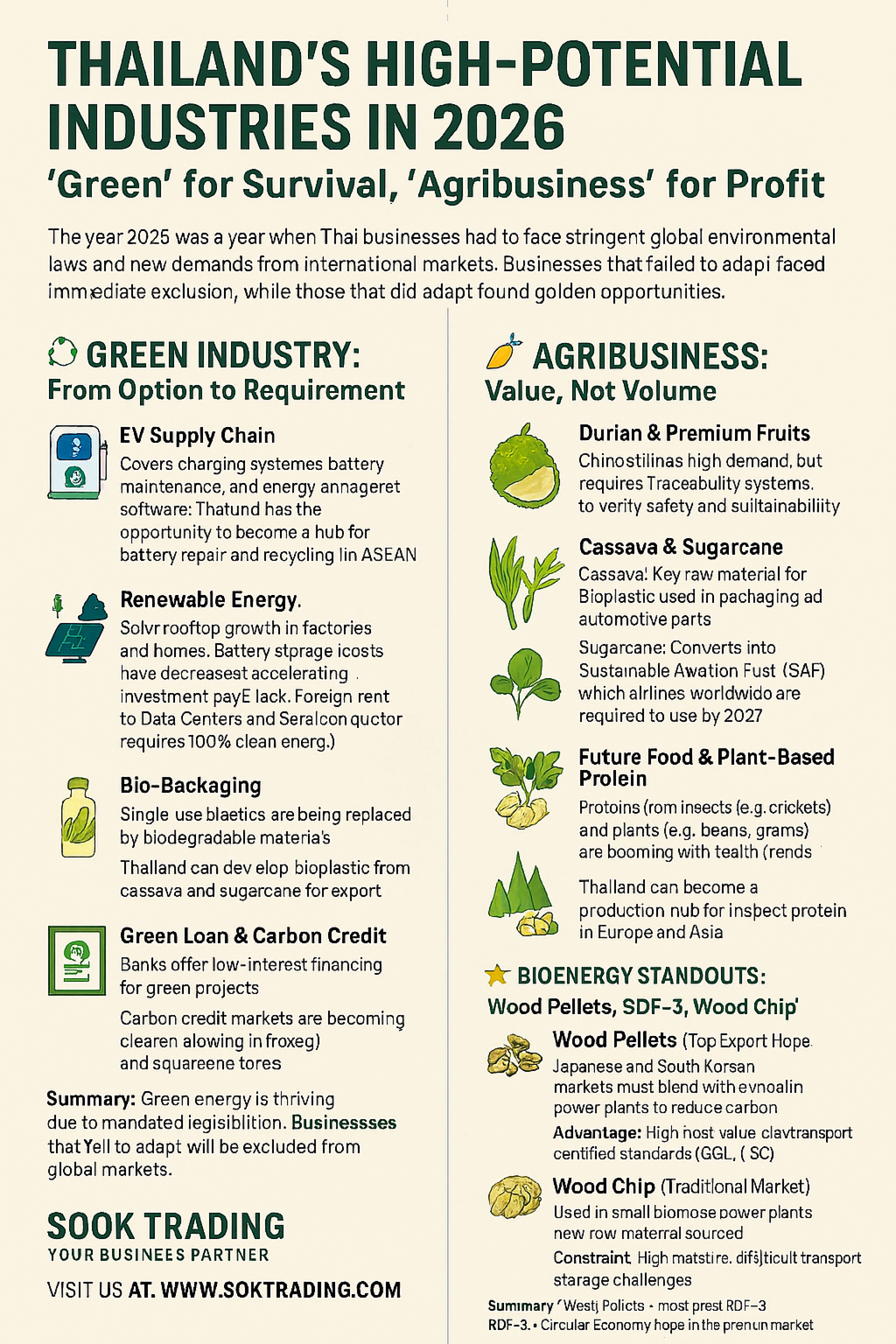
Thailand’s Rising Industries in 2026: “Green” is Survival, “Agriculture” is Prosperity
Green means clean energy, eco-friendly power.
Agriculture’s standout products include cassava and sugarcane for biofuels, and premium fruits such as durian for export.
In 2026, Thai businesses must face strict global environmental regulations and new demands from international markets.
Those who fail to adapt will be excluded immediately, while those who succeed will find golden opportunities for both industry and business.
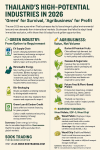
♻️ Green Industry: From Option to Requirement
EV Supply Chain: Charging systems, battery maintenance, energy management software. Thailand has the chance to become ASEAN’s hub for battery repair and recycling.
Renewable Energy: Solar rooftops booming in factories and households. Battery storage costs falling, speeding up ROI. Foreign investment in data centers and semiconductors requires 100% clean energy.
Bio-Packaging: Single-use plastics are being replaced by biodegradable materials. Thailand can develop bioplastics from cassava and sugarcane for export.
Green Loan & Carbon Credit: Banks offer low-interest loans for green projects. Carbon credit markets are becoming clearer, allowing afforestation and clean energy to be directly monetized.
Summary: Green energy is thriving because of legal mandates. Businesses that fail to adapt will be shut out of global markets.
Agribusiness: Value, Not Volume
Premium Fruits (Durian, etc.): Strong demand from China, but traceability systems are required to ensure safety and sustainability.
Cassava & Sugarcane: Cassava is a key raw material for bioplastics; sugarcane is processed into Sustainable Aviation Fuel (SAF), which airlines worldwide must adopt by 2027.
Future Food & Plant-Based Protein: Insect protein (e.g., crickets) and plant-based protein (beans, grains) are booming with health trends. Thailand can become a hub for insect protein production for Europe and Asia.
Herbs & Functional Food: Turmeric, ginger, centella are in high demand for supplements and cosmetics worldwide.
Fast-Growing Trees (Eucalyptus, Acacia): Used for wood pellets and carbon credit sales.
Biomass Fuel Stars: Wood Pellets, RDF-3, Wood Chip
Wood Pellets (Top Export Hope): Japan and South Korea require co-firing with coal to reduce carbon emissions. High heat value, easy transport, certified standards. Thailand’s government supports fast-growing tree plantations.
RDF-3 (Domestic Market): Waste-derived fuel used in cement plants and waste-to-energy facilities. Supports circular economy, reduces coal dependency. Limitations: inconsistent quality and incomplete waste sorting in Thailand.
Wood Chip (Traditional Market): Used in small biomass power plants near raw material sources. High moisture, transport and storage challenges. Gradually losing ground to wood pellets in premium markets.
Summary:
Wood Pellets = Export star
RDF-3 = Domestic circular economy hope
Wood Chip = Still viable but declining
Strategic Conclusion for 2026
Green Industry = Survival → Businesses that fail to adapt will be excluded from global markets.
Bio-Agriculture = Prosperity → Thai agriculture must shift from “selling raw produce” to “industrial raw materials.”
Wood Pellets, RDF-3, Wood Chip = Indicators of transition to a circular economy.
Cassava & Sugarcane = Core of bio-refinery, elevating Thai agriculture to global markets.
✨ 2026 is not about who produces more, but who produces in line with global trends and sustainable standards.
SO OK TRADING: Your Business Partner VISIT US AT: WWW.SOOKTRADING.COM