Share

Thai Agri-Exports 2026: Rising Strong, Going Global: Durian to Cassava: Thailand’s Export Powerhouse
Last updated: 19 Feb 2026
3548 Views

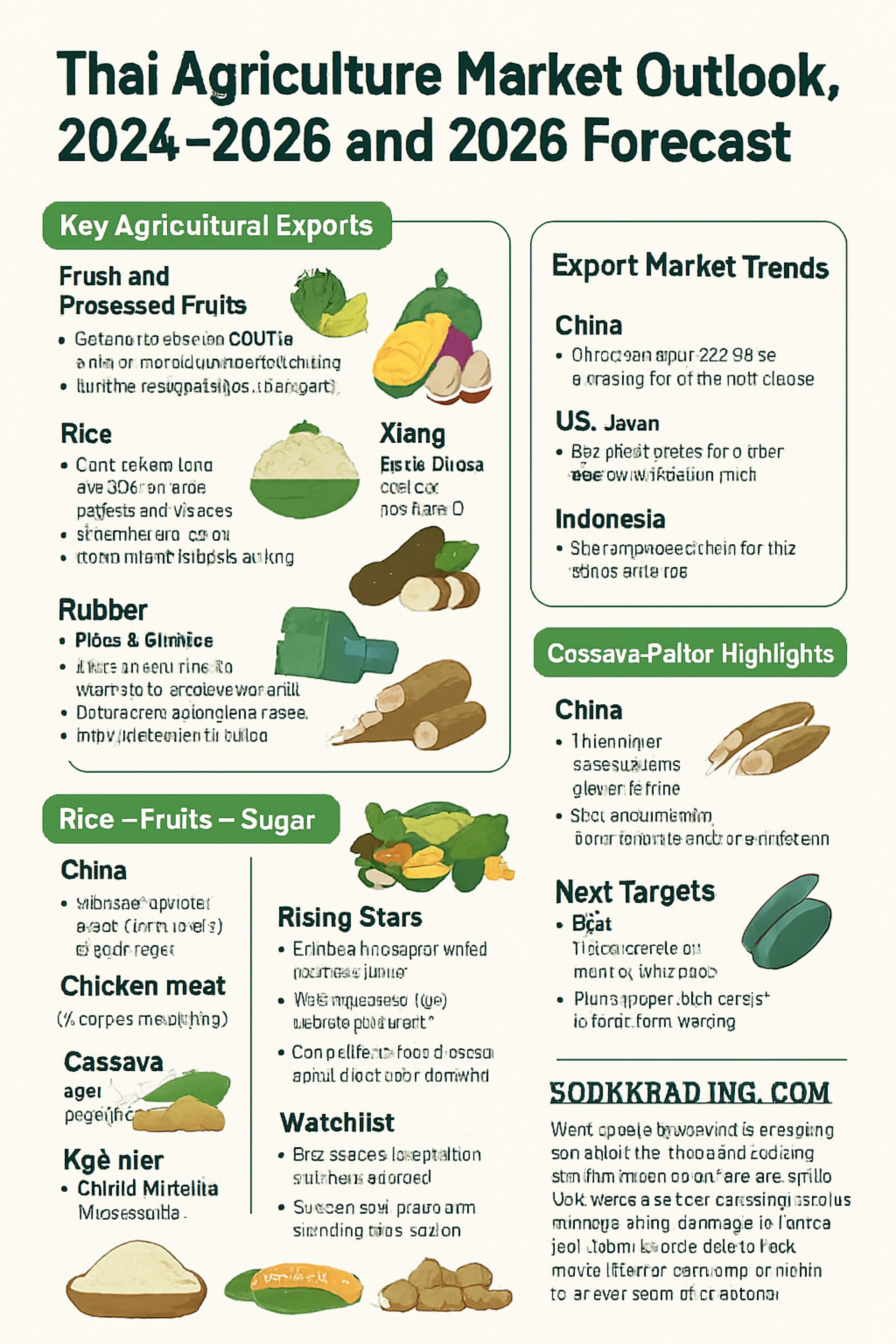
Thai Agriculture Market Overview 2024–2026 and 2026 Outlook

Thailand’s agricultural exports remain a vital “engine of growth” for the economy, with staple products generating steady revenue and rising stars expanding into new global markets.

 Key Agricultural Exports

Fresh and Processed Fruits
Export value: USD 6.51 billion
Durian dominates as the top fruit export, with China absorbing over 70% of production
Other key fruits: longan, mangosteen, mango
Rice
2024 exports: 9.95 million tons, the highest in six years
Main markets: Indonesia, Africa, Iraq
2025 target: 7.5 million tons, but facing competition from India and baht appreciation pressures
Rubber
Export value: USD 4.99 billion
Thailand remains the world’s top exporter
Key markets:
Block rubber → China
Smoked sheets → Japan, USA
Concentrated latex → Malaysia
Compound rubber → India
Chicken Meat
Export value: USD 4.31 billion
Driven by strong global protein demand
Cassava and Products
Export value: USD 3.13 billion
China is the primary market, for animal feed and energy
 

Export Market Trends

China: Largest share (23.68%), especially for durian and cassava
USA & Japan: Key for rubber and chicken
Indonesia: Major buyer of rice and sugar
 

Cassava Pellet Highlights

China
Demand surging, used as corn substitute in feed and ethanol production
2025 advance purchase: 1.68 million tons, worth THB 5.3 billion
Strict standards: cleanliness and starch content ≥ 67%
Middle East
Late 2025: First shipment of 20,000 tons to Saudi Arabia
Major client: ARASCO, the region’s largest feed producer
Strengths: Non-GMO, high quality, durable, suitable for long-distance transport
Next targets: UAE and halal food industry
 

Rice – Fruits – Sugar

Rice: Record high in 2024, but 2025 faces competition and currency pressure
Fruits: Durian, longan, mangosteen, mango dominate China; 2025 production expected to rise 15%, possibly pressuring domestic prices
Sugar: Thailand remains #2 globally; sugarcane output up 20% supports revenue despite lower export prices
 

2026 Outlook – “Strong Recovery”

Agricultural GDP: Expected growth 2–3%, total value THB 720–730 billion
Rising Stars
Durian – sustained demand from China
Chicken – strong global protein demand
Cassava – favorable prices due to lower production
Palm oil – supported by energy and biodiesel demand
Watchlist
Rice – increased competition, baht appreciation
Rubber – global slowdown may reduce demand
 

✨ Conclusion

Thai agriculture is entering an “upswing,” with fruits and cassava leading the charge into new markets. Rice and rubber require strategic adjustments to stay competitive globally. The successful opening of the Middle East market marks a milestone, reducing reliance on China and assuring farmers of diversified demand.

For inquiries on Thai agricultural products — rice, sugar, fruits, cassava chips/pellets, corn — please visit WWW.SOOKTRADING.COM or email sooktrading@outlook.com.


Related Content
เกร็ดความรู้ ผลไม้ไทย By So Ok
ผลไม้ไทยส่งออกหลักๆ คือ ทุเรียน, ลำไย, มังคุด, มะม่วง, และมะพร้าว โดยมี ประเทศจีน เป็นตลาดส่งออกอันดับ 1 ที่สำคัญที่สุดสำหรับผลไม้สดหลายชนิด เช่น ทุเรียน มังคุด และมะพร้าว รองลงมาคือ ฮ่องกง เวียดนาม อินโดนีเซีย และเกาหลีใต้ โดยไทยเป็นผู้ส่งออกผลไม้รายใหญ่ครองส่วนแบ่งตลาดสูง และมีการขยายตลาดไปยังตะวันออกกลางและยุโรปมากขึ้น. ผลไม้ดาวเด่นและตลาดหลัก ทุเรียน: "ราชาแห่งผลไม้" ครองตลาดจีน (97.4%) และเป็นสินค้าส่งออกหลัก. ลำไย: นิยมในจีน (73.1%), อินโดนีเซีย, เวียดนาม. มังคุด: เป็นที่ต้องการสูงในจีน (91.0%), เวียดนาม, เกาหลีใต้. มะพร้าวอ่อน: ตลาดหลักคือจีน (82.7%), สหรัฐฯ, ฮ่องกง. มะม่วง: ตลาดสำคัญคือเกาหลีใต้ (61.8%), มาเลเซีย, ญี่ปุ่น. ตลาดและโอกาสการส่งออก ตลาดเอเชีย: จีน (ตลาดใหญ่ที่สุด), ฮ่องกง, เวียดนาม, อินโดนีเซีย เป็นตลาดหลักที่สำคัญ. ตลาดใหม่: มีการขยายไปสหรัฐฯ, ตะวันออกกลาง (เช่น สหรัฐอาหรับเอมิเรตส์) และยุโรป. ความต้องการ: ผลไม้สดแช่เย็น/แข็ง (โดยเฉพาะทุเรียนที่แกะเนื้อ) และผลไม้อบแห้ง เช่น ทุเรียนอบกรอบ มะม่วงอบแห้ง ได้รับความนิยม. แนวโน้มและการแข่งขัน ไทยยังคงเป็นผู้ส่งออกผลไม้สำคัญ แต่ต้องเผชิญการแข่งขันสูงขึ้น โดยเฉพาะในตลาดจีนจากคู่แข่งรายใหม่ (เวียดนาม, ฟิลิปปินส์). ·“ประเทศเวียดนาม และจีน เป็นประเทศคู่ค้า. ผลไม้ที่สาคัญของไทย จึงมีผู้ส่งออกผลไม้. รายใหม่เพิ่มขึ้นอย่างต่อเนื่อง”. “ทุเรียน มังคุด มะพร้าว และมะม่วง จะส่งออก. ได้สูงในช่วงฤดูร้อนและฤดูฝน ·สำหรับส้มโอและชมพู่ก็อาจจะมีโอกาสเติบโต ในตลาดจีนเช่นกัน เนื่องจากส้มโอไทยมีคุณภาพสูง และชมพู่ก็เริ่มขยายตลาดในจีนมากขึ้น ทำให้ชาวจีนรู้จักชมพู่ไทยมากขึ้นกว่าเดิม
13 Dec 2025
Thai Fruits: Deliciousness from Thailand, Nature’s Harvest, Reaching the World Discover Thai fruits and explore export & trade opportunities with SO OK TRADING
Thai Fruits: Thai Products Entering the Global Market Overview of Thai Fruits Thailand is renowned as the “Kingdom of Fruits,” thanks to its favorable climate and fertile soil, producing a wide variety of fruits. Durian, mangosteen, mango, coconut, and pineapple are highly celebrated both domestically and internationally. Export Market Overview - Japanese Market - Bananas, mangoes, mangosteen, and pineapples are especially popular. - The JTEPA agreement provides tariff benefits, while GI certification enhances trust in quality. - Meets Japanese consumers’ demand for health and premium quality. - Chinese Market - Durian, mangosteen, longan, and Nam Dok Mai mango are the main export products. - China is Thailand’s largest importer of fruits. - The China–Laos Railway improves logistics, ensuring freshness. - Western Markets (Europe, USA, Australia) - Young coconuts, mangosteen, mangoes, pineapples, and dragon fruit attract strong attention. - Consumers emphasize health, organic products, and sustainability. - Growing demand for processed goods such as freeze-dried fruits and juices. Export Opportunities and Development Directions - Quality Differentiation: Build premium fruit brands to enhance competitiveness. - Smart Agriculture: Use AI and drones to reduce costs and improve efficiency. - Product Innovation: Develop dried fruits, bottled juices, and superfood series. - Sustainability: Address environmental regulations (EUDR) and carbon footprint requirements. - Logistics Upgrades: Cold chain and railway transport to ensure freshness. ✨ Summary With strengths in quality, innovation, and sustainability, Thai fruits are poised to further expand their global market influence in 2026 and beyond. Japan, China, and Western markets each present unique advantages and opportunities, giving Thai fruit exports strong strategic potential for growth.
23 Jan 2026
Food Condiment , Thai Spice : Gift from Natural Product of Thailand
Thai condiments are vibrant, flavor-boosting additions like spicy-sweet Nam Jim Gai, all-purpose spicy Prik Nam Pla (fish sauce with chilies/garlic), savory Nam Prik Pao (chili jam), and tangy Nam Jim Jaew for grilled meats, adding balance (salty, sweet, sour, spicy) to dishes, much like salt and pepper in the West, with popular types including Sriracha, peanut sauce, and sweet chili. Popular Thai Condiments: Prik Nam Pla (or Nam Pla Prik): The quintessential all-purpose condiment, a simple mix of fish sauce, chopped chilies, garlic, and sometimes lime/sugar, adding salty, spicy, umami kick to anything. Nam Jim Gai: A sweet and sour chili sauce with garlic and vinegar, perfect for fried chicken and spring rolls. Nam Prik Pao: A complex, savory chili jam with roasted chilies, shallots, garlic, tamarind, and palm sugar, used in soups (like Tom Yum) and as a spread. Nam Jim Jaew: A smoky, tangy, spicy dipping sauce for grilled meats (Gai Yang), made with chili, lime, fish sauce, shallots, and toasted rice powder. Sriracha: While known globally, it's a staple, a spicy chili sauce often used on its own or as an ingredient. Sweet Chili Sauce (Nam Chim Kai): A widely loved sweet, tangy, and spicy sauce, great for fried items. Key Ingredients: Fish Sauce (Nam Pla): Salty, umami base. Chilies (Prik): Fresh (red/green) or dried for heat. Lime Juice: Adds essential sourness. Garlic & Shallots: Aromatic depth. Palm Sugar: Balances heat with sweetness. Tamarind: For sour/sweet notes. These condiments are crucial for achieving the balance of flavors—spicy, sour, salty, and sweet—that defines Thai cuisine.
18 Dec 2025
This website uses cookies for best user experience, to find out more you can go to our Privacy Policy and Cookies Policy
Powered By MakeWebEasy Logo MakeWebEasy