“The World After Lunar New Year: Strong Dollar, Rare Earth Shortages, and the Rise of AI” “From Tariff War to Resource War: The World of 2026 Will Never Be the Same” “Trump 2.0 Reshapes the Globe: When the Economy Turns Into a Battlefield"
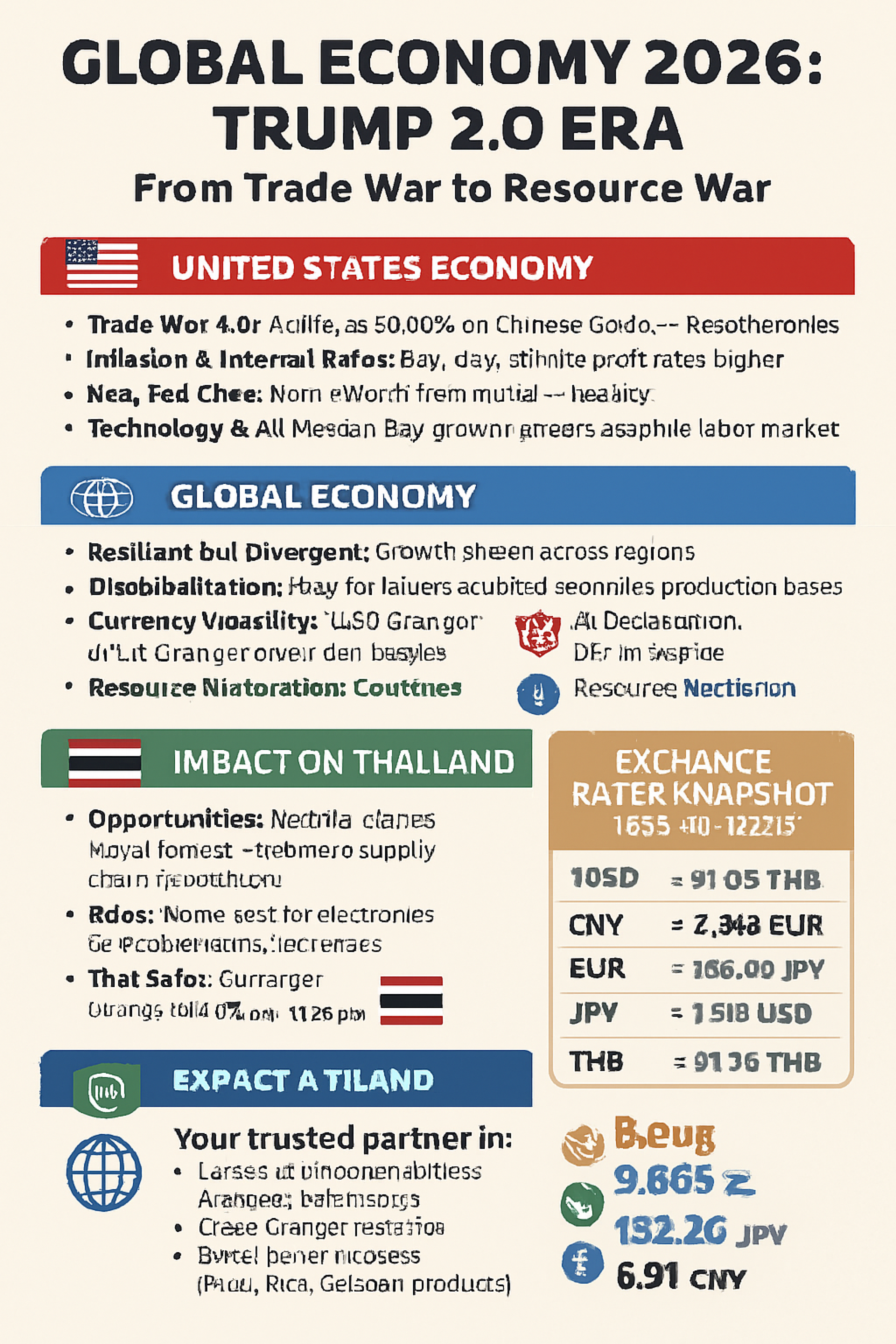
Global Economy in the Trump 2.0 Era: From Trade War to Resource War
2026 is not just a year of transition—it marks the beginning of a new era of economic and resource conflict. Under President Donald Trump’s “America First” policy, the world is undergoing a profound transformation in trade, finance, and geopolitics.
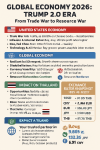
U.S. Economy: Tariffs + New Fed Chair
Trade War 2.0: Tariffs up to 60% on Chinese goods → factories reshored, global import costs rising.
Inflation & Interest Rates: Domestic tax cuts + tariffs fuel inflation → Fed keeps interest rates higher for longer.
Fed Leadership Change: Kevin Warsh nominated; markets watch closely whether he remains “hawkish” or shifts to easing.
Labor Market & Technology: Hiring slows, but AI and advanced tech remain the main drivers of stock markets.
Global Economy: Resilient but Divergent
Global Trade Slowdown: Supply chains disrupted → countries accelerate relocation of production bases.
Currency Volatility: USD stronger short‑term, weaker mid‑term → EUR recovery potential, JPY under pressure, THB strengthening.
Geopolitical Tensions: Conflicts with China and oil producers push energy prices higher.
AI Investment Boom: Massive investments in AI across the U.S. and Europe help prevent a global recession.
⚔️ Resource Wars: Rare Earths, Battery Metals & Chips
Rare Earths: China controls 80% of supply, begins restricting exports.
Battery Metals: Lithium, cobalt, nickel → South America’s “Lithium Triangle” and Congo become diplomatic battlegrounds.
Semiconductor War: U.S. blocks China’s access to advanced chip technology → China stockpiles high‑tech raw materials.
Resource Nationalism: Countries hoard resources → commodity prices swing violently.
Impact on Thailand: Opportunities & Risks
Opportunities: Thailand could become a “midstream supply chain” hub if it maintains neutrality and attracts investment in mineral processing.
Risks: Rising raw material costs for electronics and automotive industries.
Currency: Thai Baht strengthens (31.00–31.50 per USD).
Exchange Rate Summary (Feb 2026)
USD: 1 USD ≈ 31.09 THB 0.845 EUR 153.26 JPY 6.91 CNY
CNY: 1 USD ≈ 6.91 CNY
EUR: 1 EUR ≈ 1.18 USD
JPY: 1 USD ≈ 153.26 JPY
THB: 1 USD ≈ 31.09 THB
Overall Summary
U.S. Economy: “America First” → high tariffs + Fed leadership change.
Global Economy: Entering a “survival of the fittest” era, with AI as the growth engine.
Currencies: USD strong short‑term, Thai Baht strengthening steadily.
Resource Wars: China dominates rare earths, U.S. seeks new sources → commodity prices highly volatile.
If you are interested in non‑ferrous commodities (copper, aluminum), clean energy resources, or agricultural exports (fruit, rice, cassava products),
SO OK TRADING is your trusted partner in global markets.
For more details:
www.sooktrading.com
sooktrading@outlook.com