Thailand Energy 2026: Game-Changer from Coal to Clean Fuels From Black to Green — Thailand’s Energy Journey Toward NET ZERO Clean Energy Thailand: RDF3, Wood Pellets, Solar Power, EV Article by SO OK TRADING
Thailand’s Alternative Energy 2026: Transition from Coal to RDF and Clean Power
2026 marks a decisive turning point for Thailand’s energy system. The country is moving away from coal and fossil fuels toward renewable and clean energy sources that meet the demands of cost efficiency, reliability, and a green image.
Energy Demand and Revenue Growth
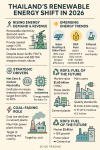
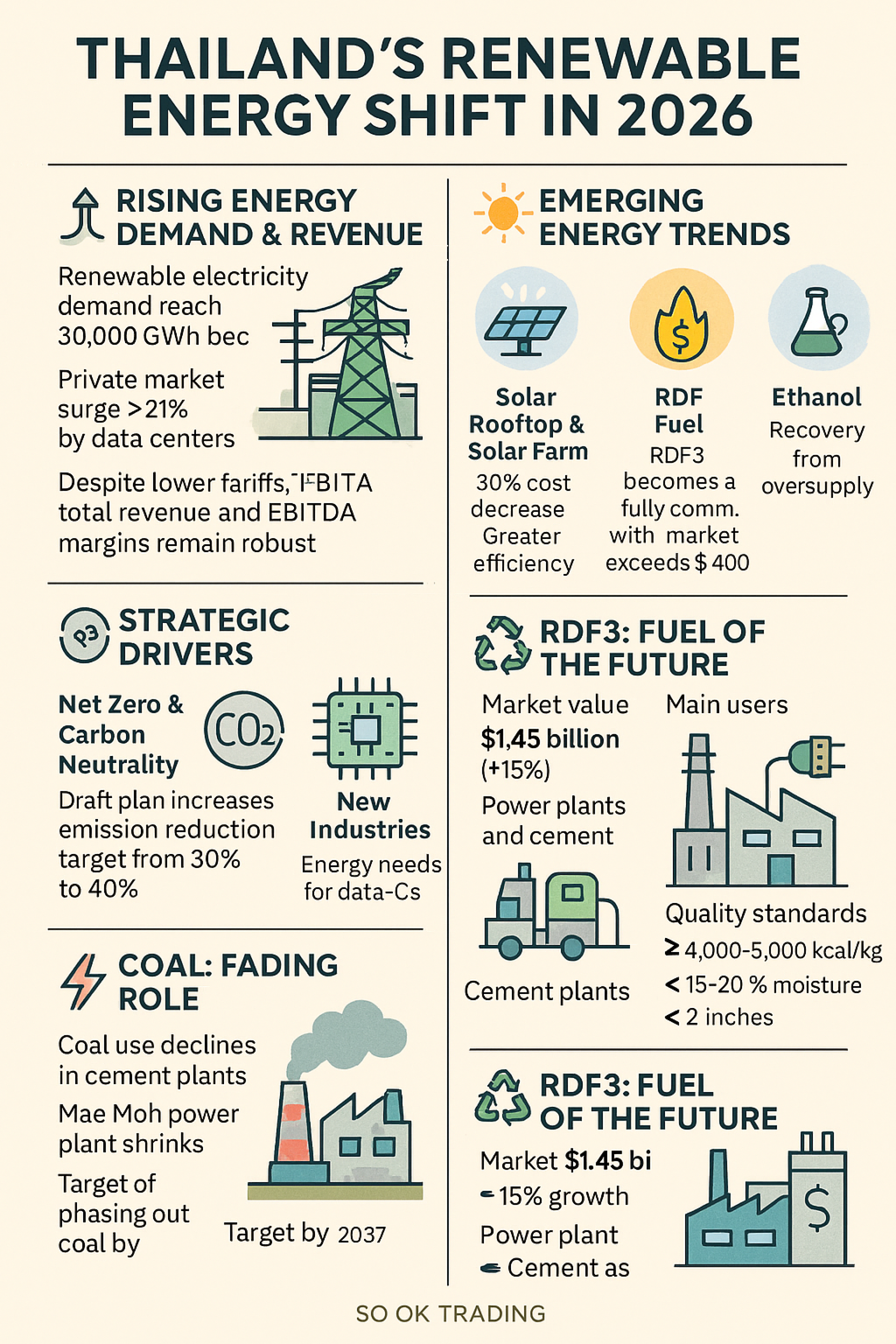
Electricity demand surges: Renewable energy consumption is expected to reach 30,000 GWh, with the private sector expanding by 21% due to the growth of data centers and AI, both requiring stable clean base-load power.
Revenue outlook: Although feed-in tariffs per unit are declining, government purchases of renewable electricity are projected to rise by 7%, keeping overall revenue growth strong. Gross margins remain above 30%.
Emerging Energy Trends
Solar Rooftop & Solar Farms: Costs of solar panels have dropped by over 30% compared to five years ago, while efficiency has improved, driving adoption across factories and households.
RDF (Refuse-Derived Fuel): Market value is expected to exceed THB 14.5 billion, with RDF3 (finely sorted and shredded waste) becoming a fully commercial fuel.
Ethanol: Recovering from oversupply in 2025, with supply-demand balance improving.
Strategic Drivers
Net Zero & Carbon Neutrality: Thailand’s revised PDP plan raises greenhouse gas reduction targets from 30% to 40%.
New industries: Data centers and AI require stable clean energy, accelerating demand.
Off-grid power (IPS): More businesses are producing their own electricity to reduce costs and ensure energy security.
Coal: A Fading Role
Industrial demand: Declining steadily, especially in cement production where coal accounts for 60% of usage.
Mae Moh power plant: Still operating partially to maintain low-cost supply, but capacity may be cut by half in 2026.
Long-term goal: Complete coal phase-out by 2037.
RDF3: Fuel of the Future
Market size: Expected to reach THB 14.5 billion in 2026, growing 15% year-on-year.
Main users: Power plants (64%) and heavy industries, especially cement (36%).
Quality standards: Heating value ≥ 4,000–5,000 kcal/kg; moisture < 15–20%; particle size < 2 inches; chlorine < 1%.
Cost Comparison: RDF3 vs Coal
Coal (imported): Prices fluctuate with global markets, high transport costs, full carbon tax (CBAM), and no environmental benefits.
RDF3: Stable domestic pricing, low or exempt carbon tax, eligible for carbon credits and BOI incentives. Long-term cost efficiency is higher, especially for factories located within 100–150 km of RDF sources.
Conclusion
2026 is the year Thailand takes a decisive step toward clean energy. Coal is being replaced by solar, biomass, RDF3, and natural gas blended with hydrogen. Businesses that adapt quickly and choose strategic locations will gain advantages in both cost efficiency and the “green image” demanded by global markets.
If you are interested in biofuels such as RDF3, wood chips, wood pellets, or sawdust — SO OK TRADING can provide quotations and source high-quality materials from southern, eastern, and northeastern Thailand.
For details, visit www.sooktrading.com or contact us directly at sooktrading@outlook.com.