Lead Ingot 101: The Small Raw Material Driving Big Industries: Lead Ingot Is the Answer: Essential for Energy, Electronics, and Logistic
Marketing Article: Lead Ingots – Applications and Market Trends
(Business Opportunities with SO OK TRADING)
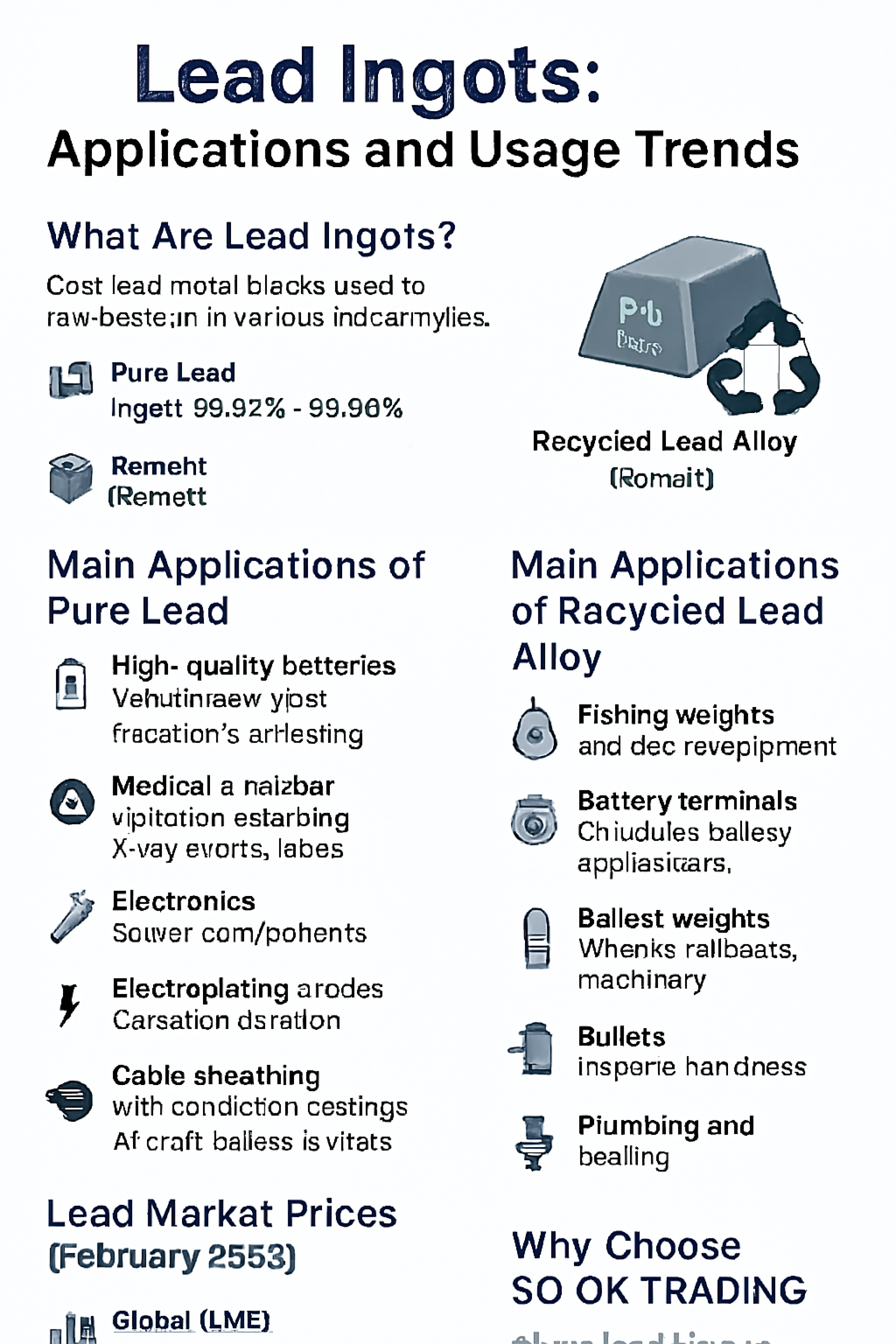
What Are Lead Ingots?
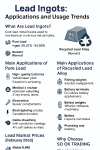
Lead ingots are cast blocks of lead metal, serving as upstream raw materials for various industries. They are generally divided into two main types:
Pure Lead Ingots (99.97% – 99.99%)
Remelted Lead / Lead Alloys (Recycled Lead Alloy)
Each type has distinct properties and applications depending on market needs.
Main Applications of Pure Lead
High-Quality Battery Industry: Used to produce plates in lead-acid batteries for vehicles and UPS systems, ensuring maximum efficiency and long service life.
Medical & Nuclear Radiation Shielding: Applied in X-ray rooms, CT scan facilities, and nuclear laboratories as protective barriers.
Electronics Industry: Used in solder production and precision electronic components.
Electroplating: Serves as anode material to prevent corrosion.
Cable Sheathing & Precision Casting: For underground/undersea cables, aircraft ballast, and high-precision bullets.
Main Applications of Remelted Lead / Alloys
Fishing & Sports: Used for sinkers, weights, and casting accessories.
Battery Structural Components: Terminals and busbars requiring mechanical strength.
Ballast Weights: Applied in car wheels, sailboats, and heavy machinery.
Bullet Manufacturing: Hard lead alloys maintain shape and reduce barrel fouling.
Plumbing & Sealing: Used in pipe joints and engine seals.
Pure Lead vs. Remelted Lead / Alloys
Purity
Pure Lead: 99.97% – 99.99%
Remelted Lead: Below 99% (contains other metals)
Hardness
Pure Lead: Very soft, can be scratched with a fingernail
Remelted Lead: Harder, maintains shape better
Melting Point
Pure Lead: ~327°C
Remelted Lead: Lower and variable (depends on composition)
Corrosion Resistance
Pure Lead: Very high
Remelted Lead: Moderate
Main Uses
Pure Lead: Batteries, radiation shielding, electronics
Remelted Lead: Fishing weights, ballast, battery terminals
Cost
Pure Lead: Higher (based on LME prices)
Remelted Lead: Lower (recycled material)
Malleability
Pure Lead: Excellent (ductile and highly workable)
Remelted Lead: Moderate to low (may be brittle)
Lead Market Prices (February 2026)
Global (LME)
Cash Settlement: ~1,925 USD/ton
3-Month Contract: ~1,962–1,967 USD/ton
Thailand
Pure Lead: ~69,000–75,000 THB/ton or ~110–150 THB/kg
Remelted Lead: ~80–130 THB/kg
Scrap Lead: Buying price ~49–53 THB/kg
Why Choose SO OK TRADING
SO OK TRADING is a trusted expert in sourcing and exporting high-quality pure and alloyed lead ingots. We provide end-to-end services — from raw material procurement and customization to global export.
Our Strengths
Expertise in marketing and content adaptation for multiple regions (Thai, Chinese, Japanese, English)
Transparent and up-to-date global market pricing
Clear, trustworthy product storytelling that builds confidence with clients and partners
Agile and efficient management structure
Conclusion
Both pure and remelted lead ingots play vital roles across industries — from batteries and medical shielding to fishing and sports. Choosing the right type depends on technical requirements and budget.
SO OK TRADING is ready to be your bridge to the global market, leveraging expertise in marketing, export, and regional adaptation to support your business growth.