Share

Thai Corn — The Power Behind Global Food and Industry By SO OK TRADING
Last updated: 28 Jan 2026
759 Views

 Corn: The Miracle Crop Driving Global Food and Industry

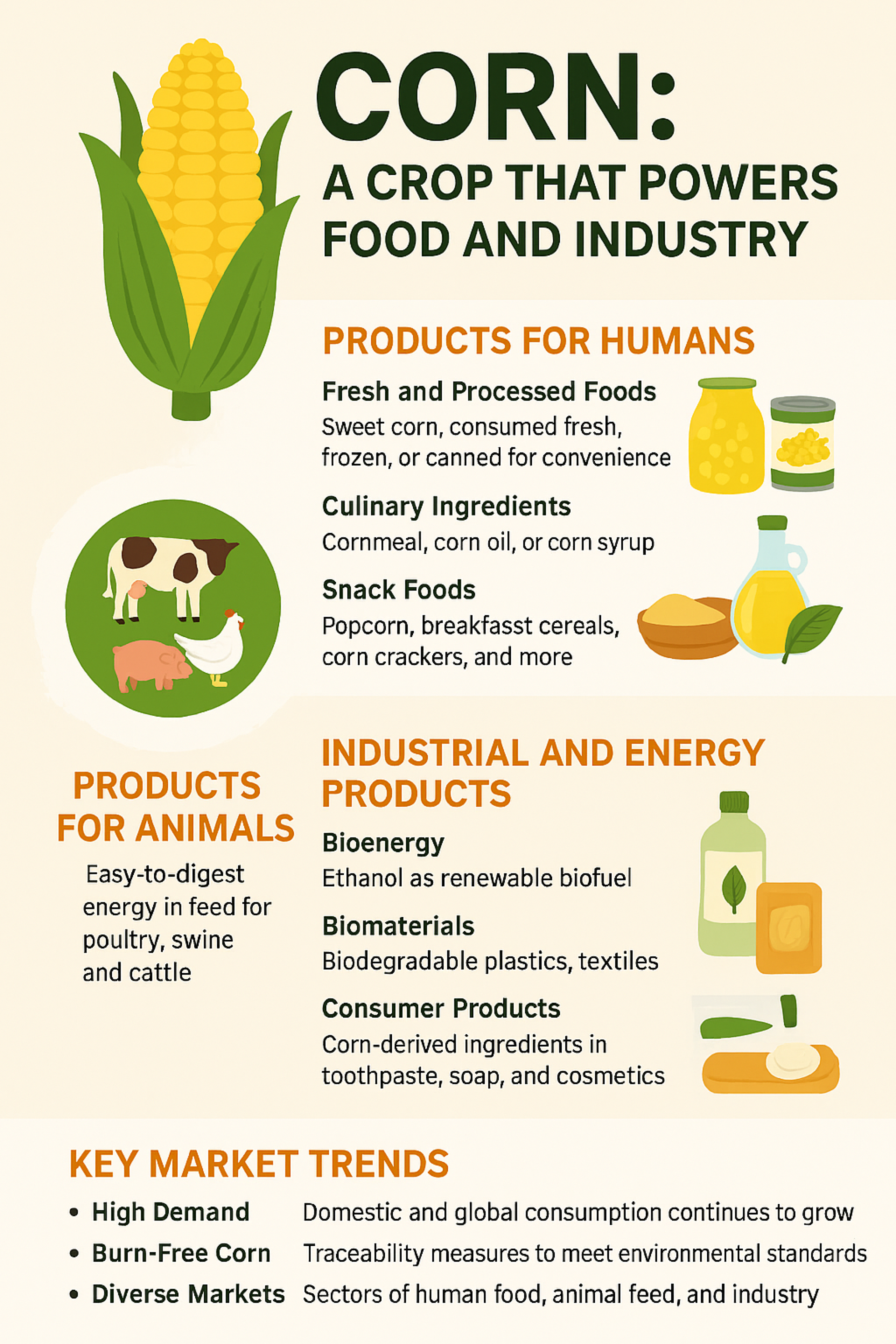
Corn is more than just a food crop—it is a “power of growth” that connects the dining table with factories and clean energy. For producers and exporters, corn is a valuable raw material and a gateway to vast market opportunities.

Products for Humans

Fresh & Processed Foods: Sweet corn—fresh, frozen, or canned—delivers convenience and quality.
Culinary Ingredients: Corn starch, corn oil, and corn syrup are essential to the food and beverage industry.
Snacks: Popcorn, breakfast cereals, and corn crackers bring joy to everyday life.
Products for Animals

Animal Feed: Corn is the primary energy source, easily digestible and highly productive, ideal for poultry, swine, and cattle.
Popular Varieties: CP and NK hybrids are widely cultivated in Thailand and neighboring countries for their high yield and resilience.
Industrial & Energy Products

Bioenergy: Corn is used to produce ethanol, reducing reliance on fossil fuels and supporting a cleaner planet.
Biomaterials: Biodegradable plastics and textiles from corn meet the demand for sustainable living.
Consumer Goods: Corn-derived extracts are found in everyday products like soap, toothpaste, and cosmetics.
 

Market Trends in 2026

Thailand: Domestic demand exceeds production, requiring imports from Myanmar, Laos, and Cambodia. From 2026, strict traceability rules ensure “burn-free corn,” reducing cross-border PM2.5 and enhancing Thailand’s trade image.
China: Massive demand for animal feed and bio-industries such as ethanol and bioplastics, aligned with carbon reduction policies.
Japan: Focuses on high-quality, Non-GMO corn for premium livestock feed and human food products like cereals and frozen sweet corn from Thailand.
Middle East: Rising demand for animal feed, alongside booming markets for popcorn and ready-to-eat foods driven by middle-class growth and tourism.
 

Corn by SO OK TRADING

✅ High Quality: Carefully selected seeds and harvests that meet international standards
✅ Burn-Free: Compliant with Thailand’s new environmental measures and global sustainability requirements
✅ Diverse Markets: Covering human food, animal feed, and industrial applications
✅ Global Connections: Exporting to major markets including China, Japan, and the Middle East


✨ Corn represents endless opportunities—in food, energy, and sustainability. SO OK TRADING is ready to lead in delivering premium Thai corn to the global market, building food security and a sustainable future.


Related Content
“Cassava and Corn: From Food to Green Energy and Bio-Packaging Bioplastics and Clean Fuels — From the Kitchen of the World to the Green Innovation Hub” Article by SO OK TRADING | March 24, 2026
“Transforming Thai Crops to Net Zero: From Cassava and Corn to Bioplastics, Packaging, and Future Fuels” Cassava and corn are no longer just food crops — they are becoming the raw materials of the future for compostable packaging, bioplastics, and clean fuels, driving the green economy and supporting Net Zero goals. This article by SO OK TRADING explores in depth:
24 Mar 2026
Coffee Knowledge, Useful of Coffee, History of Coffee
Coffee knowledge covers its origins (coffee cherries), types (Arabica, Robusta), processing (washed, natural), flavor profiles influenced by terroir (origin, soil, altitude) and roast (light, medium, dark), brewing methods, and cultural aspects, revealing how these factors create the complex tastes and aromas we enjoy, from fruity & floral to nutty & chocolatey. Key Aspects of Coffee Knowledge Coffee Origins & Plant: Beans come from seeds inside coffee cherries on the Coffea plant, grown in the "bean belt" between the tropics. Key species are Arabica (sweeter, popular) and Robusta (stronger, higher caffeine). Terroir & Processing: Flavor is shaped by region (e.g., Ethiopian fruitiness vs. Brazilian nuttiness), altitude, soil, and processing (drying beans inside the cherry vs. washing them). Roasting: Lighter roasts are brighter/acidic, medium roasts are balanced, and darker roasts are bolder/bitter; roasting develops deep brown colors and complex flavors. Tasting & Flavor: Coffee has sweet, sour, bitter, salty, and aromatic (floral, fruity, spicy, nutty, etc.) components, with sweetness often indicating careful processing. Brewing: Techniques like espresso, drip, or cold brew extract - Coffee is a beverage made from roasted, ground seeds of coffee cherries. Finland consumes the most coffee per capita. Brazil grows the most coffee in the world. -----
22 Dec 2025
THAI DURIAN (KING OF FRUIT)
Thai durian is one of the country’s most iconic fruits, earning the title "King of Fruits” thanks to the rich, distinctive flavour that sets it apart from other varieties. If you're looking to try durian at its best, it's a seasonal fruit available about six months a year, typically from April to September. 1.April to June - Eastern Thailand produces most of the country's durian, with May being the peak month. 2.July to September - Southern Thailand takes over as the primary durian producing region. There are five main Thai durian varieties that are especially popular: 1.Monthong (Golden Pillow): Pale yellow flesh, smooth and dry texture, thick meat with small seeds. Very sweet with a mild aroma. 2.Chanee: Deep yellow flesh with a rich, creamy texture. Medium fibre content. When fully ripe, the flesh becomes soft and bold in both sweetness and smell. 3.Kanyao: Golden yellow flesh, soft and fine texture with a balanced sweet, creamy taste. Medium fibre, pleasantly aromatic. 4.Puangmanee: Deep yellow, sticky flesh with a thin layer of fruit. Intensely sweet with a fragrant aroma. 5.Gradoom: Bright yellow, soft textured flesh with a thinner layer of fruit and larger seeds. Mildly sweet, less creamy and tends to become mushy when overripe.
28 Dec 2025
This website uses cookies for best user experience, to find out more you can go to our Privacy Policy and Cookies Policy
Powered By MakeWebEasy Logo MakeWebEasy