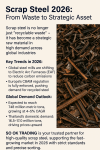
Steel Scrap 2026: From Waste to Strategic Asset Scrap steel is no longer just “recyclable waste” — it has become a strategic raw material fiercely competed for across global industries
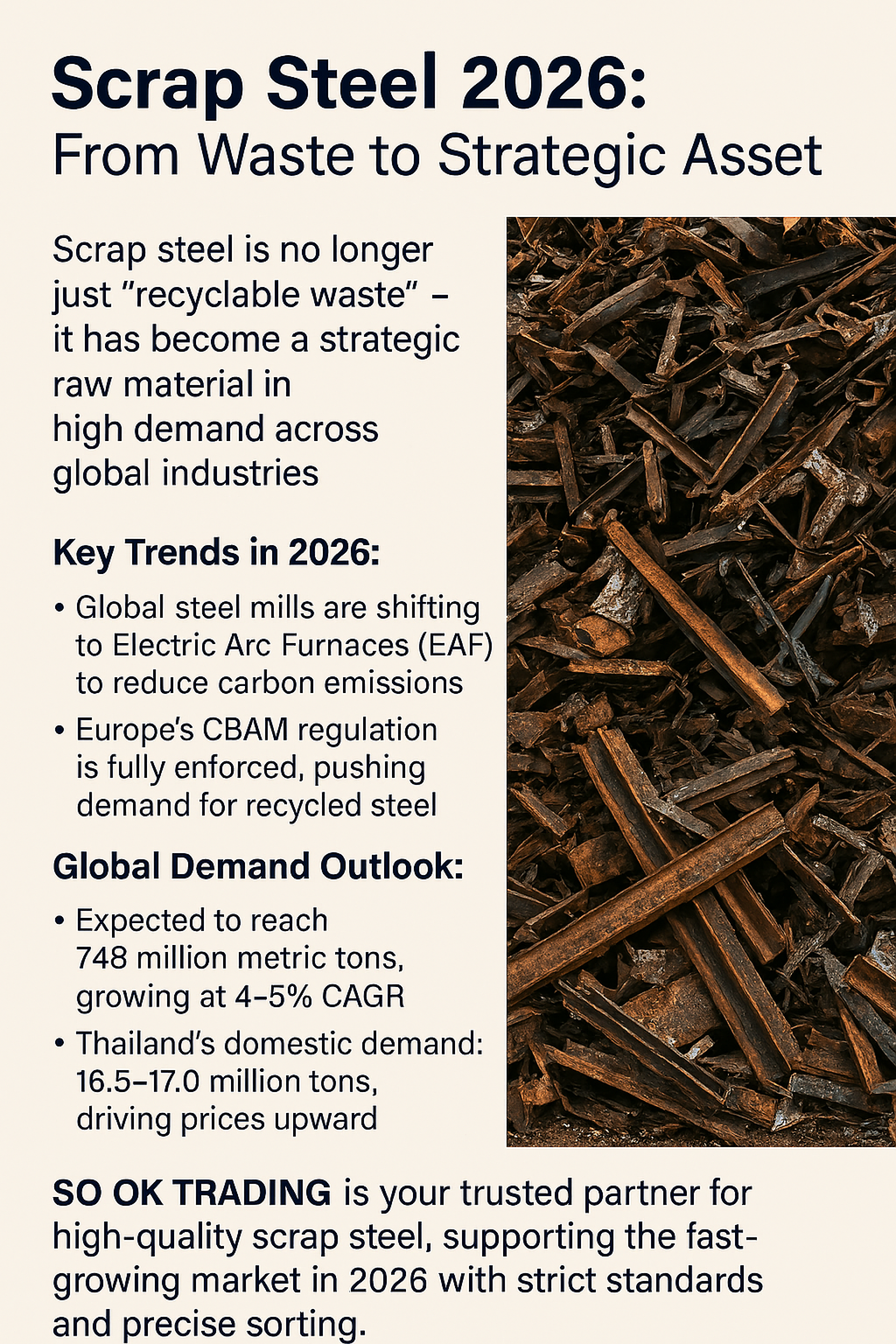
Steel Scrap 2026: From “Recyclable Waste” to “Strategic Raw Material”
SO OK TRADING – Supplying High-Quality Scrap Steel for Thailand and Global Industries
Scrap Steel Categories under Thai Industrial Standards
In 2026, scrap steel in Thailand is clearly classified under the Department of Primary Industries and Mines and Customs Tariff HS Code 7204:
Heavy Scrap: Thickness ≥ 6 mm (structural steel, beams). Highest market price.
Light Scrap: Thickness < 3 mm (sheet steel, empty cans).
Mixed Scrap: Combination of various types, size ≤ 80 x 60 cm.
Cast Iron Scrap: From cast components (engine blocks, cast pipes).
Borings/Turnings: Small metal shavings from machining.
Steel Can Scrap: Baled or old steel cans.
Shock Absorber Scrap: Must be processed to remove oil before melting.
Indicative Buying Prices (January 2026)
Heavy special / Cast iron: 12.00 – 13.5 THB/kg
Heavy scrap: 11.00 – 12.00 THB/kg
Light scrap / Metal sheet: 7.00 – 9.50 THB/kg
Shock absorber scrap: 5.00 – 6.00 THB/kg
Quality Requirement: Scrap must be clean, free of oil, toxins, and contamination to qualify for premium pricing.
Market Trends in 2026
EAF Expansion: Thai and ASEAN steel mills accelerate transition to Electric Arc Furnaces (EAF), using scrap steel as the main raw material → demand surges.
Europe’s CBAM: Carbon Border Adjustment Mechanism fully enforced → scrap steel becomes a strategic raw material.
Competition with China: Despite pressure from cheap Chinese steel, anti-dumping measures and new export licensing help stabilize domestic prices.
Key Users in Thailand
Major EAF Mills: MILL, TSTH, SYS, BISW, GSTEEL, GJS — consuming massive volumes of scrap steel for rebar, wire rod, and structural steel.
End-Users: Construction sector (64% of domestic steel use) and automotive industry, recycling industrial scrap back into furnaces.
Demand & Supply Overview
Global Demand 2026: Expected to reach 748 million metric tons, growing at 4–5% CAGR.
Thailand Demand 2026: 16.5 – 17.0 million tons, driven by mega projects (high-speed rail, EEC).
Global Supply 2026: 740 – 750 million metric tons → structurally undersupplied.
Thailand Supply: From prompt scrap (factories), obsolete scrap (demolition, end-of-life vehicles), and imports (increasingly difficult and costly).
Business Opportunities
Premium Pricing: Clean, heavy scrap commands the highest value.
Structural Undersupply: Global shortage favors suppliers with efficient sorting and management systems.
Strategic Shift: Scrap steel evolves from “recyclable waste” to “strategic raw material” essential for every steel mill.
✨ SO OK TRADING is ready to be your trusted partner in supplying high-quality scrap steel to Thai and global industries, with strict international standards and advanced sorting systems — supporting the fast-growing demand in 2026 and beyond.