“STR 20 Golden Era 2026: Thailand Rubber on the Global Stage – Strategic Transformation Towards the Hub of the Global Tire Industry” SO OK TRADING: 17 OCT
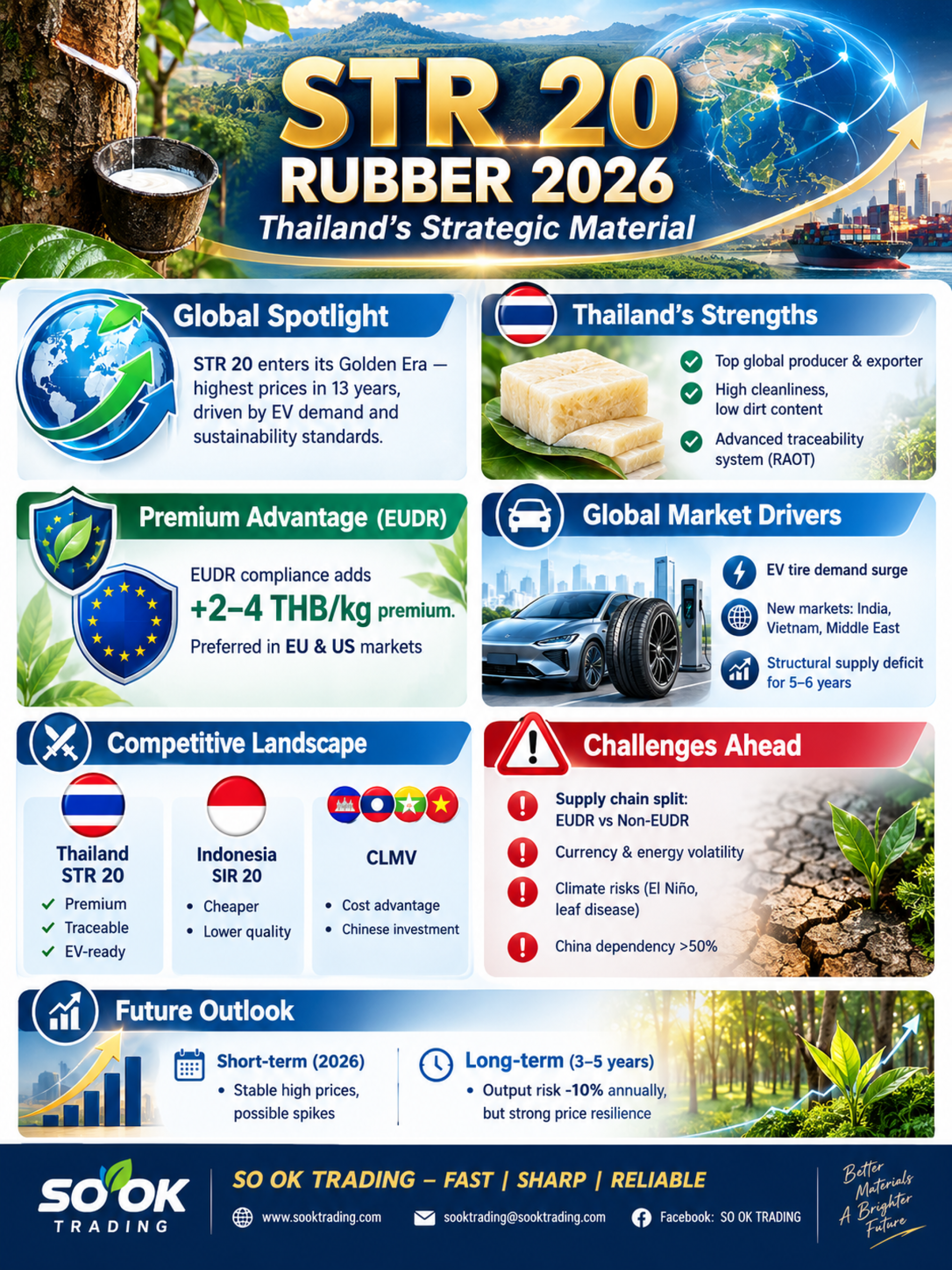
STR 20 Rubber Industry Outlook 2026 : SO OK TRADING
Overview
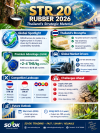
Thailand’s STR 20 (Standard Thai Rubber 20) industry, along with the global market, is entering its most significant turning point in over a decade. Prices have surged to their highest level in 13 years, global demand continues to rise, and environmental standards are becoming increasingly stringent. STR 20 is no longer just an “agricultural commodity” — it has been elevated into a strategic raw material, directly fueling the growth of the electric vehicle (EV) industry and the global tire market.
Thailand’s STR 20 Industry
Global Leadership: Thailand remains the world’s No.1 producer and exporter of midstream rubber.
Quality Advantage: High cleanliness, low dirt content, and an advanced traceability system developed by the Rubber Authority of Thailand (RAOT).
Production Growth: Favorable weather conditions following the end of La Niña have boosted yields, with average growth projected at 7.9–8.9%.
EUDR Premium: Rubber compliant with the EU’s deforestation-free regulation (EUDR) commands an additional premium of 2–4 THB/kg, making Thai STR 20 highly sought after in Europe and the US.
Latest Price: FOB Laem Chabang stands at 87.50–88.00 THB/kg, the highest in 13 years.
Global Market Trends
Structural Supply Deficit: Aging plantations and slow replanting in major producing countries have led to supply shortages for 5–6 consecutive years. Global natural rubber consumption is expected to reach 15.55 million tons.
Demand Drivers: Automotive industry recovery, EV tire demand, and expansion into new markets such as India, Vietnam, and the Middle East.
Competitive Landscape: Indonesia’s SIR 20 is cheaper but lower in quality, while CLMV countries are entering the market with support from Chinese investment.
Environmental Regulations: EUDR has split the market into two clear segments — traceable premium rubber and low-cost general rubber.
STR 20 and the Tire Industry
Core of the Global Tire Market: Over 90% of natural rubber is used in tire manufacturing, with STR 20 being the most demanded grade.
EV Demand Accelerator: EVs are heavier and deliver higher torque, requiring high-quality STR 20 for durability and performance.
Thailand’s Supply Chain Advantage: Midstream processors such as Sri Trang, NER, and Wongpabandit supply directly to tire factories, reducing logistics costs and positioning Thailand as the world’s No.3 tire exporter.
Global Trust: Tires made with Thai STR 20 are trusted by leading brands including Michelin, Bridgestone, Goodyear, and major Chinese manufacturers.
⚠️ Key Challenges
Cost of separating EUDR vs Non-EUDR supply chains
Currency and energy price volatility
Climate risks (El Niño, leaf disease)
Heavy reliance on the Chinese market (over 50–60%)
Short- and Long-Term Outlook
Short Term (End of 2026): Prices are expected to remain high and stable, with occasional spikes due to flooding and farmer sales adjustments.
Long Term (3–5 Years): Aging plantations and limited replanting may reduce Thai output by an average of 10% annually, though prices are likely to remain resilient at high levels.
✨ Conclusion
Thailand’s STR 20 has established itself as a strategic raw material in the global market, thanks to superior quality and advanced traceability. Despite challenges from Indonesia, CLMV competitors, and rising costs, opportunities from EV growth and international environmental regulations ensure Thailand’s continued advantage in premium markets. The nation is well-positioned to evolve into a true hub of the global tire industry.
SO OK TRADING : Your Trusted Business Partner SO OK TRADING : FAST SHARP RELIABLE WWW.SOOKTRADING.COM Facebook : SO OK TRADING E-MAIL : SOOKTRADING@SOOKTRADING.COM