“Middle East in Turmoil: Prolonged Conflict Shakes the World, Hits Thailand — Oil Prices Surge, Global Economy Trembles” SO OK TRADING’s Insight | 11 October 2026
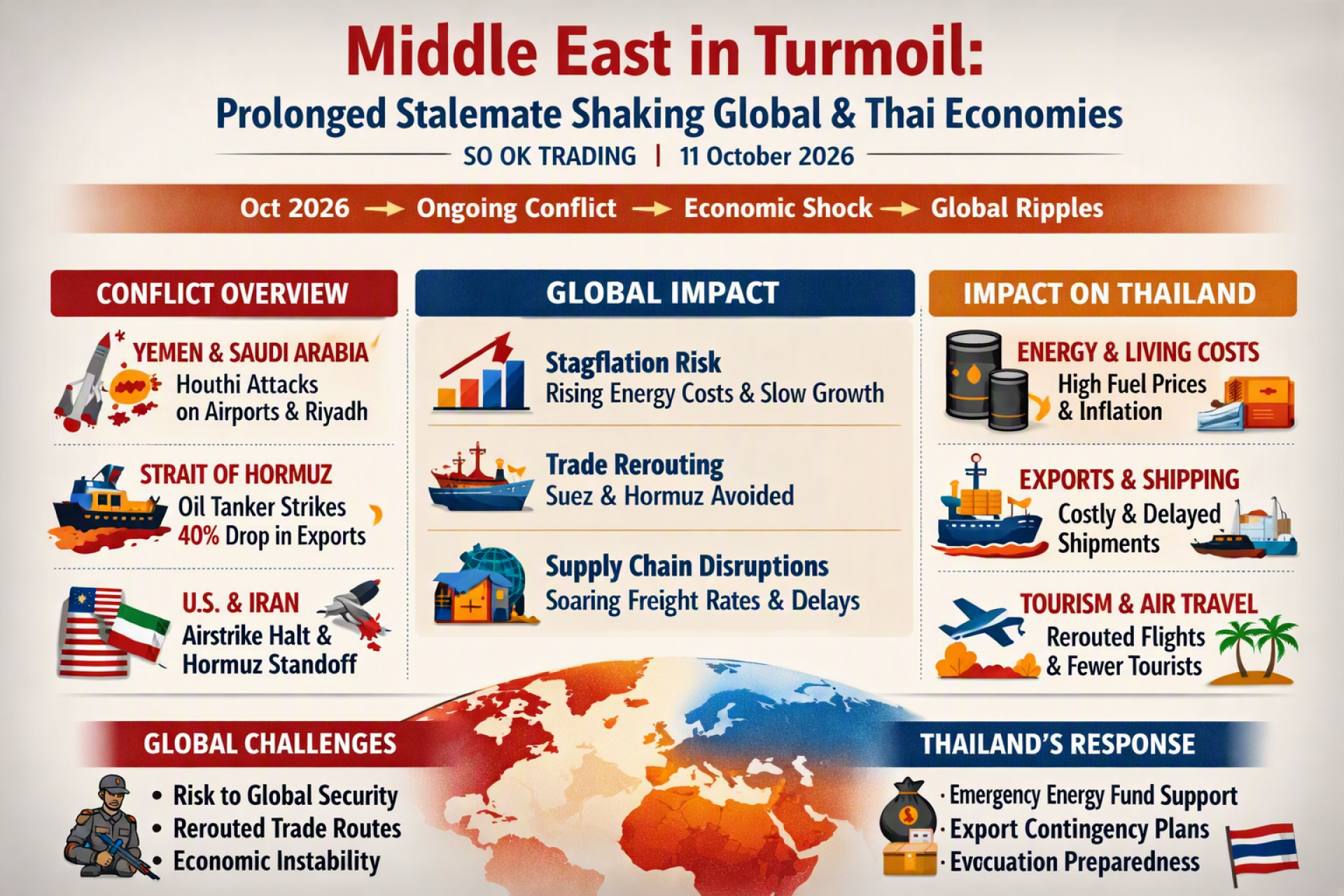
Middle East in Turmoil: Prolonged Stalemate Shakes Global & Thai Economies
SO OK TRADING | 11 October 2026
✍️ Introduction
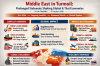
As of 10 October 2026, the Middle East crisis continues to intensify and grow more complex. Military clashes in Yemen and Saudi Arabia, maritime disruption in the Strait of Hormuz, and the tense U.S.–Iran relationship all paint a picture of a “Prolonged Stalemate of Attrition”. No side has gained decisive ground, yet the economic shockwaves are reverberating across the globe and hitting Thailand hard.
⚔️ Main Content
1. Yemen–Saudi Arabia Frontline
Airport & Capital Attacks: Houthi forces launched missile and drone strikes on Abha Airport and Riyadh, causing significant casualties.
Impact on Aviation: Global airlines canceled or rerouted flights to avoid Saudi airspace, paralyzing regional air traffic.
Military Response: Saudi Arabia and its allies prepared major counter‑operations, escalating the risk of a proxy war with Iran.
2. Strait of Hormuz Crisis
Oil Tanker Attacks: The highest number of tanker strikes in years, including UAE‑flagged vessels.
U.S. Sanctions: Under Operation Economic Outcast, the U.S. sanctioned 17 Iranian oil tankers.
Oil Price Shock: Exports through Hormuz fell by over 40%, pushing Brent crude above $104 per barrel.
3. U.S.–Iran Relations
U.S. Airstrike Pause: President Donald Trump announced a halt to airstrikes until after mid‑term elections.
Evacuation Orders: The U.S. State Department ordered citizens to leave Iran immediately.
Iran’s Position: Asserted its right to uranium enrichment and refused to reopen Hormuz until the blockade ends.
Russia’s Role: President Putin stepped in as mediator, though progress remains limited.
Outlook
Prolonged Stalemate: Attacks on infrastructure and transport routes will persist.
Global Economy: Risk of renewed stagflation — slowing growth with high inflation driven by energy and logistics costs.
Trade Rerouting: Suez and Hormuz are seen as unsafe; exporters shift to land routes or longer voyages via the Cape of Good Hope.
Impact on Thailand
Energy & Living Costs: Import oil prices surge, fuel fund under strain, electricity bills and living costs rise.
Exports & Supply Chains: Shipments to Europe — autos and processed foods — face soaring freight rates and container shortages.
Aviation & Tourism: Thai airlines reroute flights, raising costs and ticket prices, reducing European tourist arrivals during high season.
Conclusion
The Middle East crisis in October 2026 has locked the region into a “Prolonged Stalemate of Attrition”. Beyond military and humanitarian losses, the ripple effects are shaking the global economy and Thailand. With surging energy prices, disrupted exports, and weakened tourism, Thailand must urgently prepare strategies in energy, trade, and tourism to stabilize its economy amid a crisis with no clear end in sight.