SO OK INSIGHT: Thailand Flood Crisis 2026 – Lessons from Nature Shaking the Foundations of the Thai Economy October 5, 2026
Flood Crisis 2026: When Nature Challenges Thailand’s Economic Structure
SO OK TRADING | October 5, 2026
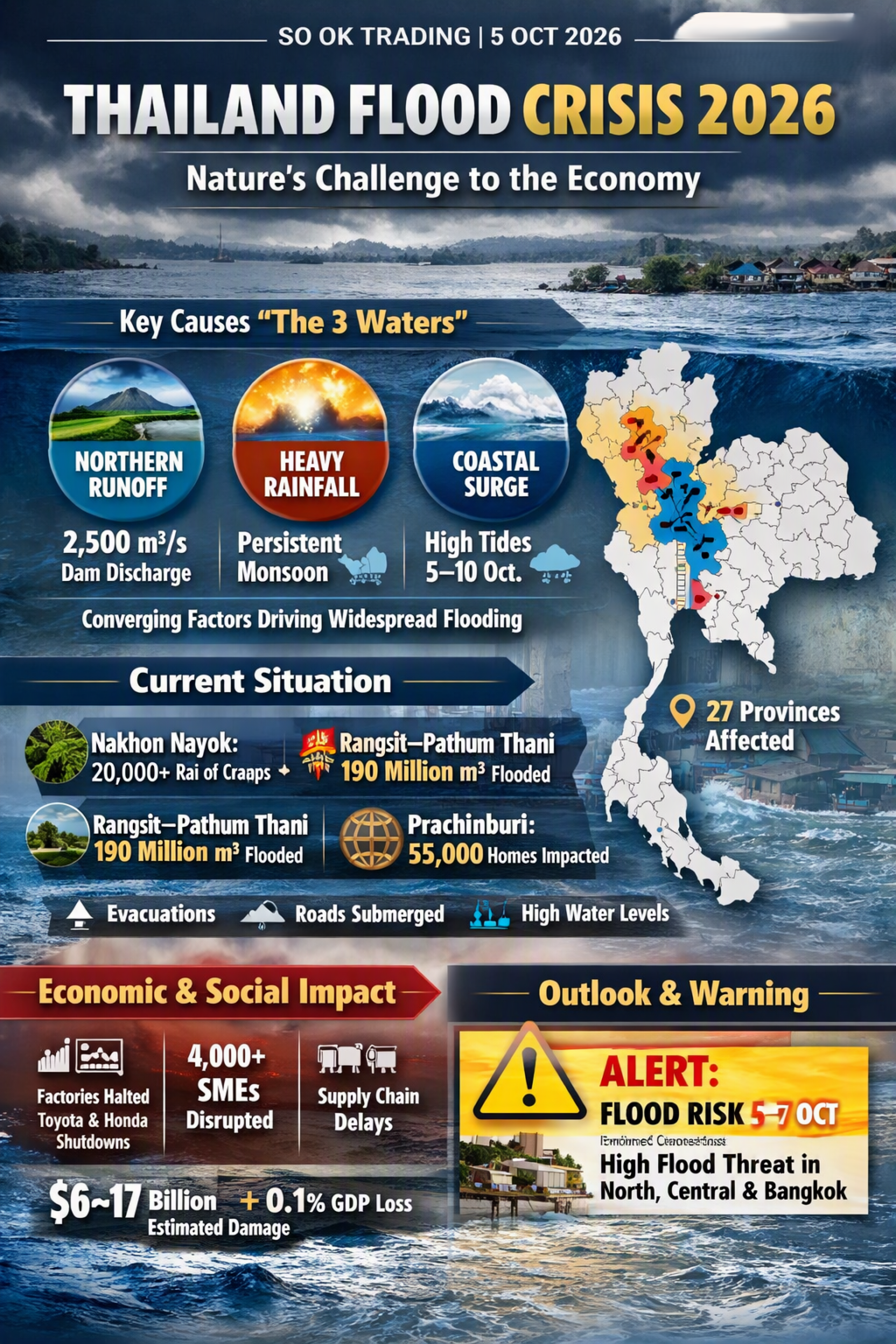
Causes of the Flood
Thailand is currently facing persistent heavy rainfall from a monsoon trough stretching across the northern and central regions, compounded by cold air masses from China. This collision has triggered widespread flooding.
The main factors driving this flood are known as the “Three Waters”:
Northern Runoff: The Chao Phraya Dam forced to discharge at 2,500 m³/s to accommodate upstream inflows.
Accumulated Rainfall: Continuous heavy downpours saturating lowlands and floodplains, slowing drainage.
Coastal Surge: High tides between October 5–10 obstructing water flow into the Gulf of Thailand.
Together, these factors have created immense natural pressure, leading to widespread flooding across northern, central, and eastern Thailand.
Current Situation (October 2026)
Flooding remains at a critical level, affecting more than 27 provinces. Key hotspots include:
Nakhon Nayok (Ongkharak District): Communities encircled by floodwaters, over 20,000 rai of farmland damaged.
Rangsit–Pathum Thani: Receiving over 190 million m³ of floodwater, requiring urgent pumping into canals.
Prachinburi: 7 districts submerged, 55,000 households affected, 9 fatalities reported.
Chachoengsao: Rising Bang Pakong River levels due to upstream runoff and coastal surge.
Chainat–Singburi–Ang Thong–Ayutthaya: Downstream areas flooded 1–2 meters, sandbag defenses under strain.
Bangkok–Samut Prakan: Main levees holding, but outer districts (Yan Nawa, Samphanthawong, Khlong Toei) face risks from tidal surges and overflow.
⚠️ Flood Warnings (October 5–7, 2026)
Risk Areas: Northern, Central, and Eastern regions.
Bangkok & Metropolitan Area: High risk of waterlogging from heavy rainfall.
Coastal Surge: October 5–10 requires heightened vigilance.
Economic & Social Impact
Although less severe than the 2011 mega-flood, this crisis has delivered significant shocks to Thailand’s economy:
Industrial Sector: Major factories, including Toyota and Honda, forced to halt production due to supply chain disruptions.
SMEs: Over 4,000 businesses affected, urgently requiring financial support.
Services & Retail: Logistics and warehouses disrupted, delaying nationwide distribution.
Overall Economy: Estimated damages of 6–17 billion THB (less than 0.1% of GDP), yet Thailand’s GDP growth is still projected at 2.2%.
Outlook
Early October (5–7): Heavy rainfall in northern regions, risk of flash floods.
Mid October (11–14): New rain waves expected in central lowlands and Chao Phraya Basin.
Late October: Monsoon shifts southward, increasing rainfall in eastern and southern regions.
Ongoing Risk: Bangkok and coastal provinces along the Gulf of Thailand will continue to face slow drainage due to tidal surges.
Conclusion
The 2026 flood crisis is a stark reminder of the vulnerabilities in Thailand’s infrastructure and water management systems. While authorities have prevented a disaster on the scale of 2011, the impacts on livelihoods and the economy remain significant.
Future preparedness must focus on:
Proactive and integrated water management
Development of drainage infrastructure and floodplain reserves
Early warning systems and effective risk communication
Only through these measures can Thailand sustainably coexist with the “Three Waters” — northern runoff, heavy rainfall, and coastal surge.