“Thai Durian Exports Surpass One Million Tons! Q4/2026 – From Monthong to Musang King, Battling in China’s Red Ocean Market” SO OK TRADING | September 19, 2026
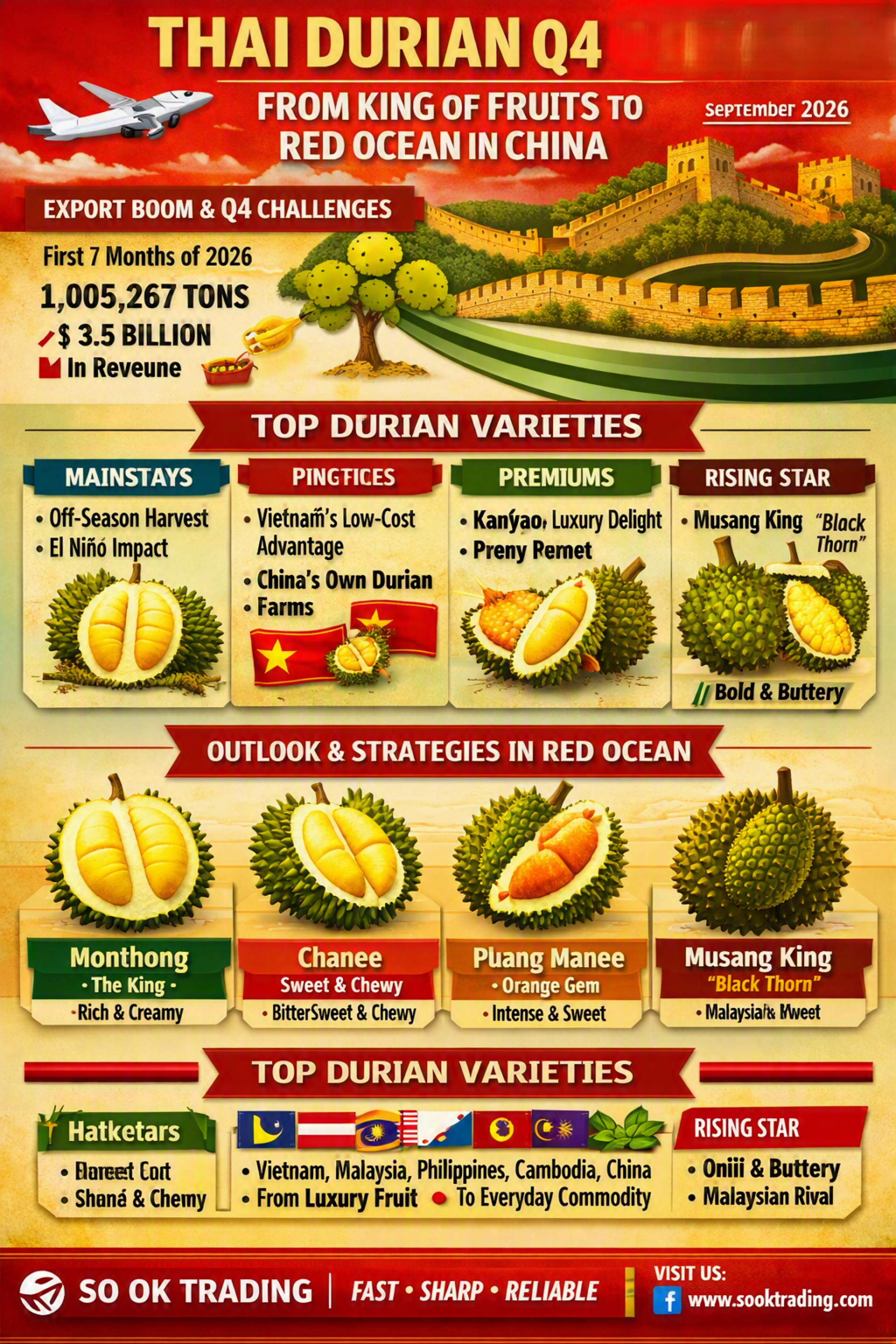
Thai Durian Q4/2026 – From “King of Fruits” to Red Ocean Battlefield in China
SO OK TRADING | September 19, 2026
✨ Introduction
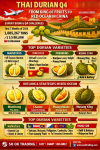
The year 2026 marks a record-breaking milestone for Thai durian exports. In the first seven months alone, exports to China surpassed 1,005,267 tons, valued at 124.658 billion baht — an outstanding achievement in terms of volume. However, as we enter the fourth quarter (October–December), which coincides with the off-season and the tail end of the southern harvest, the market faces major challenges: pricing pressure, intensifying competition, and rapidly shifting consumer behavior in China.
Thai Durian Q4/2026
1. Production Volume and Key Regions Eastern provinces (Chanthaburi, Rayong, Trat) and the South are the main sources of off-season durian. Climate fluctuations from El Niño–La Niña have reduced yields in some areas and made fruit setting more difficult.
2. Durian Prices and the Chinese Market Thai durian prices in China continue to decline during the off-season. Key price pressure factors:
Vietnam enjoys a logistics advantage via land transport, requiring only 1–3 days to deliver into China.
China has begun cultivating durian in Hainan and Sanya. Although volumes remain small, this impacts market psychology and price structures.
3. Government Measures for Quality Control Focus on the “Four Nos”: no immature fruit, no pests, no fraudulent labeling, no chemical residues. Border customs upgraded with smart inspection systems, reducing clearance time by 40% and helping preserve freshness of off-season durian.
4. Highlighted Off-Season Varieties
Mainstream Varieties: Monthong (King of exports), Chanee (rich, bittersweet flavor, firm texture)
Premium Varieties: Kanyao (luxury, high price), Nok Krajib (fine, creamy sweetness), Puang Manee (deep orange flesh, intense sweetness)
Rising Stars: Musang King / Black Thorn — now being cultivated in Thailand to compete with Malaysia.
5. Popularity and Chinese Consumer Preferences Thai Monthong remains the “safe zone” most loved by Chinese consumers, accounting for 80–90% of consumption. Key appeal: sweet and creamy taste, mild aroma, abundant flesh.
Changing Consumer Behavior (China Case Study)
Preference for online orders and live-commerce platforms (Douyin, Taobao, Meituan).
Trend toward smaller-sized durians (mini Monthong) catering to small households.
Outlook and Future Direction for Thai Durian
Competition is at its fiercest in 20 years, with rivals from Vietnam, Malaysia, the Philippines, Cambodia, and China’s own cultivation.
Thailand’s future strategy:
Compete on quality and branding rather than sheer volume.
Expand premium varieties + implement traceability systems (QR codes).
Enhance logistics efficiency via the Thai–Laos–China railway and smart customs clearance.
Conclusion
Thai durian remains the “King of Fruits” beloved by Chinese consumers. Yet the era of “plant anything and sell at high prices” has ended. From 2026 onward, the game is defined by quality, hygiene, and logistics speed. Those who master standards and cost control will survive in the Red Ocean battlefield of China’s durian market.
SO OK TRADING Your trusted business partner in Thai fruit exports FAST • SHARP • RELIABLE www.sooktrading.com Facebook: SO OK TRADING