“Durian Boom 2026 — The King of Thai Durian Conquers Global Markets! GI Premium Flags China, Southern ‘Water-Dried Durian’ Builds a New Brand | SO OK TRADING Presents: The Thai Fruit Revolution”
“Durian Boom 2026: Southern Thai Durian Hits 1 Million Tons Export — The King of Thai Fruits Plants Its Flag in China, Southern ‘Water-Dried Durian’ Builds a GI Brand” Article by SO OK TRADING | 25 July 2026
Overview of Thailand’s Durian Industry (July 2026)
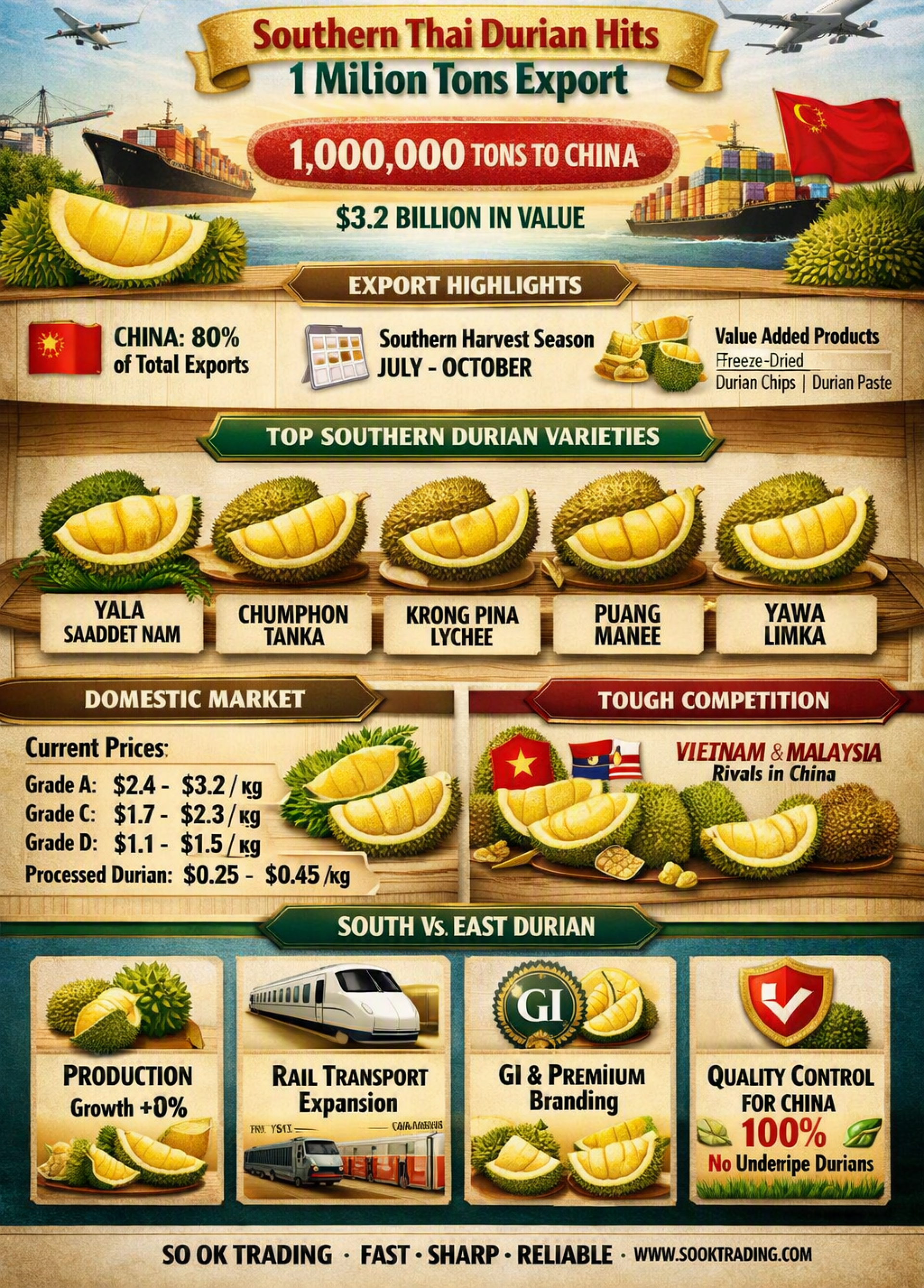
Exports surpass target: Thailand’s fresh durian exports to China exceeded 1 million tons, valued at more than 114.8 billion THB (cumulative data from January 1 – July 19, 2026).
Southern harvest enters market: The southern durian season (July–October) begins after the eastern season ends.
Government support: The Ministry of Commerce accelerates southern durian distribution and promotes processing to increase value.
Export and Market Trends
Target achieved quickly: China remains the main market, accounting for over 80%.
Southern durian as the driving force: The second half of the year focuses on southern harvest distribution.
Value-added processing: Expansion of freeze-dried, durian paste, and durian chips factories to absorb C–D grade produce.
Domestic Market Situation
Southern fruit festivals: Consumers enjoy premium durians from Nakhon Si Thammarat, Chumphon, and Yala.
Intense competition: Vietnam and Malaysia push aggressively into the Chinese market, pressuring Thai durian prices.
Domestic price fluctuations (July 2026):
Grade AB (export): 85–110 THB/kg (Southern border areas: 60–70 THB/kg)
Grade C: 60–80 THB/kg
Grade D: 40–55 THB/kg
Local/defective durian: 8–15 THB/kg (sent to processing plants)
Retail price in Bangkok (Monthong): 125–135 THB/kg
Five Rising Southern Durian Varieties
Yala Saadet Nam (GI) — Dry, fine texture; rich, sweet, and aromatic.
Chumphon Tanka — Thick flesh, pale yellow; balanced sweet and mild aroma.
Yala Long-Stem Lychee Durian — Smooth flesh; sharp sweetness; fruity fragrance.
Southern Puang Manee — Small fruit; deep orange flesh; very sweet and oily.
Narathiwat Yawa Limka — Golden flesh; dry and chewy; low fiber; sweet and well-rounded flavor.
Southern vs Eastern Thai Durian
Season: East (Mar–Jun) / South (Jul–Oct)
Climate: East → Juicy flesh / South → Dry, chewy flesh
Flavor: East → Sweet and mild / South → Strongly sweet, rich, and aromatic
Shape: East → Round fruit, large sparse spikes / South → Rugged fruit, dense sharp spikes
Outlook for Southern Durian in 2026
Production increase 20–30% due to favorable weather.
Rail transport expansion improves distribution efficiency, reducing overripening in transit.
GI branding (e.g., “Yala Saadet Nam,” “Phang Nga Salika”) targets premium markets.
High competition in China requires strict quality control — “No underripe durians” — to compete with Vietnam.
Processing industry growth expands to absorb lower-grade produce.
✨ SO OK TRADING — Your Trusted Business Partner FAST • SHARP • RELIABLE www.sooktrading.com Facebook: SOOK TRADING