“Aluminum Paste Magic – AAC Revolution: Green Metal Transforming Lightweight & Strong Blocks”
Aluminum Paste – The Metal Behind Lightweight & Strong AAC Blocks!
Aluminum Paste is not just a metallic pigment for coatings — it is the hidden key of modern construction. Especially in the world of AAC Blocks (Autoclaved Aerated Concrete), which dominate the global building materials market, aluminum paste plays a crucial role as the foaming agent that makes blocks lightweight, strong, and eco‑friendly.
️ Why Do AAC Blocks Need Aluminum Paste?
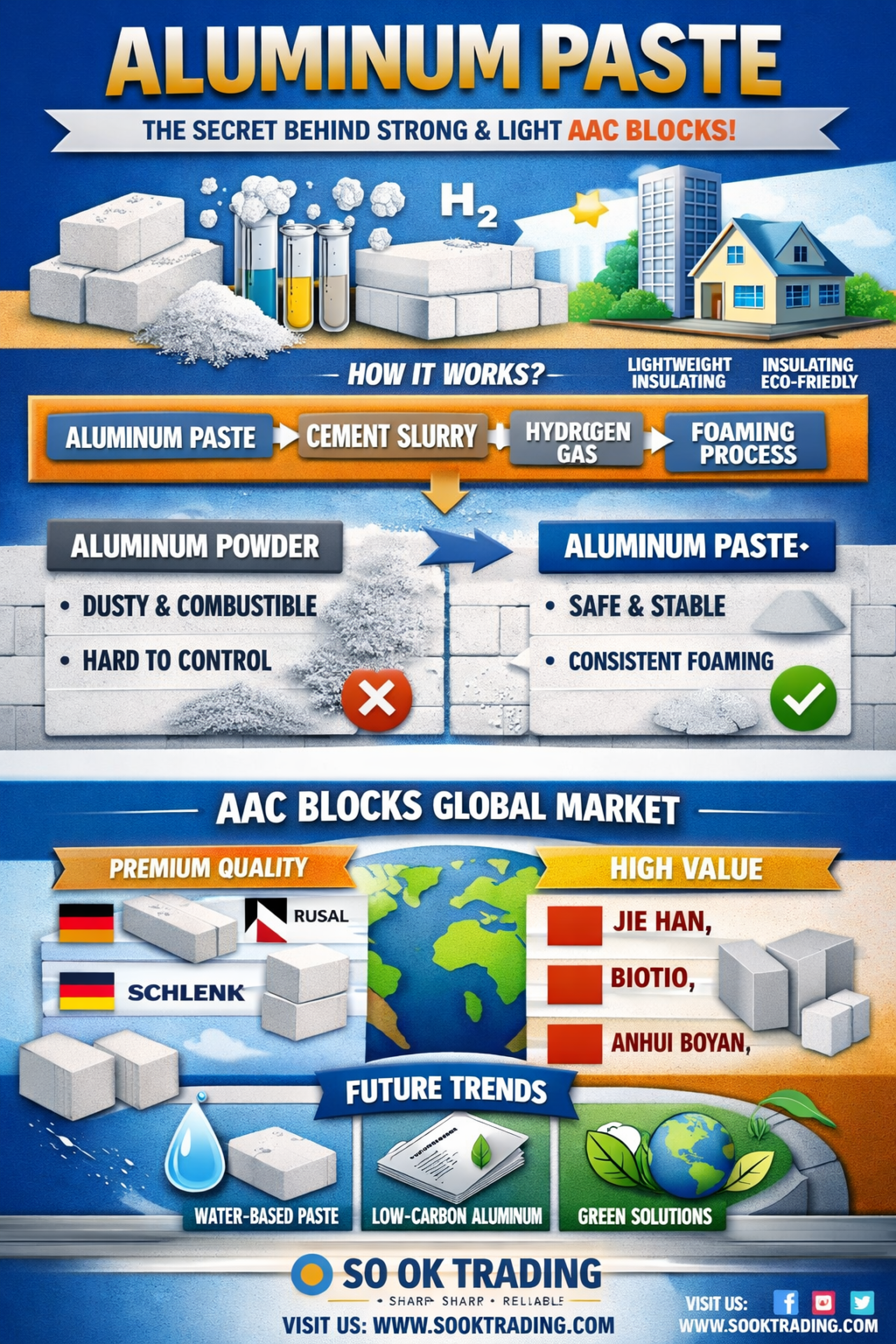
When mixed into cement slurry, aluminum reacts with alkaline compounds to release hydrogen gas.
This causes the slurry to “rise” like bread, forming a uniform porous structure.
The result: lightweight yet strong blocks with excellent thermal and sound insulation, ideal for both residential and commercial buildings.
Hydrophilic Aluminum Paste disperses easily in water, ensuring consistent gas release and reducing risks of structural collapse.
⚖️ Aluminum Powder vs. Aluminum Paste
Powder: Dusty, flammable, difficult to control gas release.
Paste: Safer, stable, disperses well, ensures consistent foaming → preferred by factories worldwide.
Specifications Commonly Used in AAC Production
Solid Content: 65–70%
Active Aluminum: >90% for maximum gas efficiency
Particle Size: ~30 µm → finer particles yield stronger, more uniform blocks
Solvent Base: DEG‑based or water‑based for easy mixing
Global AAC Block Suppliers
Europe/Russia: SCHLENK, RUSAL → premium specs, reduced defects
China: Jie Han, BioTio, Anhui Boyan → cost‑effective, stable supply, popular in Thailand
RUSAL (Russia): strong in Green Aluminum, using hydropower to cut carbon footprint by 75%
Future Trends in AAC Blocks
Water‑based Paste: eco‑friendly, VOC reduction
Low‑carbon Aluminum: meets Scope 3 emission reduction goals
Thai Market: Chinese brands dominate on price, while premium buyers prefer European/Russian quality
✨ Aluminum Paste in Other Industries
Leafing Type: Metallic flakes float on the surface, creating chrome‑like shine → anti‑rust paints, roof coatings, packaging inks
Non‑Leafing Type: Disperses within the coating, adding depth and durability → automotive paints, electronic components
Key Applications:
Paints & Coatings: Luxury finish, UV protection, anti‑corrosion
AAC Blocks: Hydrogen foaming agent for lightweight, strong construction
Printing & Plastics: Adds premium appeal to packaging and products
Solar Energy: Conductive paste in solar cells
Market‑Desired Properties of Aluminum Paste
High hiding power → reduces paint usage, saves cost
Reflectivity → lowers building temperatures
Weather resistance → extends product lifespan
Conclusion Aluminum Paste is both the “material of the future” and the “golden key” of AAC construction. It enables lightweight, strong, safe, and eco‑friendly building materials, while also powering industries from automotive to solar energy. Manufacturers who deliver both quality + sustainability will lead the global market in the new era.
✨ SO OK TRADING — Your Business Partner FAST • SHARP • RELIABLE www.sooktrading.com Facebook: SO OK TRADING