“Baht Volatility Amid Global Storm: Dollar Surges, Oil Prices Spike, Thai Economy Shaken” SO OK TRADING | 28 MAY 2026
“Baht Volatility Amid Geopolitical Storm: Investors Must Watch the Dollar and Oil Game” SO OK TRADING | 28 May 2026
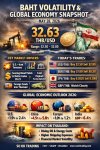
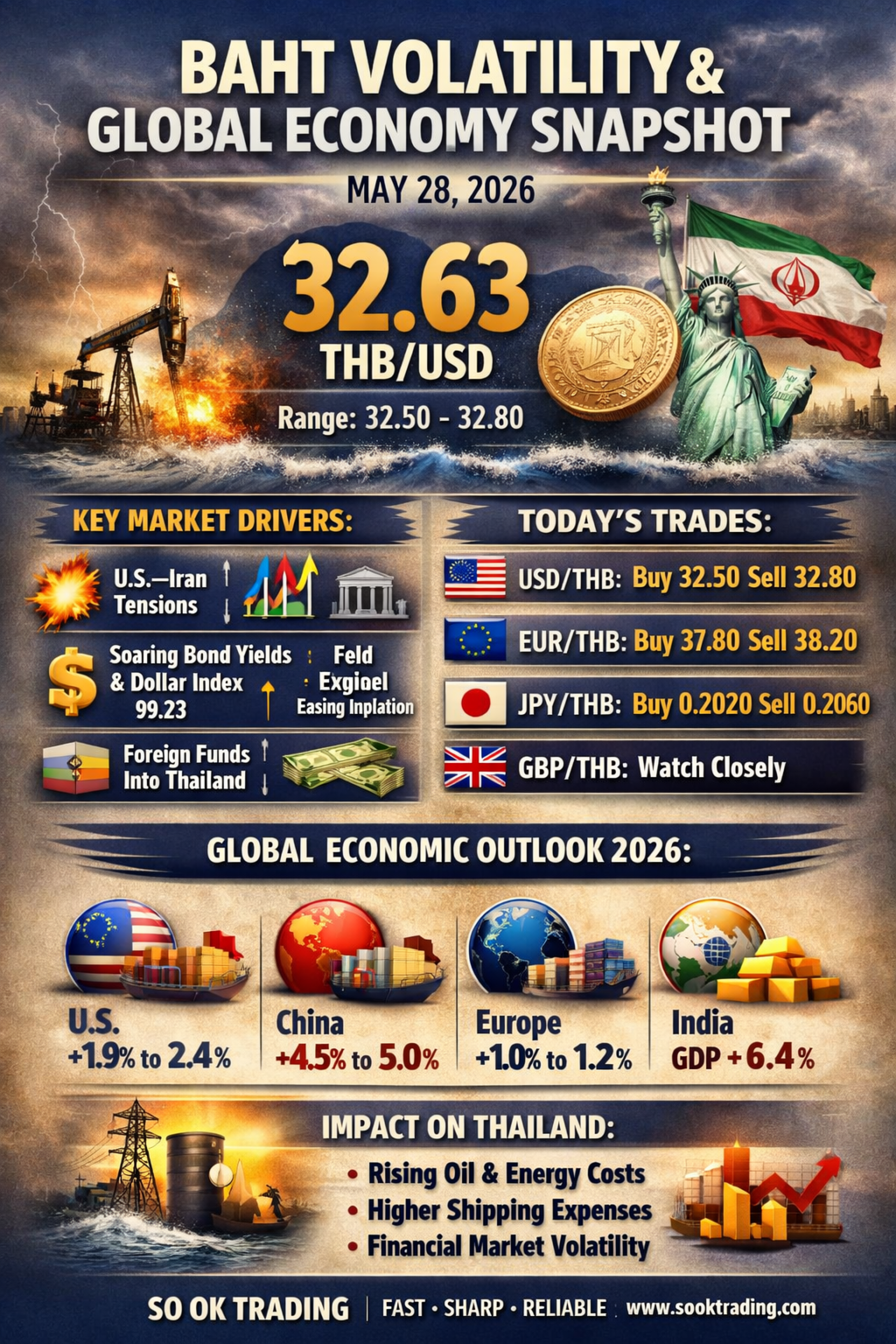
On May 28, 2026, the Thai baht opened slightly weaker at 32.63 THB/USD, compared to yesterday’s close of 32.58. Analysts expect today’s trading range to hover between 32.50 – 32.80, reflecting both external pressures and domestic support.
Key Factors Driving the Baht
U.S.–Iran Geopolitical Tensions: Renewed conflict raises concerns over energy supply and global shipping routes, especially through the Strait of Hormuz.
Bond Yields & Dollar Index Surge: The Dollar Index climbed to 99.23, supported by persistently high U.S. bond yields. Markets anticipate the Fed may keep rates elevated longer than expected.
Signals from the Fed: Governor Lisa Cook indicated inflation may ease without further rate hikes, limiting excessive dollar strength.
Foreign Capital Inflows to Thailand: Despite global headwinds, foreign investors net bought Thai equities worth 2.6 billion THB and bonds worth 2.5 billion THB, providing partial support to the baht.
Exchange Strategies (28 May 2026)
USD/THB: Buy at 32.50, take profit at 32.80
EUR/THB: Buy at 37.80, take profit at 38.20
JPY/THB: Buy at 0.2020, take profit at 0.2060
GBP/THB: Monitor closely
U.S. Dollar Outlook
Short Term: Strong but volatile, driven by geopolitical risks and high bond yields.
Long Term: Likely to weaken (Bearish Correction) under economic pressures.
Global Economic Snapshot (2026)
United States: Inflation pressures, GDP growth projected at 1.9%–2.4%
China: Export-driven with fiscal stimulus, GDP target 4.5%–5.0%
Europe: Slow recovery, GDP growth 1.0%–1.2%
Asia (ex-China): Key growth driver, India leading at 6.4%
Impact on Thailand
⚡ Rising Energy Costs: As a net oil importer, Thailand faces higher fuel and electricity prices. ⚡ Increased Shipping Expenses: Rerouted shipping lanes extend transit times, driving up freight and insurance costs. ⚡ Financial Market Volatility: Risk-off sentiment pushes investors out of equities and into safe havens like the dollar and gold.
✨ Today’s baht movement reflects the turbulence of global markets and geopolitical risks. Investors must stay alert to the dollar and oil dynamics, as these will shape both Thailand’s and the world’s economic trajectory in 2026.
SO OK TRADING FAST • SHARP • RELIABLE www.sooktrading.com Facebook: SO OK TRADING