Share

"Global Crisis Overlap: Washington Shock – Middle East in Flames, Oil–Gold–Currencies Enter Panic Mode" Impacts from the Washington Incident and Unrest in the Middle East Conflict Analysis by SO OK TRADING: April 26, 2026
Last updated: 26 Apr 2026
3138 Views

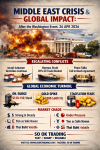
Middle East Crisis and Global Market Impact : After the Washington Incident : April 26, 2026
 
Introduction: From Washington to the Middle East
In the early hours of April 26, 2026 (Asia time), the world focused on two major events simultaneously — escalating tensions in the Middle East and the shooting at the White House Correspondents’ Dinner in Washington, D.C. This incident not only caused turmoil in the United States but also sent immediate shockwaves across global politics and economics.

 
A War Without End
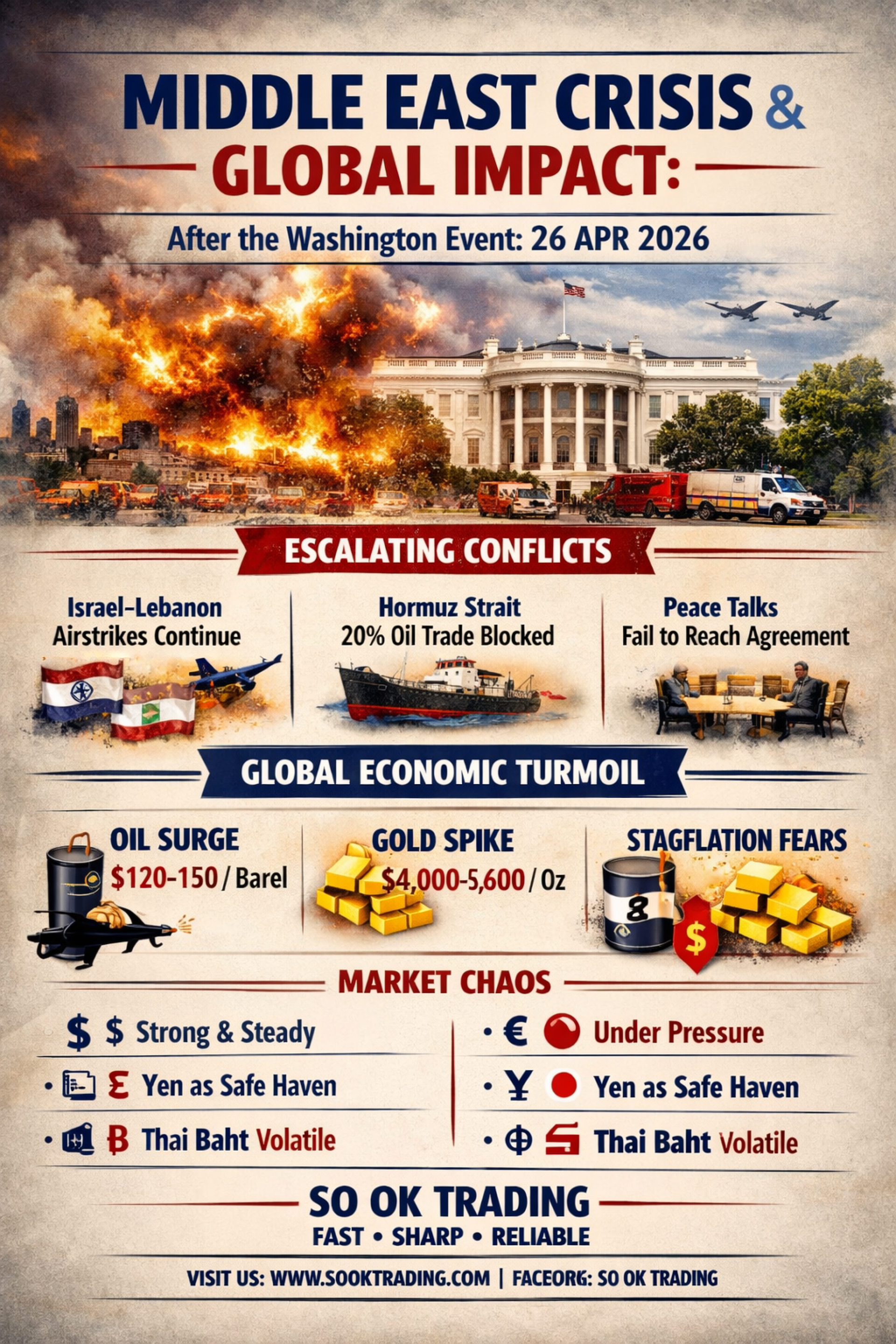
Israel–Lebanon: Despite a temporary ceasefire announcement, airstrikes continue.
Strait of Hormuz: Over 20% of global oil shipments blocked, energy markets panic, supply insufficient, oil prices surge.
Peace Talks: The second round of negotiations in Pakistan yielded no results, while violence on the ground persists.
 
Global Economy Shaken
Oil and Fertilizer Prices: Soaring costs intensify global inflation, raising stagflation risks.
Thai Consumer Confidence Index: April shows a sharp decline due to rising living costs.
 
The Washington Shooting
President Donald Trump and cabinet members were escorted out immediately.
The perpetrator was arrested at a security checkpoint.
Although the U.S. president is safe, the incident placed immense pressure on the government’s stability and image.
 
Strategic Impact Assessment: After the Washington Shooting
United States: Likely to adopt a hardline stance, increasing military presence in the Middle East → war escalation expected.
China and Russia: Seize the opportunity to expand diplomatic influence and support regional allies.
Iran: May escalate tensions further, potentially imposing a permanent closure of the Strait of Hormuz.
Israel: Accelerating military operations.
 
Crisis in Oil, Fertilizer, Gold, Aluminum, Copper, and Currencies: Global Market in Panic
Crude Oil: Could surge to $120–150 per barrel, driven by heightened supply risks from Hormuz tensions and stricter sanctions.
Gold: Prices soar rapidly as a safe-haven asset. In 2026, volatility is expected to remain high, with mid- to long-term ranges projected between $4,000 and $5,600 per ounce. Leading banks and financial institutions forecast continued upward momentum this year.
Aluminum and Copper: Prices rise with higher energy costs and strong industrial demand, especially in developing and emerging markets.
 
Currency and Global Market Outlook
U.S. Dollar (USD): Despite geopolitical tensions, the dollar remains strong as the world’s primary reserve currency, moving within a narrow band as investors seek stability.
Euro (EUR): Pressured by European economic uncertainty and Middle East crisis, likely to weaken against the dollar.
Japanese Yen (JPY): Slight appreciation as a safe-haven asset, though constrained by the Bank of Japan’s loose monetary policy.
Thai Baht (THB): Short-term volatility due to energy prices and foreign investor sentiment, but supported by recovering exports and tourism. Expected range: 32.0–32.5 THB/USD.
 
Additional Analysis
Middle East tensions are driving high volatility in global markets, particularly in energy and precious metals. Investors must closely monitor developments and prepare for short- to medium-term risks.

The rapid rise in gold prices reflects growing demand for safe-haven assets amid geopolitical and economic uncertainty. Despite pressure from high interest rates and a strong dollar, gold demand continues to climb.

On currencies, the U.S. dollar remains the most trusted globally, with no signs of sharp depreciation in the short term. Meanwhile, the euro and Thai baht may face greater pressure and volatility depending on unfolding events.

 
Conclusion
The world is entering a “temporary power vacuum” in the Middle East, as the U.S. grapples with internal crises while other powers and regional actors accelerate military and diplomatic moves. This situation not only tests U.S. stability but also marks a turning point that could lead to full-scale war.

For global markets: energy and gold will be the key indicators. Investors and businesses must brace for sharp and rapid volatility in the short term.

 
SO OK TRADING: Your Business Partner SO OK TRADING: FAST SHARP RELIABLE

VISIT US AT: WWW.SOOKTRADING.COM FACEBOOK: SO OK TRADING

Related Content
“Gold June 2026 – Building Strength for New Targets | Buy on Dip! The Opportunity Investors Cannot Miss | Correction Is Not the End, It’s the Golden Chance”   SO OK TRADING : 9 JUNE 2026
Gold June 2026 – Rebound & Build Strength for New Targets! Today, gold prices surged 400–450 THB after consecutive declines, signaling a recovery and a fresh “Buy on Dip” opportunity.
9 Jun 2026
ALUMINUM PRICE TREND 2026
An analysis of the aluminum market in 2026 indicates a likely continued market deficit and upward price pressure, driven by constrained supply and resilient demand from green energy sectors. However, significant volatility is expected due to policy uncertainties and the potential for new Indonesian supply to eventually balance the market. Key Drivers and Projections for 2026 Supply Side Analysis Capacity Constraints: China's primary aluminum output is approaching its self-imposed 45 million-tonne capacity cap, limiting global supply growth. Power Challenges: Smelters outside of China face intense competition for power from energy-intensive sectors like AI data centers, which are willing to pay higher prices for long-term contracts. This has kept significant capacity offline in Europe and the US. Production Disruptions: Outages and potential shutdowns at existing smelters in Iceland and Mozambique further tighten the market. Scrap Supply Pressure: The EU's planned implementation of the Carbon Border Adjustment Mechanism (CBAM) and potential scrap export tariffs in spring 2026 are expected to impact global scrap flows, creating regional shortages and price volatility. New Capacity: Indonesia is a key source of new supply, with several projects in the pipeline. However, analysts suggest the pace of the ramp-up may be slower than expected due to infrastructure and policy challenges, meaning it is unlikely to fully offset near-term tightness. Demand Side Analysis Green Transition Demand: Demand from "green" sectors such as solar panels, new energy vehicles, and energy transition infrastructure remains strong, providing fundamental support for the market. Substitution Effect: Aluminum's wide price discount relative to copper has encouraged substitution in electrical applications, acting as a tailwind for demand and prices. Construction and Automotive: The construction and automotive industries continue to be major consumers, with growing demand for lightweight, low-carbon aluminum products. Price Forecasts and Volatility The market is expected to remain in a deficit in 2026, with estimates ranging from 200,000 to 600,000 tonnes. This structural tightness is leading most analysts to forecast sustained or rising prices. Bullish Views: Analysts at Bank of America project prices of $3,000/tonne as early as 2026. J.P. Morgan also expects prices to approach $3,000/tonne in Q1 2026. ING forecasts an average price of $2,900/tonne for the year. Bearish/Conservative Views: Goldman Sachs is an outlier, forecasting prices to decline to $2,350/tonne by Q4 2026, anticipating a market surplus later in the year. SMM forecasts a "high first, then lower" pattern, with prices finding equilibrium in the $2,700–$2,800/tonne range by year-end. Premiums: Regional premiums, particularly the US Midwest premium, are expected to remain high and volatile due to tariffs and regional supply dynamics, creating a disconnect from the LME benchmark price. In essence, 2026 is projected to be a year of high volatility where participants need to focus on scenario readiness rather than relying on a single price forecast, as geopolitical and energy policies significantly influence regional supply and costs
31 Dec 2025
Aluminum P1020 / A7 — The Strategic Metal Powering EVs, Clean Energy & Global Industry Discover why this high‑purity aluminum is more than a commodity — it’s the backbone of tomorrow’s sustainable economy. : BY SO OK TRADING
Aluminum P1020 / A7 isn’t just metal — it’s the backbone of clean energy, EVs, and recyclable innovation. Explore why this high-purity ingot is powering the future of global industry, and how SO OK TRADING delivers trusted supply to the world’s most demanding markets. ✨ #SOOKTRADING #AluminumP1020 #GreenAluminum #EVMaterials #SustainableIndustry #GlobalTrade #ThaiExports
28 Jan 2026
This website uses cookies for best user experience, to find out more you can go to our Privacy Policy and Cookies Policy
Powered By MakeWebEasy Logo MakeWebEasy