“Naphtha in Turmoil! Hormuz Crisis Shakes Global Energy – SO OK INSIGHT: Supply Chain Lessons 2026”
Middle East Crisis – Boiling Naphtha Shakes the World
April 20, 2026: Volatile and highly uncertain situation, with hopes pinned on Round 2 talks in Islamabad
Strait of Hormuz: A Squeezed Artery
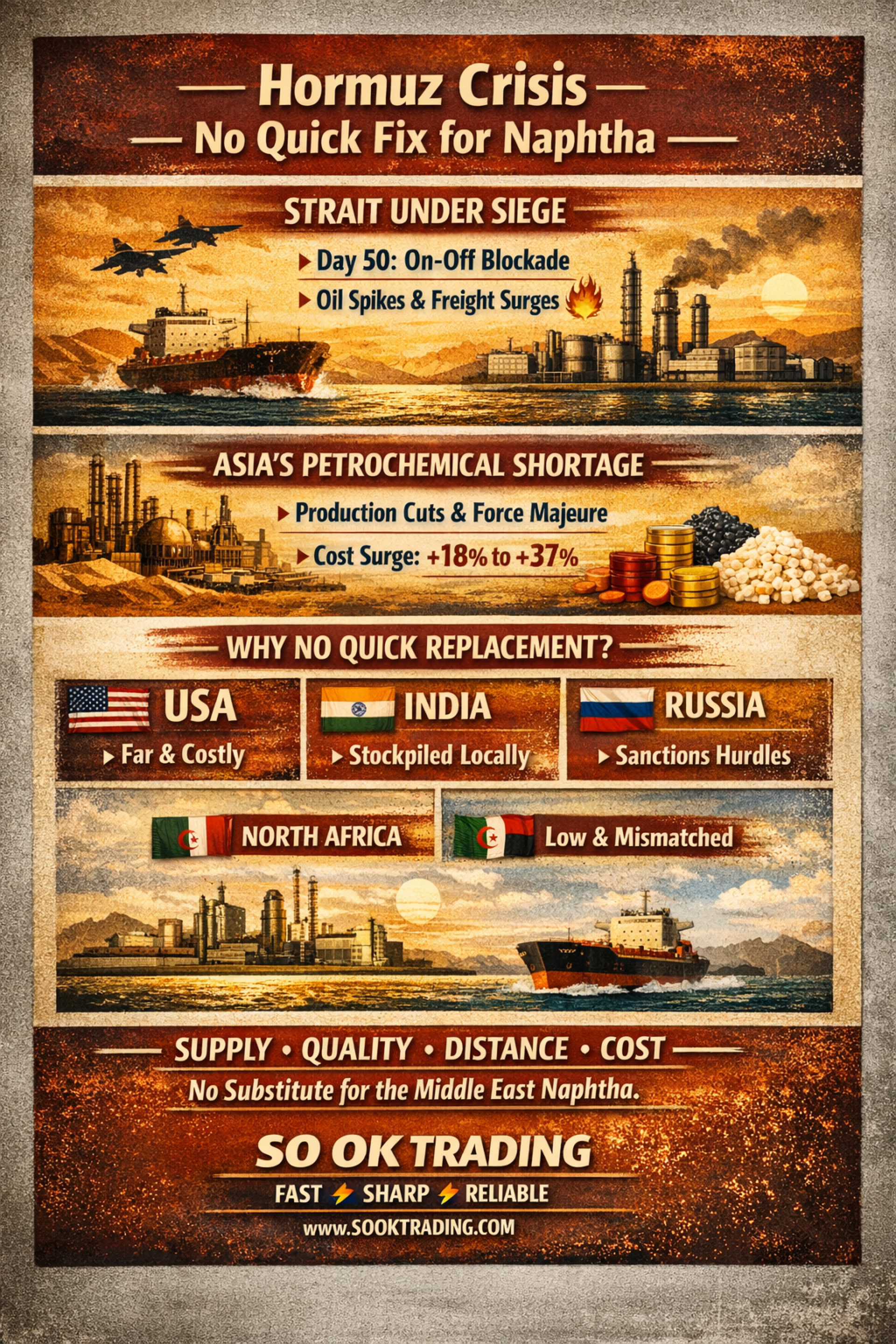
The confrontation between Iran and the United States has entered its 50th day with no sign of resolution. The closure of the Strait of Hormuz instantly halted oil and naphtha shipments, sending crude prices soaring, freight rates skyrocketing, and Asian financial markets into full alert mode.
Temporary openings allowed only 19–35 vessels to pass before the strait was shut again, accompanied by threats to attack any ship approaching. Maritime traffic remains fraught with danger.
⛽ Naphtha: The Shortage of a Core Feedstock
Naphtha is the lifeblood of petrochemicals and plastics. With supply disrupted, plants in Thailand, Japan, and South Korea have cut output by 20–30% or suspended operations. Several major companies have declared Force Majeure, unable to secure raw materials as planned.
Prices surged: naphtha jumped more than 18% in a single week, while plastic resins spiked 37%, hitting food packaging, auto parts, and construction materials across the region.
Japan & South Korea: Facing the Harshest Blow
Giants like Mitsubishi Chemical and Yeochun NCC have halted production
Consumer goods from plastic bags to medical devices are running short
Automotive and semiconductor sectors risk disruption from missing components
Governments imposed emergency measures: bans on petrochemical stockpiling and suspension of naphtha exports
Despite historical tensions, both nations are cooperating to seek alternative energy sources
Thailand: One SCG Vessel Breaks Through
A rare piece of good news—an SCG naphtha tanker managed to break through, sustaining production for about 7–10 days and boosting investor confidence. Yet structurally, this is far from sufficient given massive demand and soaring costs.
❓ Why Other Sources Cannot Substitute Immediately
United States: Shale gas yields abundant naphtha, but shipping takes 30–40 days and costs are prohibitive
India: Large refineries, but stockpiling for domestic security
Russia: Ample supply, but sanctions hinder finance and shipping
North Africa (Algeria/Libya): Some exports, but volumes too small for Asia’s huge demand
Quality (Grade): Japanese and Korean plants are optimized for Middle Eastern paraffinic naphtha, which yields high ethylene. Switching grades requires costly adjustments and reduces efficiency
Freight Costs: Global scramble for distant supplies drives tanker demand so high that shipping may cost more than the cargo itself
Middle Eastern Naphtha: Still Irreplaceable
Other regions exist, but none can instantly match the Middle East in volume, quality, and cost. Continued closure of the Strait of Hormuz leaves Thailand, Japan, and South Korea exposed to severe supply chain risks.
“Naphtha is not just about price—it’s a game of quality, volume, and risk. The Middle East cannot be replaced overnight.”
SO OK TRADING: Your Business Partner
SO OK TRADING: FAST • SHARP • RELIABLE
VISIT US AT: WWW.SOOKTRADING.COM FACEBOOK: SO OK TRADING