“Clean Energy = The Business Weapon in the CBAM Era: A Case Study of Solar Cells — From Eco Trend to Survival Strategy in the Global Supply Chain, and the Net Zero Finish Line for Adaptive Businesses” Article by SO OK TRADING | March 17, 2026
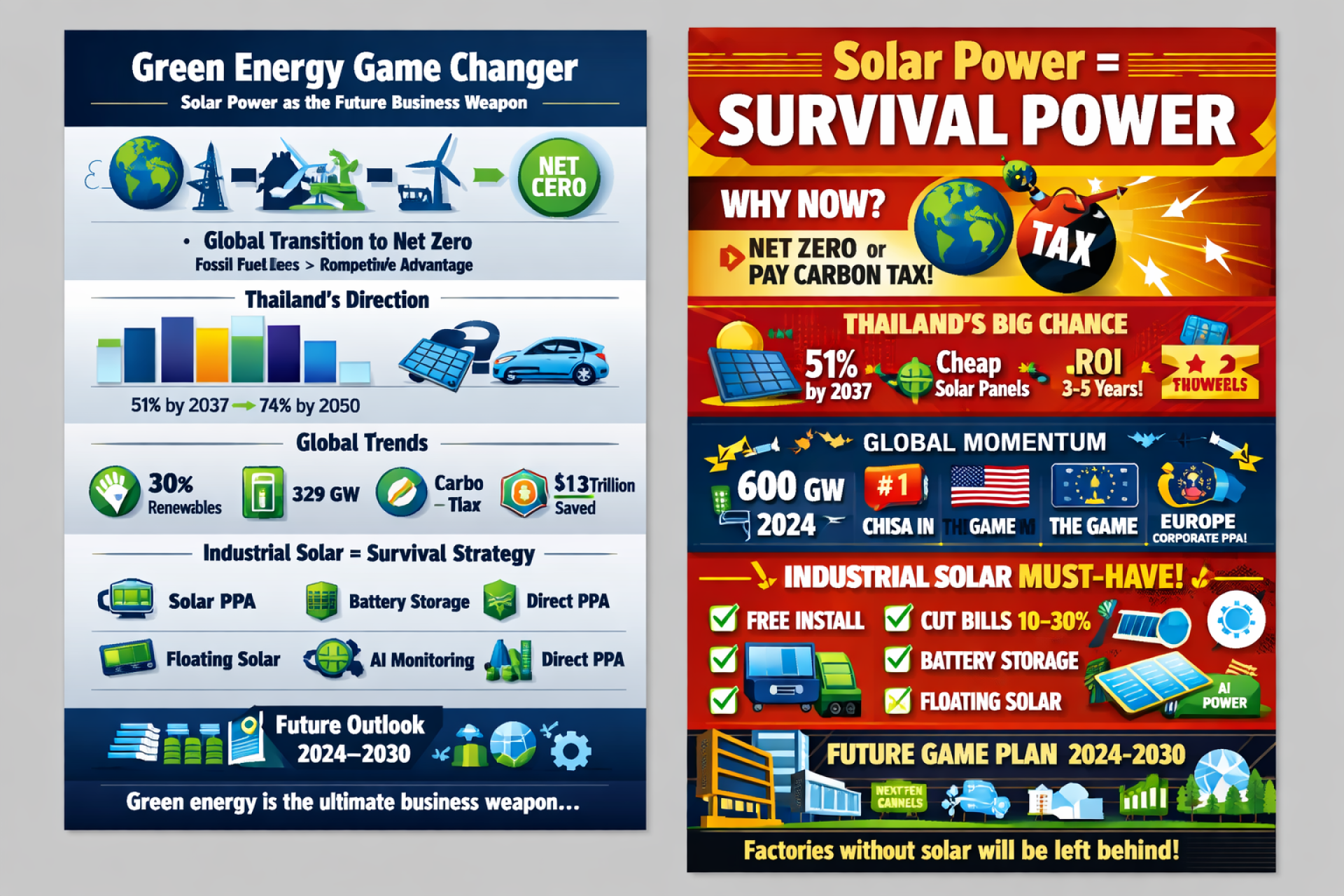
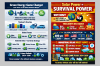
⚡️ Green Energy Game Changer: Clean Energy as the Business Weapon of the Future
Case Study: Solar Cells — The easiest energy transition, and the critical weapon for every industry moving toward Net Zero and Carbon Credit
Article by SO OK TRADING | March 17, 2026
The world is entering the greatest energy transition in history — from fossil fuels to renewable energy.
This is not only about the environment, but also an economic competition strategy that will determine who survives and who is left behind.
Thailand: Opportunities from Sunlight and EVs
PDP 2024: Targeting 51% clean energy by 2037 and 74% by 2050
Falling solar panel prices from China → faster ROI for factories and malls
EVs and Solar PPA are Thailand’s main pathways: factories need no upfront investment but enjoy 10–30% cheaper electricity
Global: Clean Energy = Trade Advantage
IEA forecast: Renewables to reach 30% of global energy by 2025
China: Installed 329 GW of solar in 2024, achieving its 2030 target six years early
CBAM (Carbon Border Adjustment Mechanism): EU and US require exporters to cut carbon or face extra tariffs
Cost savings: Renewables have already saved the world over $1.3 trillion since 2010
☀️ Solar Energy: From Explosive Growth to Sustainable Expansion
2024: Over 600 GW of new installations worldwide (80% of new renewables)
Solar panel prices at historic lows → wider adoption, but shrinking manufacturer margins
2026: Global solar market may see its first slight contraction due to policy adjustments in China and the US
Industry: From “Eco-Friendly” to “Survival Strategy”
Solar PPA: Zero upfront cost, 10–30% cheaper electricity
CBAM compliance: Export industries must cut carbon footprints
Battery Storage (BESS): Store power for peak hours, slash bills
Floating Solar: Boost efficiency by 5–10%
AI & Smart Monitoring: Real-time load management for maximum solar use
Direct PPA: Buy clean power directly, even without roof space
“Install early, profit early” — payback period now only 3–5 years
Future Outlook (2024–2030)
Thailand: Solar + Battery becomes the new standard; SMEs drive PPA boom
Global: N-Type & Perovskite panels, AI & Digital Twin, Microgrids, Green Hydrogen lead the way
Conclusion: In the near future, factories without solar will face severe cost disadvantages and risk exclusion from global supply chains
Conclusion
Clean energy is not just an “eco trend” — it is the business weapon of the future.
Installing solar today reduces electricity costs and boosts global competitiveness
Investors and customers prefer suppliers using clean energy
Thailand has a major opportunity with cheaper solar costs and strong policy support
Early adopters gain the edge as the world moves into the era where “Clean Energy = Business Competitiveness.”
SO OK TRADING: Your Business Partner
SO OK TRADING: FAST SHARP RELIABLE
www.sooktrading.com
Interested in installing Solar Cells in Thailand? Contact us directly at SOOKTRADING@OUTLOOK.COM.
We provide high-quality solar cells at competitive prices, professional installation, and reliable after-sales service.
Thank you very much!