Share

“Silver Supercycle 2026 – From War to Clean Energy, The Precious Metal Driving the Future” Price Trends · Market Outlook · Silver’s Strategic Path : A Special Report by SO OK TRADING
Last updated: 5 Mar 2026
604 Views

Silver Supercycle 2026 – A Global Wave of Opportunity: The Impact of Middle East Conflicts, the U.S., and Iran

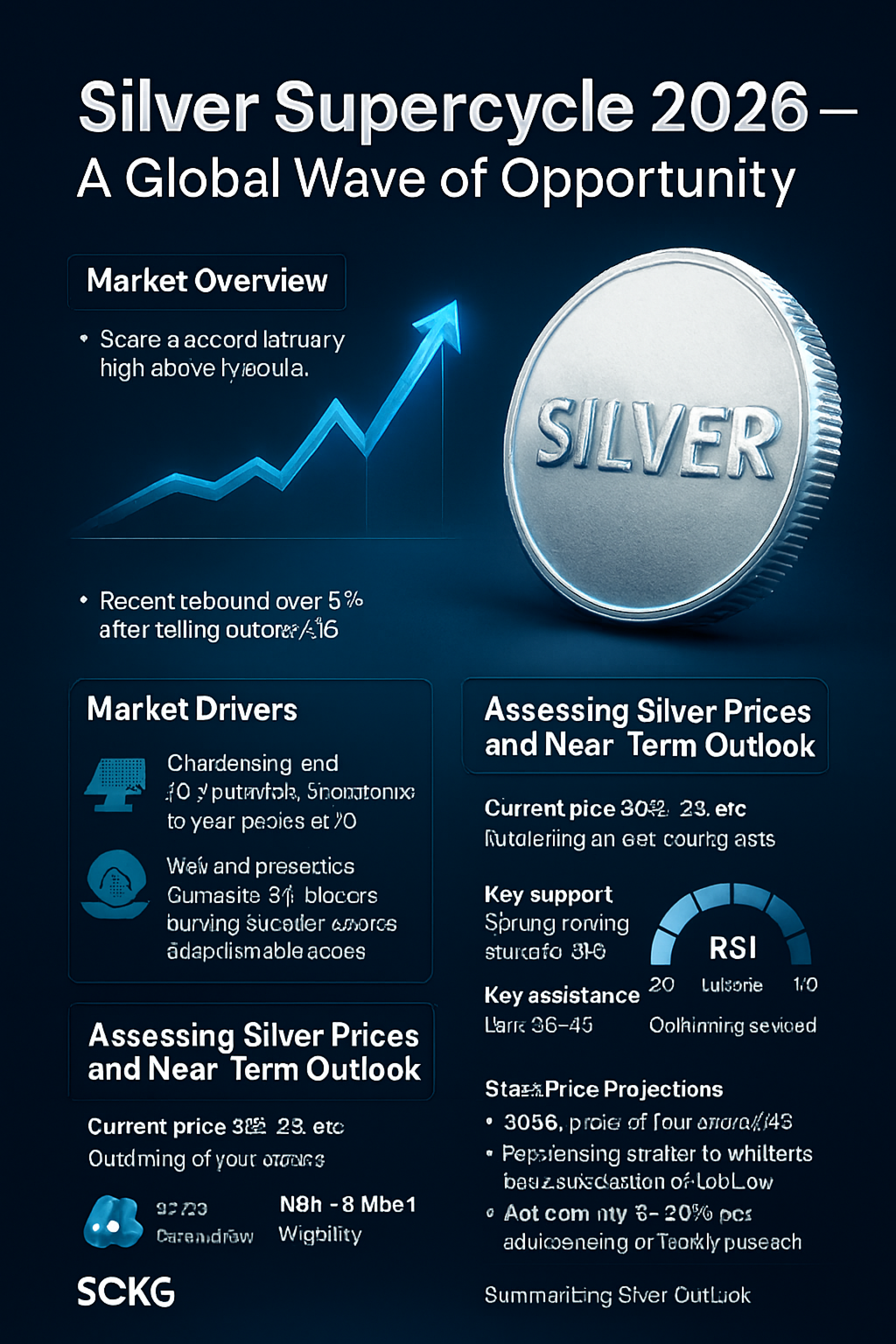
Market Overview

2026 has become a landmark year for silver.
In January, prices surged to a historic high above $125/oz, before sharply correcting to $72–73/oz. By early March, silver rebounded to $83–85/oz, reflecting strong buying momentum and the potential for further gains.

Recent rebound of over 5% after dipping below $75
Silver outperformed gold, soaring more than 55% in just one month (January 2026)
 

Market Drivers

Clean Energy & EV Industry: Silver is a critical material in solar panels and electric vehicles. Demand continues to rise while supply remains limited.
War & Geopolitics: Heightened tensions in the Middle East have driven investors to silver as a Safe Haven asset.
Financial Forecasts: J.P. Morgan projects an average price of ~$81, while Citigroup sets a target range of $70–100.
 

Price Assessment & Near-Term Outlook

Current price: $84–85/oz, consolidating while awaiting new developments from the war.

Key Resistance: $88–90 (confirmation of reversal), $94–96 (breakout could lead to $100–120)
Key Support: $79–80 (50-day moving average), $72 (February low)
 

RSI Analysis

The Relative Strength Index (RSI) measures buying and selling pressure on a scale of 0–100:

Below 30 → Oversold
Above 70 → Overbought
Around 50 → Neutral Zone
Silver’s current RSI is ~50, signaling indecision. The market is neither overheated nor exhausted, but rather building strength for the next move. If geopolitical tensions escalate or industrial demand intensifies, RSI could climb above 60–70, a bullish signal for a new upward cycle.


Price Forecasts (Based on RSI & Market Factors)

March 2026: $80–92 → Base-building phase, awaiting war headlines
Q2 2026: $85–105 → Industrial demand could push prices above $100
Full Year Range: $75–120
Base Case: Average $80–85
Bull Case: War persists + Fed rate cuts → $110–120
Risk Case: War ends quickly or global recession → $65–70 correction
 

Silver Market Summary

2026 is the year of the Silver Supercycle.

Primary trend remains Bullish
Volatility is extremely high → staggered buying on pullbacks is recommended
Avoid chasing prices during war-driven spikes
 

SO OK TRADING – Your Global Business Partner
www.sooktrading.com
sooktrading@outlook.com


Related Content
“Oil Shock 2026: USA–Iran Oil War Shakes the World — Crude Prices Surge, Gold Soars, Stocks Plunge, Inflation Hits the Global Economy. March 7, 2026: Iran’s Oil Depots Attacked, Retaliation Sparks a New Oil War. Article by SO OK TRADING.”
Oil War – March 7, 2026: When the USA & Israel Bombed Iran’s Oil Depots, the World Entered a Massive Oil Shock On March 7, 2026, the world shook overnight. The USA and Israel launched a strike on Iran’s oil depots in Tehran, igniting fires and triggering immediate retaliation. Within 24 hours, Iran officially closed the Strait of Hormuz — the strategic passage for more than 20% of global oil. The result: the largest Oil Shock since the Russia–Ukraine war. Oil Prices: Brent crude jumped from $65–70 to over $92 per barrel, with forecasts pointing to $120–150 if the blockade continues. Gold Prices: From $4,800/oz before the war, gold surged to $5,300–5,400/oz, setting a new floor at $5,000 and potentially climbing beyond $6,000. Currencies: USD strengthened as a safe haven, while JPY, CNY, and THB weakened under soaring energy costs. Stock Markets: Asia-Pacific indices tumbled as investors fled to gold and other safe assets. This is not just a Middle East conflict — it’s a shockwave hitting costs, investments, and wallets worldwide. SO OK TRADING monitors these shifts in real time, standing as your trusted partner in uncertain times.
8 Mar 2026
ถ่านกะลามะพร้าวคืออะไร ทำไมทางจีนนำเข้าเยอะ ใช้เยอะ By SO OK TRADING
Coconut charcoal is a sustainable, eco-friendly fuel made from carbonized coconut shells, prized for grilling, shisha, and water filtration due to its high heat, long burn time, low ash, and minimal smoke compared to wood charcoal. It's produced by heating shells in an oxygen-deprived environment (pyrolysis) and is compressed into briquettes or used as activated carbon, offering benefits like using agricultural waste and aiding detoxification. Production Source: Discarded coconut shells, a byproduct of the coconut industry. Process (Pyrolysis): Shells are heated to high temperatures (300-500°C) in a limited-oxygen kiln, turning them into charcoal. Forms: Can be crushed and formed into briquettes (cubes/discs) or processed further into activated carbon. Key Benefits & Uses Sustainability: Uses waste, prevents deforestation, renewable. Performance: Burns hotter, longer, cleaner, with less smoke and ash. Versatile Uses: Cooking: BBQ, shisha/hookah. Filtration: Water purification, air deodorization (activated carbon). Health/Beauty: Detoxification (activated charcoal). Agriculture: Ash can be used as fertilizer. Advantages Over Wood Charcoal Longer Burn: A smaller amount goes further. Higher Heat: More efficient for grilling. Eco-Friendly: Doesn't harm trees. Clean Burning: Less smoke and odor.
23 Dec 2025
This website uses cookies for best user experience, to find out more you can go to our Privacy Policy and Cookies Policy
Compare product
0/4
Remove all
Compare
Powered By MakeWebEasy Logo MakeWebEasy