The Future of Biofuels and Biomass Energy — Pathways to Replace Coal (Article by SO OK TRADING)
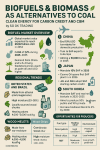
Biofuels & Biomass as Coal Alternatives
CLEAN ENERGY FOR CARBON CREDIT and CBM
By SO OK TRADING
Biofuel Market Overview
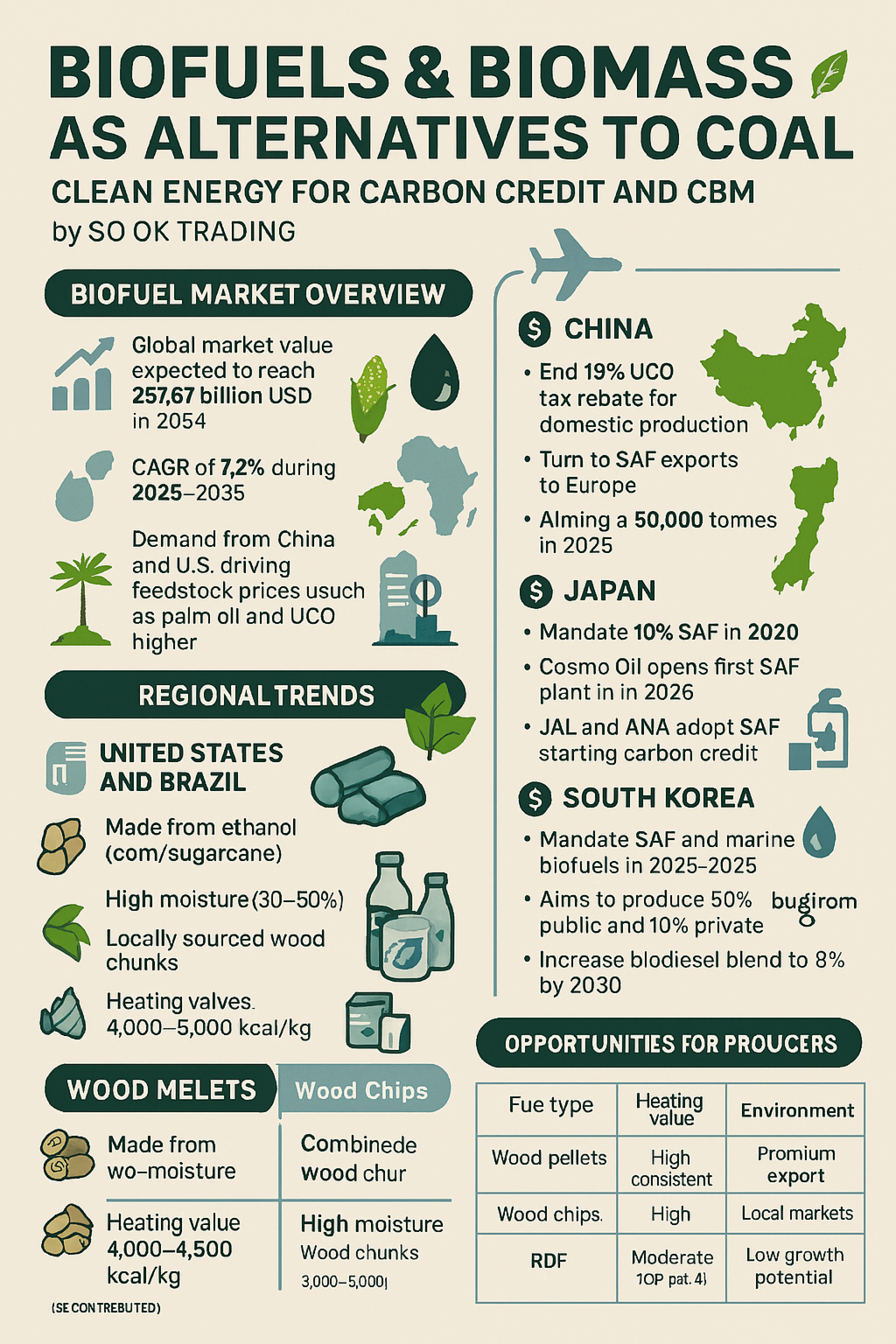
Global market value projected to reach USD 257.61 billion by 2034
Average annual growth rate (CAGR) of 7.2% during 2025–2035
Rising demand from China and the U.S. is driving up feedstock prices such as palm oil and UCO (Used Cooking Oil)
Regional Trends
United States & Brazil: Leading ethanol producers (corn in the U.S., sugarcane in Brazil)
Europe: Focus on biogas development, strict palm oil sustainability screening
Southeast Asia:
Vietnam: Launching E10 fuel nationwide in 2026
Singapore: Studying biofuel use in heavy industries, aiming for Net Zero by 2050
✈️ Rising Stars in East Asia: SAF & Marine Fuels
China:
Ended 13% UCO export tax rebate to prioritize domestic production
Shifted to producing SAF (Sustainable Aviation Fuel) for export to Europe
Domestic SAF consumption target: 50,000 tons by 2025
Export quota: 500,000 tons of B24 marine fuel
Japan:
SAF mandate: 10% of aviation fuel by 2030
Cosmo Oil to open Japan’s first commercial SAF plant in 2025
JAL and ANA adopting SAF, with carbon credit trading platforms
South Korea:
SAF and marine biofuels mandated in 2025–2026
Biogas production target: 50% from public waste, 10% from private sector
Biodiesel blend to increase to 8% by 2030
Note: SAF (Sustainable Aviation Fuel) is produced from renewable feedstocks or waste, chemically similar to Jet A-1, and can be used directly in existing aircraft and infrastructure without engine modifications (“drop-in fuel”).
Biomass Fuels as Coal Alternatives
Main Types
Wood Pellets:
Made from compressed wood/sawdust, moisture <10%
Heating value: 4,000–4,500 kcal/kg
Key markets: Japan, South Korea, EU
Requires FSC, PEFC, SBP certification
Wood Chips:
Moisture 30–50%, low-cost
Suitable for local industries and pulp & paper sector
New trend: Mobile chipping, low-moisture grades
RDF (Refuse Derived Fuel):
Produced from municipal waste (plastic, paper, rubber)
Heating value: 3,000–5,000 kcal/kg
Key markets: Cement plants, waste-to-energy facilities
Premium RDF: strict chlorine and heavy metal control
Comparative Attributes (BIO MASS ENERGY)
Wood Pellets
Heating value: High & consistent
Cost per heat unit: High
Transport: Most convenient
Environment: Cleanest
Wood Chips
Heating value: Moderate, inconsistent
Cost per heat unit: Low
Transport: Moderate (light but high moisture)
Environment: Clean, but risk of spoilage
RDF (Grade 3–5)
Heating value: High (depends on grade)
Cost per heat unit: Very low
Transport: Good if compressed
Environment: Polluting, requires emission controls
Market Prices (Approximate)
Wood Pellets: USD 160–220/ton (THB 5,500–7,500)
Wood Chips: USD 130–150/BDMT (bone-dry metric ton)
RDF: THB 800–1,500/ton in Thailand (in some European countries, subsidies make RDF nearly free)
Business Opportunities
Wood Pellets: Premium export market, ideal for long-distance trade
Wood Chips: Local market, suitable for nearby factories
RDF: High growth potential in Thailand & ASEAN, low-cost fuel for heavy industries
Final Summary – SO OK TRADING BIO MASS
Biofuels and biomass are shifting from “supplementary fuels” to “primary fuels.” Companies that adapt to international standards and differentiate through sustainability will secure strong positions in the global Net Zero era.
For inquiries about Wood Pellets, Wood Chips, or RDF, visit www.sooktrading.com → Give Inquiry, or contact us directly at sooktrading@outlook.com.