Share

Aluminium Cans 2026: The New Symbol of Green Business — Sustainability Drives Growth
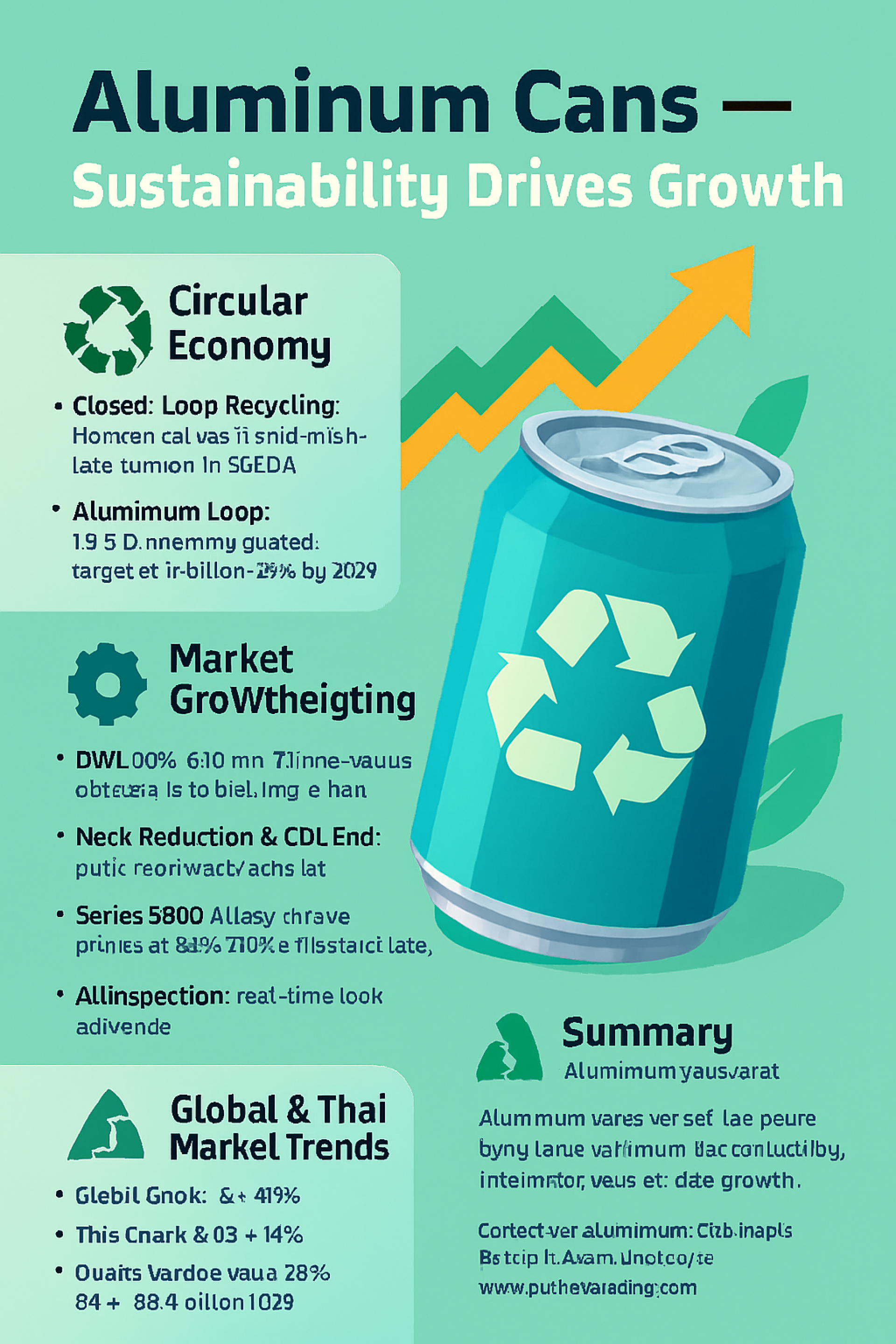
Last updated: 20 Feb 2026
2623 Views

Trends in Aluminum Can Usage in Thailand (2025–2026)

Entering the Era of “Sustainability Driving Growth”

Transition to a Circular Economy

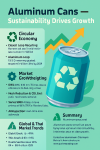
Thailand is a leader in the ASEAN region, having established a fully closed-loop recycling system. Can manufacturing plants and recycling facilities are located within a 200 km radius, enabling used cans to be transformed into new ones in just 60 days.
The Aluminium Loop project has already recycled more than 1.3 billion cans and aims to expand this figure to 5 billion within the next decade. By 2032, Thailand is expected to become the regional recycling hub.

Market Growth and Plastic Substitution

Demand for aluminum cans continues to rise, particularly in ready-to-drink beverages, craft beer, and convenience foods. Many businesses are switching from plastic to aluminum to align with ESG principles and modern brand positioning.
In 2025, the metal packaging industry is projected to generate approximately 18 billion THB in revenue, a 7.5% increase year-on-year. Aluminum accounts for 74.22% (around 14.5 billion THB), with cans holding the largest share at 58.48% (about 8 billion THB).

Lightweighting Innovations

Manufacturing technology has advanced significantly to balance cost efficiency and environmental impact:

DWI (Drawn & Wall Ironed): Reduces wall thickness to 0.07–0.10 mm, cutting aluminum usage by 30–40%
Neck Reduction & CDL End: Minimizes can neck and lid size to save material
Aluminum Series 5000: Used in lids and tabs for strength and pressure resistance
AI Inspection: Detects micro-leaks in real time to ensure maximum safety
Global and Thai Market Outlook (2025–2035)

The global market is expected to grow at a CAGR of 3.2–6.4%, reaching USD 845–992 billion by 2035. Thailand’s market is forecast to grow at 4.12–4.18% annually, with the goal of becoming ASEAN’s only closed-loop recycling hub.

Challenges from Chinese Imports

Despite Thailand’s strong potential, competition from imported finished products from China remains a challenge. In 2025, Thailand imported aluminum worth approximately USD 1.9 billion, mainly sheets, foil, and structural components. Tariff measures and TH-CBAM will play a crucial role in protecting domestic industries.

Conclusion

In Thailand, aluminum cans are no longer just packaging—they represent sustainability, innovation, and circular growth, connecting producers and consumers in a truly integrated way.


If you require ALUMINUM COIL (for packaging), ALUMINUM INGOT, or ALUMINUM REMELT, please contact SO OK TRADING via:

Website: www.sooktrading.com → click “Give INQUIRY”
Email: sooktrading@outlook.com


Related Content
COPPER PRICE AND TREND  2026
Copper prices are expected to remain elevated and bullish in 2026, driven by strong demand from the green energy transition (EVs, renewables, grid upgrades) and persistent mine supply constraints/disruptions, with forecasts generally placing prices in the $10,000 to over $12,000 per tonne range, although some analysts foresee a slight cooling to $10,000-$11,000 as market balances tighten. Key factors include IRA spending, AI infrastructure needs, constrained new mine supply, and potential Chinese economic recovery, creating tight markets despite some projected minor surpluses. Key Price Predictions (2026): Goldman Sachs: $10,000 - $11,000/tonne range, averaging $10,710/tonne in H1 2026. J.P. Morgan: Averaging around $12,075/tonne, with potential spikes to $12,500/tonne in Q2. Bank of America: Average of $11,313/tonne, with potential for $15,000/tonne spikes. UBS: $11,000/tonne by Sept 2026. World Bank: Average of $9,800/tonne. Bullish Drivers: Energy Transition: Massive demand for grid expansion, EVs, and renewable infrastructure. AI Infrastructure: Increased demand for data centers. Supply Deficit: Mine disruptions (Grasberg, Kamoa-Kakula, etc.) and difficulty bringing new mines online. China: Potential economic rebound acting as a catalyst. Potential Headwinds/Volatility: Policy-induced Surpluses: E.g., from IRA incentives or scrap availability. Stronger USD: Can weigh on commodity prices. Slower Demand: If China's recovery falters. Overall Outlook: Expect a tight market with strong underlying demand, leading to high prices, but with significant volatility due to policy shifts and mine output fluctuations. The market is moving towards a structural deficit, supporting higher prices long-term
30 Dec 2025
เกร็ดความรู้ การใช้งาน ALUMINUM INGOT (อลูมิเนียม INGOT) P1020 A7
Aluminum Ingot P1020 , A7 อลูมิเนียมเป็นหนึ่งในรูปแบบทั่วไปของโลหะผสมอลูมิเนียมที่ใช้ในอุตสาหกรรมสมัยใหม่ การผสมผสานคุณสมบัติที่เป็นเอกลักษณ์ของอลูมิเนียมทำให้เป็นวัสดุที่มีคุณค่าสำหรับการใช้งานที่หลากหลาย รวมถึงการก่อสร้าง การบินและอวกาศ การขนส่ง และสินค้าอุปโภคบริโภค ในบทความนี้ เราจะพิจารณากระบวนการผลิตแท่งอลูมิเนียมอย่างละเอียดมากยิ่งขึ้น กระบวนการผลิตแท่งอลูมิเนียมเริ่มต้นด้วยการสกัดแร่บอกไซต์ แร่นี้จะถูกบดเป็นผงละเอียดก่อนแล้วจึงผสมกับโซเดียมไฮดรอกไซด์ในกระบวนการที่เรียกว่ากระบวนการไบเออร์ สารละลายที่ได้จะถูกบำบัดด้วยความร้อนและความดันเพื่อสร้างอะลูมิเนียมไฮดรอกไซด์ ซึ่งจะถูกทำให้แห้งเพื่อผลิตผงอะลูมินาจากนั้นนำผงอลูมินามาผสมกับไครโอไลต์ ซึ่งเป็นแร่ธาตุหายากที่ทำหน้าที่เป็นฟลักซ์ ส่วนผสมจะถูกวางในเซลล์อิเล็กโทรไลต์ขนาดใหญ่ที่เต็มไปด้วยเกลือหลอมเหลว และกระแสไฟฟ้าจะถูกส่งผ่านเซลล์ กระบวนการนี้เรียกว่ากระบวนการ Hall-Héroult ทำให้อะลูมิเนียมออกไซด์แยกตัวออกจากออกซิเจน เหลือแต่อโลหะอะลูมิเนียมบริสุทธิ์ จากนั้นโลหะอลูมิเนียมจะถูกเทลงในแม่พิมพ์เพื่อสร้างรูปทรงลิ่ม แม่พิมพ์มักทำจากเหล็กหรือกราไฟต์และมีหลายขนาดและรูปร่าง แท่งอโลหะจะถูกทำให้เย็นและแข็งตัว จากนั้นนำออกจากแม่พิมพ์และตัดตามความยาว (Aluminum Slab) ก่อนที่แท่งอโลหะจะสามารถนำมาใช้ในอุตสาหกรรมได้ จะต้องผ่านกระบวนการต่อไป โดยทั่วไปแล้วจะละลายและหล่อเป็นรูปแบบเฉพาะสำหรับการใช้งานเฉพาะ ซึ่งอาจเกี่ยวข้องกับการผสมอลูมิเนียมกับอโลหะอื่นเพื่อให้ได้คุณสมบัติเฉพาะ เช่น ความแข็งแรง ความทนทานต่อการกัดกร่อน หรือการทนความร้อน แท่งอะลูมิเนียมมีขนาดตั้งแต่ไม่กี่ปอนด์ไปจนถึงหลายตัน ขึ้นอยู่กับการใช้งาน โดยปกติแล้วจะจัดส่งในปริมาณมากไปยังผู้ผลิต ซึ่งจะนำไปแปรรูปเป็นผลิตภัณฑ์ที่หลากหลายต่อไป (Aluminum Ingot, Aluminum Billet, Aluminum Slab) ETC. โดยสรุปแล้ว การผลิตแท่งอะลูมิเนียมเป็นกระบวนการที่ซับซ้อนซึ่งเกี่ยวข้องกับการเปลี่ยนแปลงทางเคมีและกายภาพหลายขั้นตอน จำเป็นต้องมีความเข้าใจอย่างลึกซึ้งเกี่ยวกับวัสดุศาสตร์และหลักการทางวิศวกรรม เช่นเดียวกับแรงงานที่มีทักษะในการใช้งานอุปกรณ์ที่ซับซ้อนที่ใช้ในกระบวนการ แท่งอลูมิเนียมมีบทบาทสำคัญในอุตสาหกรรมสมัยใหม่ และความสามารถรอบด้านและความน่าเชื่อถือทำให้เป็นวัสดุที่ขาดไม่ได้สำหรับการใช้งานที่หลากหลาย ตั้งแต่เครื่องครัว ไปจนถึง เครื่องบิน และ ชิ้นส่วนในยานอวกาศ
28 Nov 2025
This website uses cookies for best user experience, to find out more you can go to our Privacy Policy and Cookies Policy
Powered By MakeWebEasy Logo MakeWebEasy