Battery to Bullion: Thailand’s Circular Power Play: Lead the Future: Car Batteries & Circular Economy: From Cars to Commodities: The Rise of Lead Recycling
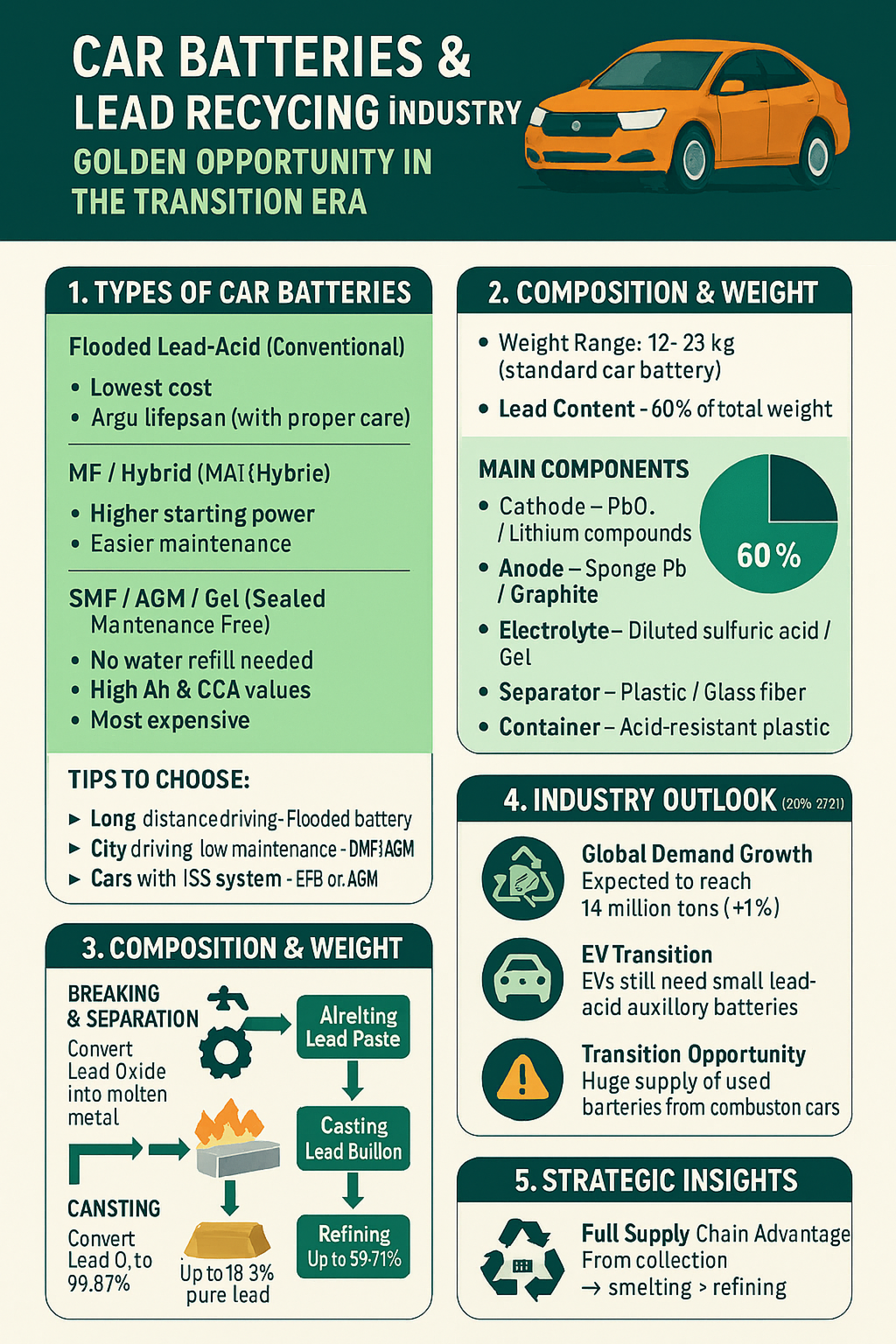
Car Batteries & Lead Recycling Industry: Golden Opportunity in the Transition Era
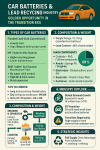
1. Understanding Car Batteries
Car batteries are the heart of a vehicle’s electrical system. Whether in combustion-engine cars or electric vehicles, every car requires a battery to start the engine and power essential systems.
Main Types of Car Batteries
Flooded Lead-Acid (Conventional)
Lowest cost
Long lifespan if properly maintained
⚠ Requires regular distilled water refills
MF / Hybrid (Maintenance Free)
⚡ Higher starting power
Easier maintenance
Higher price, occasional water checks still needed
SMF / AGM / Gel (Sealed Maintenance Free)
✅ No water refills required
High Ah and CCA values
Flexible installation
Most expensive
Tips for Choosing:
Long-distance driving → Flooded battery for durability
City driving, low maintenance → SMF/AGM for convenience
Cars with ISS system → EFB or AGM
2. Composition & Weight
Standard car batteries weigh 12–23 kg, with lead making up about 60% of the total weight.
Key Components
Cathode: PbO₂ or lithium compounds
Anode: Sponge lead or graphite
Electrolyte: Diluted sulfuric acid or gel
Separator: Plastic or glass fiber
Container: Acid-resistant plastic
Examples by Capacity (Ah):
45 Ah → 12–13 kg
75 Ah → 17–19 kg
100 Ah → 22–25 kg
200 Ah → 55–60 kg
3. Recycling Batteries: From Scrap to Lead Bullion
Thailand already has a comprehensive recycling system for lead-acid batteries.
Process Steps
Breaking & Separation: Plastic, acid, and lead paste are separated
Smelting: Lead oxide is converted into molten metal
Casting: Lead Bullion produced (95–98% purity)
Refining: Purity raised to 99.97%
Key Fact: Over 80% of new lead worldwide comes from recycled batteries.
4. Industry Outlook (2026–2027)
Demand Growth: Global demand expected to reach 14 million tons (+1%)
EV Transition: EVs still require small lead-acid auxiliary batteries
Transition Opportunity: Large supply of scrap batteries from combustion cars
⚠ Challenges:
Competition for scrap batteries
Rising energy costs and stricter environmental standards
Lead price volatility linked to LME
5. Strategic Summary
Full Supply Chain Advantage: Companies managing collection → smelting → refining gain cost and profit edge
Eco-Friendly Technology: Key to long-term sustainability
Circular Economy: Recycling is the golden opportunity
✨ Conclusion
Car batteries are more than just a starting device. They represent a business that connects circular economy principles with the global metals industry. In 2026, Thai entrepreneurs have a unique chance to become key players if they embrace sustainable technology and complete supply chain management.
If you are interested in high-quality Lead Bullion or Lead Ingot, produced through advanced recycling processes in Thailand, please contact SO OK TRADING.
Visit our website: www.sooktrading.com and submit your request via the “Give Inquiry” field on the homepage.
Or, you can send us an email directly at sooktrading@outlook.com.