Steel Scrap: Circular Economy Revitalizing Thailand’s Steel Industry In the latest article from SO OK TRADING, we highlight that steel scrap is no longer just “waste.” It has become the key driver of the circular economy, breathing new life into Thailand’
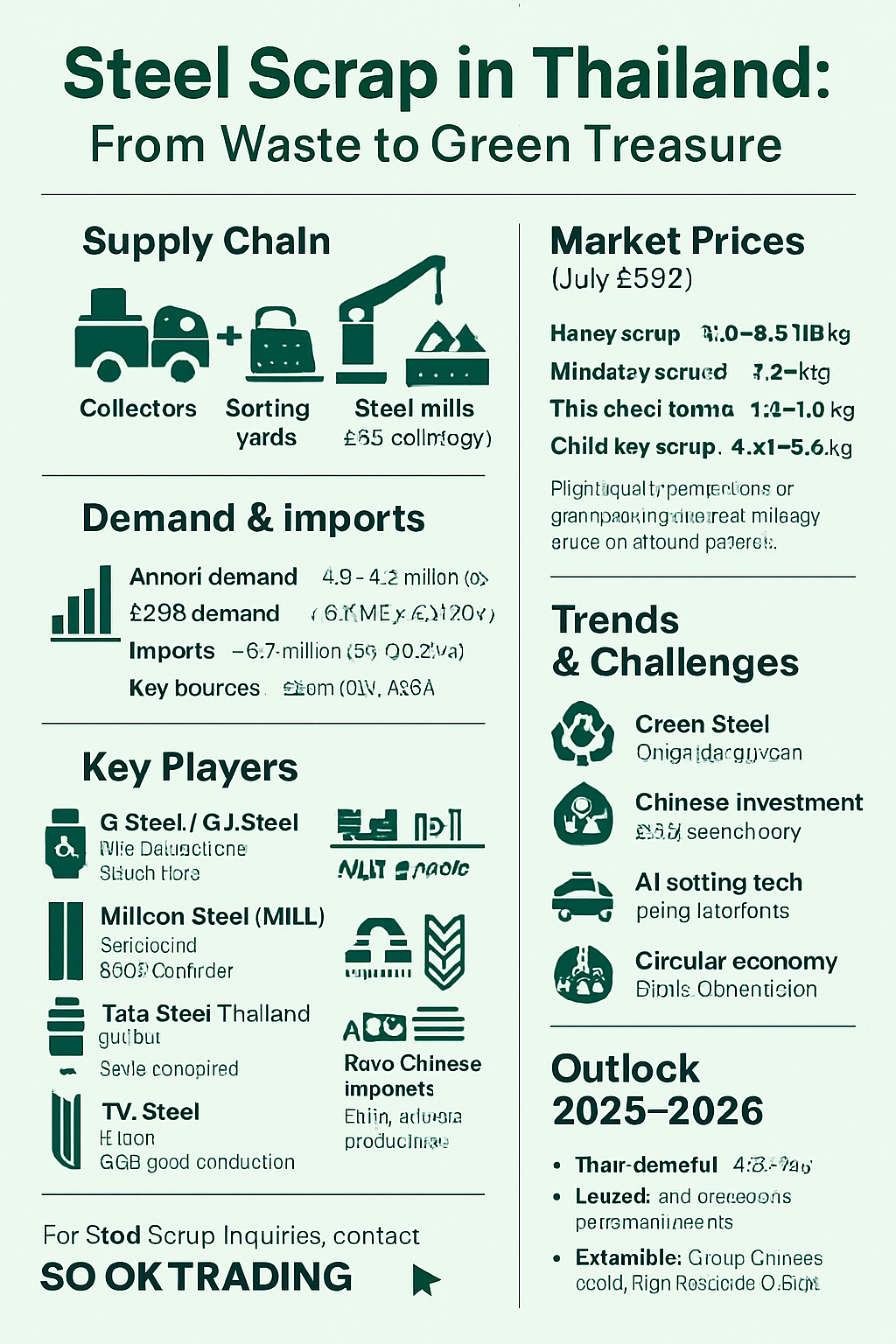
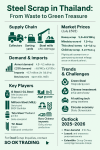
♻️ Steel Scrap: From Waste to “Green Treasure”
Hidden Power in the Supply Chain
Steel scrap in Thailand is not just leftover material—it is the core resource for steel production through Electric Arc Furnaces (EAF), which emit far less carbon than direct production from iron ore.
Small collectors (local shops, households) → Gather scrap from homes and construction sites
Central sorting yards / wholesalers → Remove impurities, cut to standard sizes
Major steel mills (e.g., G Steel, GJ Steel) → Recycle scrap into hot-rolled steel sheets
This chain connects small-scale collectors to large factories, evolving into a Green Supply Chain that the world is watching.
Market Prices (July 2025)
Heavy scrap: 6.00 – 8.50 THB/kg
Mixed/structural scrap: 7.50 THB/kg
Thin sheet/metal: 3.30 – 4.00 THB/kg
Short-cut scrap: 4.45 – 5.85 THB/kg
Prices fluctuate with global markets and domestic demand, but high-quality scrap now carries a “premium” because it significantly reduces furnace energy costs.
Scrap Demand in Thailand
Average: 4.5 – 6.5 million tons/year
2023: 5.5 million tons (-6.1% YoY)
2024: Imports ~1.2 million tons (20–25% of total demand)
Main import sources: Japan, USA, Australia, China, ASEAN
Insight: Thailand aims to rely on domestic scrap, but contamination and inconsistent sizing force imports of high-quality scrap to balance supply.
Trends & Challenges
Green Steel: Rising demand for clean, high-quality scrap
Chinese investment: New mills in Prachinburi & Rayong competing for raw material
AI sorting technology: Reducing labor, improving quality
Circular Economy (BCG): End-of-life vehicle recycling law opening new opportunities
ESG & Carbon Border Tax: Exporters must adapt—high-quality scrap reduces carbon footprint and boosts competitiveness
Key Market Players
G Steel / GJ Steel → Hot-rolled steel, 100% scrap input
Millcon Steel (MILL) → High-quality rebar, 600,000 tons/year
Tata Steel Thailand (TSTH) → Rebar & wire rod, 3 plants
TY-Steel → Reinforced concrete rebar, 600,000 tons/year
New Chinese entrants → Billet & rebar production
Insight: Competition is shifting from “price” to scrap quality and furnace technology.
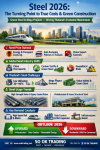
Thai Steel Market Outlook (2025–2026)
Domestic demand: 16.3–16.5 million tons (+1–2%)
Upside: Mega projects, tourism-driven construction
Downside: Cheap Chinese steel, high household debt, energy costs
Price trend: “Stable to weakening” → Traders adopt Just-in-time inventory to reduce risk
Insight: The Thai steel market is in “defensive mode” rather than “offensive,” but government projects remain the lifeline of the industry.
Survival Strategies
Consolidation → Foreign capital & technology partnerships
Niche markets → Specialty steels for auto parts & clean energy
Digital supply chain → Online platforms for pricing & booking
Additional: Shift toward Value-added Steel Solutions (e.g., Cut & Bend rebar) to reduce labor and site costs.
New Opportunities in Scrap Business
Scrap Processing Centers: Demand for pre-graded, compressed scrap rising
ELV Recycling: End-of-life vehicle law unlocking massive scrap supply
Circular Economy Branding: Companies proving “true recyclability” gain ESG advantage in mega projects
Summary for Entrepreneurs by SO OK TRADING
2025–2026 is a year of “holding steady and rebuilding foundations.”
Upside: Structural steel for rail projects (EEC)
Downside: Steel sheets for appliances (production bases relocating abroad)
Final Insight: Steel scrap is transforming from “waste” into a strategic asset that will define the future of Thailand’s steel industry in the Green Economy era.
If you require STEEL SCRAP products, please contact SO OK TRADING:
Website: www.sooktrading.com → Click Give Inquiry on the homepage
Email: sooktrading@outlook.com
Would you like me to also prepare a one-page Executive Summary in English (bullet-point style) for investors, so you can use it as a quick pitch deck companion to this full article?