Rare Earths: Neodymium & Dysprosium Powering the Future of Clean Technology and Global Energy Quick Insight by SOOK TRADING
Rare Earth Elements: Neodymium & Dysprosium
Powering Clean Technology and the Future of Global Energy
Insight by SO OK TRADING
1. Fundamental Properties and Significance
Neodymium (Nd):
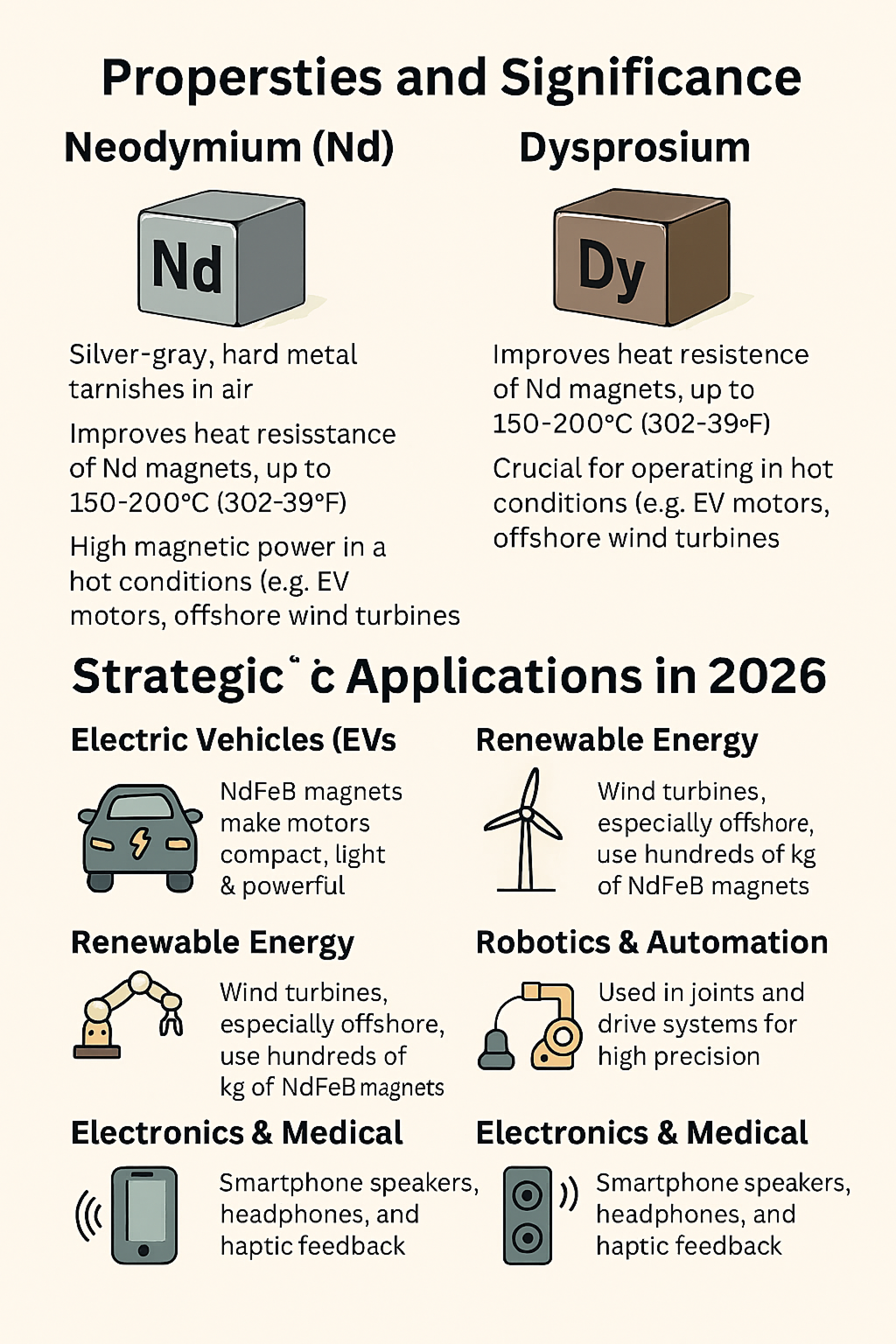
A silver-gray hard metal that tarnishes easily when exposed to air. It is the primary component of NdFeB (Neodymium-Iron-Boron) magnets, recognized as the most powerful permanent magnets in the world. Its key advantage lies in delivering immense magnetic strength in a compact size, enabling the creation of small yet powerful devices.
Dysprosium (Dy):
A rare metal with very high melting and boiling points. It enhances the heat resistance of NdFeB magnets, allowing them to operate reliably in high-temperature environments (150–200°C). This makes Dy indispensable for applications such as EV motors and offshore wind turbines.
2. Strategic Applications in 2026
Electric Vehicles (EVs):
NdFeB magnets make motors smaller, lighter, and more powerful. Dysprosium is added to improve heat resistance, preventing magnetic energy loss during high-temperature operation.
Renewable Energy:
Offshore wind turbines require hundreds of kilograms of NdFeB magnets per megawatt. These magnets reduce maintenance costs and increase power generation efficiency.
Robotics & Automation:
Used in precision joints and drive systems, NdFeB magnets support the growth of industrial robots and smart agricultural robotics.
Electronics & Medical Devices:
Found in smartphone speakers, headphones, haptic feedback systems, MRI scanners, and advanced military radar systems.
3. Market Overview and Prices (January 2026)
Neodymium (Nd): ~153.10 USD/kg
Dysprosium (Dy): ~453.90 USD/kg
Trend: Prices are on a steady upward trajectory, driven by surging demand from EVs and clean energy.
Key Price Drivers:
Demand for NdFeB magnets projected to increase 4–5 times by 2030.
Supply risks due to reliance on China and Myanmar.
Development of new technologies such as grain boundary diffusion and magnet recycling.
4. Supply Chain and Geopolitics
China: Controls over 80% of the global market, especially through the Bayan Obo mine.
United States: Expanding Mountain Pass and Round Top projects, with strong emphasis on recycling.
Brazil: Holds reserves of 21 million metric tons; Pela Ema project has begun commercial production.
Australia: Lynas’ Mt Weld mine and Arafura’s Nolans project are key sources.
Myanmar: Major supplier of heavy rare earths, including Dy.
Thailand: Emerged as the world’s sixth-largest producer in 2025–2026.
5. Future Outlook (2026–2030)
Demand for NdFeB magnets could rise 11–13 times by 2050.
Potential supply shortfall of ~60,000 tons per year by 2030.
Prices expected to remain high and volatile due to global trade dynamics.
Recycling of magnets from end-of-life devices will become a new pillar of supply, though projected to cover less than 10% of demand by 2030.
SO OK TRADING: Your Strategic Partner
As a specialist in rare earth sourcing and integrated energy solutions, SO OK TRADING supports both Thai and international businesses with:
High-quality rare earth supply: Neodymium and Dysprosium from trusted sources.
Clean energy system design and installation: Solar + Battery ESS, magnetic systems, and industrial solutions.
Tailored solutions: Covering residential, commercial, and industrial needs.
Global reliability: Backed by partnerships with leading brands and international standards.
SO OK TRADING – Transforming Rare Earth Elements into Sustainable Energy and Solutions for Your Future
Contact us today for consultation and the most suitable package for your business and industry.