SO OK TRADING’s INSIGHT | Thai Baht Outlook October–November 2026: Strong Baht, Volatile Dollar — Navigating Year-End Currency Fluctuations with Strategic Insights
Thai Baht Situation – October 2026 and November Outlook
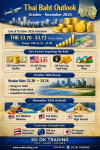
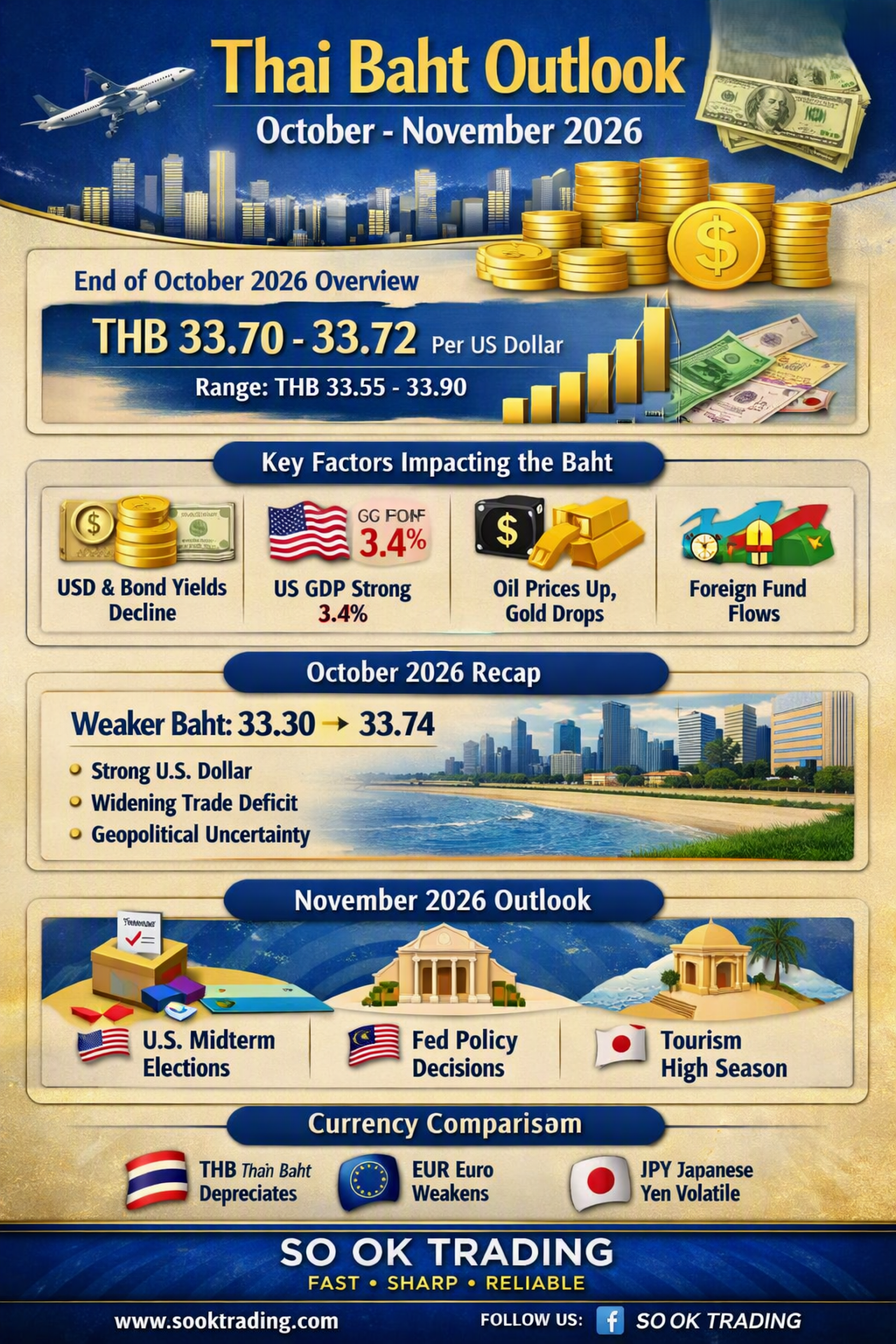
Baht Overview at the End of October
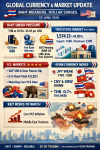
On the morning of October 30, 2026, the baht opened slightly stronger at 33.70–33.72 per US dollar, compared to the previous day’s close of 33.74–33.76. Leading commercial banks projected a movement range of 33.55–33.90, reflecting continued volatility in the market.
Key Drivers of the Baht
US Dollar and Bond Yields: The decline in the US dollar index and US bond yields, triggered by heavy sell-offs in technology stocks, led investors to seek safe-haven assets.
US Economy: September PCE rose +0.5% MoM, while Q3 GDP surged 3.4%, beating market expectations.
Oil and Gold Prices: Brent crude held above $115/barrel, while spot gold fell below $4,000/oz, prompting importers to buy more US dollars.
Foreign Fund Flows: Foreign investors recorded net sales of Thai equities worth THB 2.86 billion, but net purchases of Thai bonds worth THB 3.561 billion.
Politics and Global Monetary Policy: Markets are closely watching the US midterm elections (Nov 3) and interest rate directions from the Fed and ECB.
October 2026 Overall Performance
The baht weakened steadily from 33.30–33.40 at the beginning of the month to 33.72–33.74 at the end, marking its weakest level in three months.
Three Main Pressures on the Baht
Strength of the US dollar and 10-year US bond yields reaching 5.0%
Thailand’s trade deficit widened to USD 5.86 billion, with imports surging 50.4%
BOT’s decision to keep interest rates unchanged and geopolitical uncertainty in the Middle East
November 2026 Outlook
The baht is expected to trade within 33.50–34.20 per US dollar.
Key Drivers
US Midterm Elections: If results are inconclusive, investors may favor holding US dollars as a safe haven.
Fed Meeting: Signals of maintaining high interest rates remain a critical factor.
Thailand’s Tourism High Season: Inflows from foreign tourists will help cushion the baht against excessive depreciation.
Comparison with Major Currencies
Baht (THB): Clear depreciation due to trade deficit and rising US bond yields.
Euro (EUR): Weakening alongside the dollar after ECB kept rates unchanged.
Yen (JPY): Highly volatile and significantly weaker due to wide US–Japan interest rate differentials.
✨ Summary
The baht continues to face downward pressure from both external and domestic factors, but year-end tourism inflows may provide support.
Strategic Recommendations
Exporters: Should gradually sell US dollars when the baht weakens near the CEILING zone (34.00) to hedge cost risks.
Importers: Should buy US dollars promptly when the baht strengthens near the FLOOR zone (33.50) to guard against future depreciation.
SO OK TRADING
Your Partner in Business
FAST SHARP RELIABLE
VISIT US AT : WWW.SOOKTRADING.COM
FACEBOOK : SOOK TRADING