“Silicon Power: Silicon Metal — The Heart of Global Industry and Technology — SO OK TRADING Market Outlook 2026 | 24 AUG”
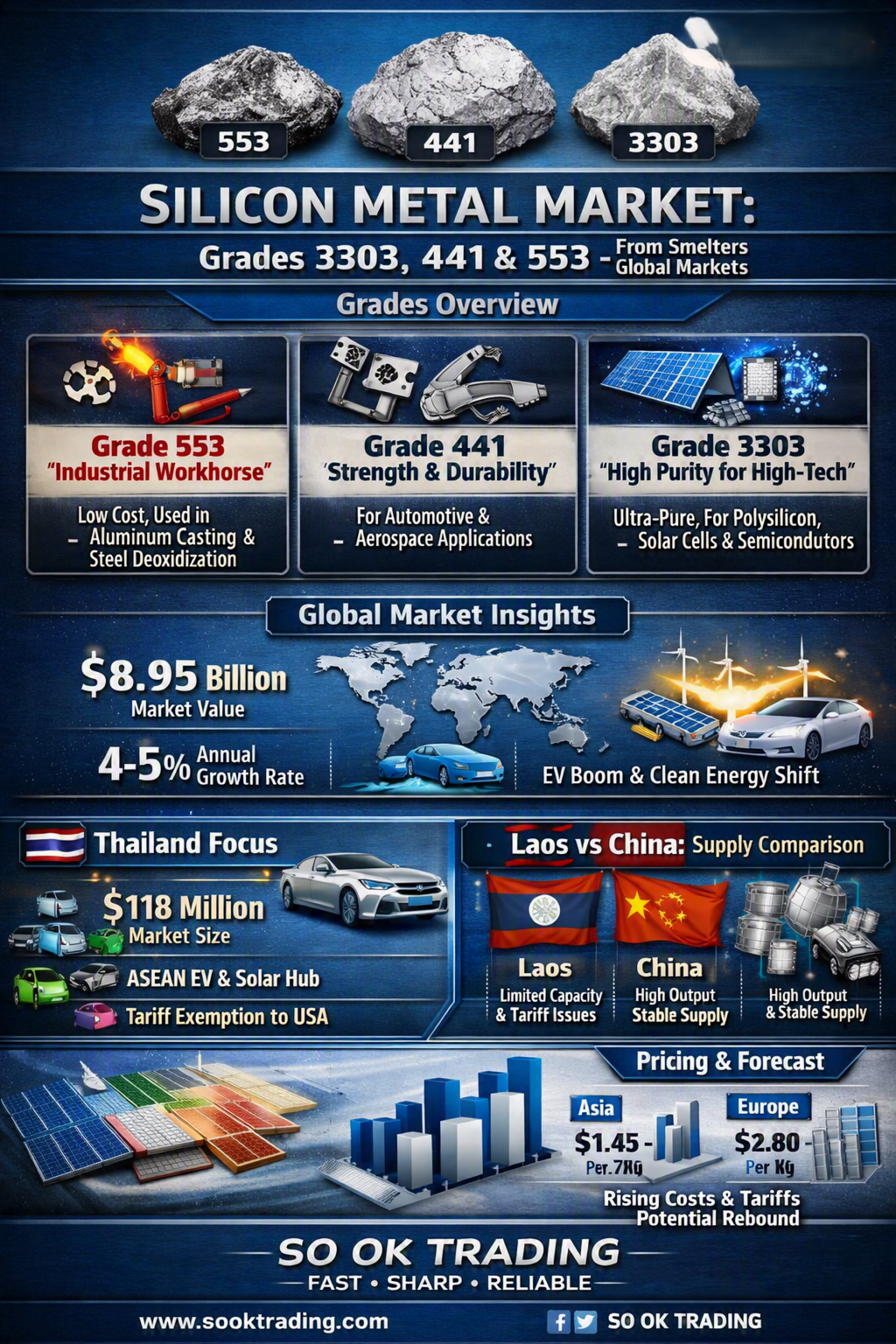
In-Depth Summary: Silicon Metal Grades 3303, 441, and 553 — From Smelters to the Global Market
SO OK TRADING : August 24, 2026
Silicon Metal Overview
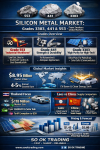
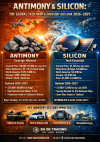
Silicon Metal, also known as industrial silicon, is the raw material behind both heavy industry and cutting-edge technology. From aluminum casting in automotive plants to the production of solar panels and semiconductor chips, its role is indispensable. The differences between grades 553, 441, and 3303 are not just numbers—they reflect distinct levels of purity and specialized applications.
Grade 553: The Foundation of Heavy Industry
Grade 553 is considered the “basic grade.” It contains the highest level of impurities but remains the most widely used due to its affordability and versatility. Aluminum foundries employ it to enhance strength and fluidity, ensuring smoother casting and reducing shrinkage during solidification. Steel mills also use 553 to deoxidize molten steel, improving density and overall quality.
Grade 441: Balancing Purity and Durability
When the demand shifts to components exposed to high stress and heat—such as pistons, cylinder blocks, or aerospace structures—Grade 441 is the answer. Its hallmark is the strict control of calcium content (below 0.1%), which ensures toughness and prevents brittleness. It is also used as a precursor in certain silicone chemicals that are highly sensitive to impurities.
Grade 3303: High Purity for the Tech World
Among metallurgical grades, 3303 stands out as the cleanest. With minimal impurities, it is not used for general casting but instead serves advanced chemical industries, including silicone rubber, adhesives, oils, and resins. Most importantly, it is a critical raw material for producing polysilicon—the backbone of solar panels and semiconductor chips.
Global Market Overview
The global silicon metal market is valued at approximately USD 8.0–8.95 billion and continues to grow at an average rate of 4–5% annually. Key drivers include the expansion of electric vehicles (EVs), which require lightweight yet strong materials, and the transition to clean energy, which has dramatically increased demand for high-purity silicon. Challenges remain, however, in the form of rising energy costs and stricter tariff measures across regions.
Thailand’s Market Situation
Thailand’s silicon market is valued at around USD 118 million, with growth slightly above the global average. Its strength lies in being a regional automotive production hub, fueling demand for grades 553 and 441. Meanwhile, the relocation of solar and electronics manufacturing to Southeast Asia has boosted demand for grade 3303. Recently, Thailand overcame allegations of subsidizing silicon products, enabling exports to the U.S. without countervailing duties—enhancing credibility and competitiveness in the global market.
Laos vs. China: Similar Quality, Subtle Differences
While silicon from Laos and China is chemically comparable and largely interchangeable, differences exist. Laos faces limitations in production capacity and resource stability, whereas China offers greater consistency and massive output. However, Laos has recently been subjected to U.S. tariff sanctions, requiring exporters to carefully verify eligibility when targeting the American market.
Price Trends (August 2026)
Asia: USD 1,450–1,570 per ton
Europe: Average USD 1,880 per ton
North America: USD 2,880 per ton (due to tariff barriers)
Prices remain within a narrow band but show signs of recovery after hitting a low point. Producers continue to push for higher prices due to elevated energy and transportation costs. For Thai buyers, now is an opportune moment to lock in prices to hedge against potential cost increases later in the year. Comparing CIF import prices between Laos and China is recommended to secure the most cost-effective option.
Conclusion
Silicon metal is the raw material that bridges industry and technology. Grades 553 and 441 will remain central to automotive and aluminum production, while grade 3303 will drive clean energy and digital innovation. Thailand’s strategic advantages in taxation and production base position it for strong growth in the global market in the years ahead.
SO OK TRADING : Your Business Partner SO OK TRADING : FAST SHARP RELIABLE VISIT US AT : WWW.SOOKTRADING.COM FACEBOOK : SO OK TRADING
SO OK TRADING — The True Non-Ferrous Specialist from Thailand