“March 10, 2026: Thai Baht Amid Global Storms — Three Pressures from War, Oil, and Gold Shaking the Financial Markets”
Thai Baht Amid Global Economic Storms: When War, Oil, and Gold Dictate the Direction
March 10, 2026 | By SO OK TRADINGMarch 2026 is not just another period of financial volatility—it is a reflection of the global macroeconomic landscape under multiple pressures: the escalating war in the Middle East, surging oil prices, and the movement of capital into safe-haven assets such as the U.S. dollar and gold. All of these forces are directly tied to the trajectory of the Thai Baht (THB).
Tracing the Baht: From Strength to New Pressures
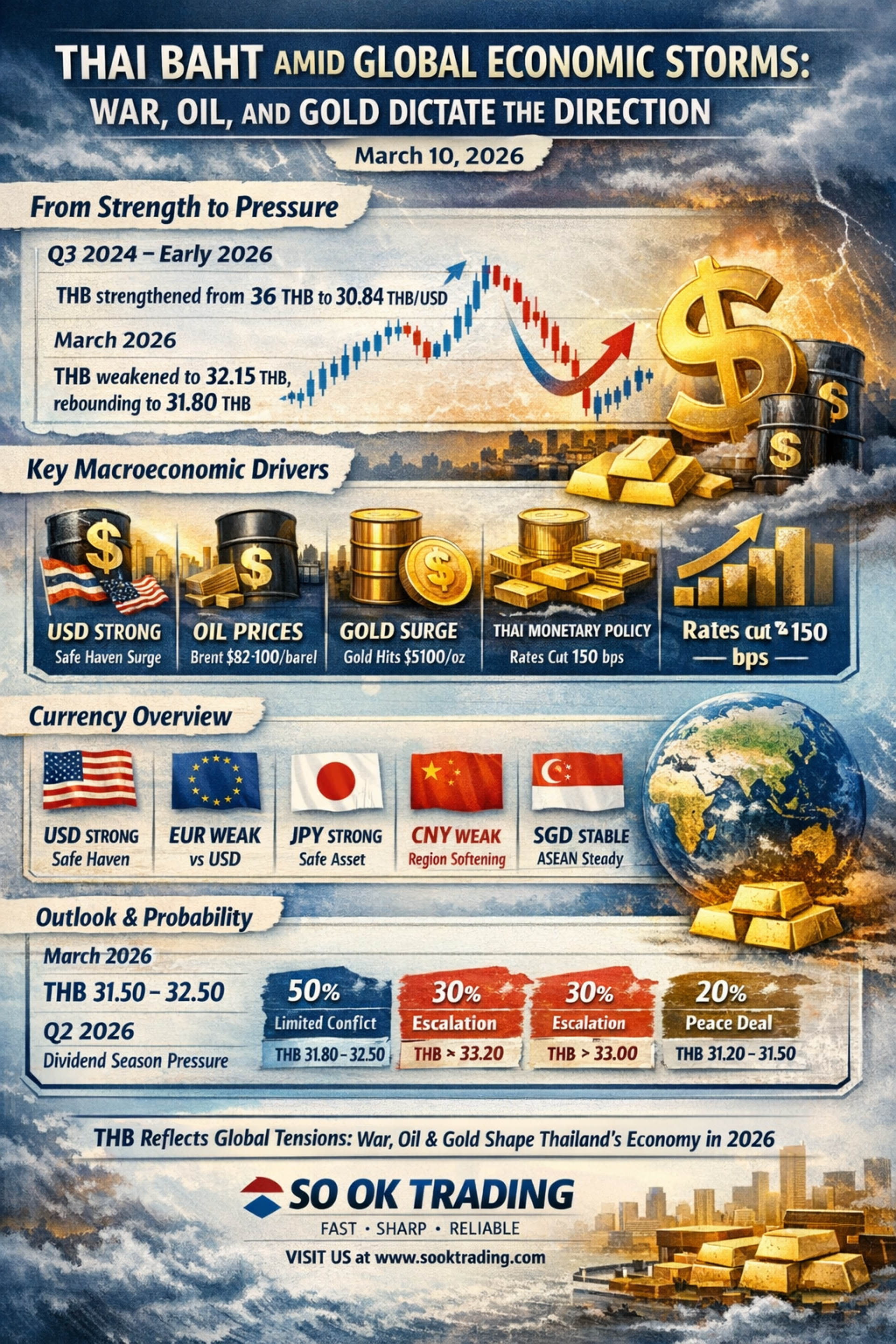
Since Q3 2024, the Baht appreciated significantly, moving from over 36 THB/USD to 30.84 THB/USD in January 2026—its strongest level in nearly five years. The main drivers were the weakening U.S. dollar amid the Fed’s rate-cut cycle and Thailand’s robust financial position, particularly gold exports that brought dollar inflows.
However, with the outbreak of war in the Middle East in early March 2026, the Baht reversed sharply, weakening to 32.15 THB/USD before rebounding to 31.80 THB/USD on the morning of March 10. This volatility highlights the rapid shifts in macroeconomic pressures.
Key Macroeconomic Drivers
U.S. Dollar (USD): Strengthened as a safe haven during escalating conflict
Oil Prices: Surged to $82–100/barrel, pressuring Thailand’s trade balance and raising stagflation risks
Gold: Jumped to $5,100/oz, providing crucial support to the Baht
Thai Monetary Policy: The Bank of Thailand cut rates by 150 bps since late 2024 to slow rapid appreciation, but in wartime conditions, lower rates left the Baht more vulnerable to external shocks
Currency Overview
USD: Strong, driven by safe-haven demand
EUR: Weaker against USD, making THB relatively stronger
JPY: Strengthened as a safe asset, pressuring THB in comparison
CNY: Weakened regionally, with intervention from the PBOC
SGD: Stable within a narrow range, reflecting ASEAN market resilience
Macroeconomic Outlook
March 2026: THB expected to trade between 31.50–32.50/USD, depending on war intensity
Q2 2026: Dividend season may drive foreign investors to convert THB back to USD, potentially weakening the Baht to ~33.20/USD
Scenario Probabilities:
50% Limited conflict → THB 31.80–32.50
30% Escalation → THB weakens beyond 33.00
20% Peace deal → THB strengthens to 31.20–31.50
Macroeconomic Summary
Today, the Baht is more than just a number—it is a mirror of the interconnected global economy. War strengthens the dollar, oil prices strain Thailand’s trade balance, gold rallies provide support, and Thai monetary policy must walk a fine line between stability and export competitiveness.
“In a world full of uncertainty, the Thai Baht reflects the macroeconomic pressures of war, oil, and gold—shaping the trajectory of Thailand and the region in 2026.”
SO OK TRADING: Your Business Partner
SO OK TRADING: FAST • SHARP • RELIABLE
www.sooktrading.com