Share

The Future of Biofuels and Biomass Energy — Pathways to Replace Coal (Article by SO OK TRADING)
Last updated: 28 Feb 2026
96 Views

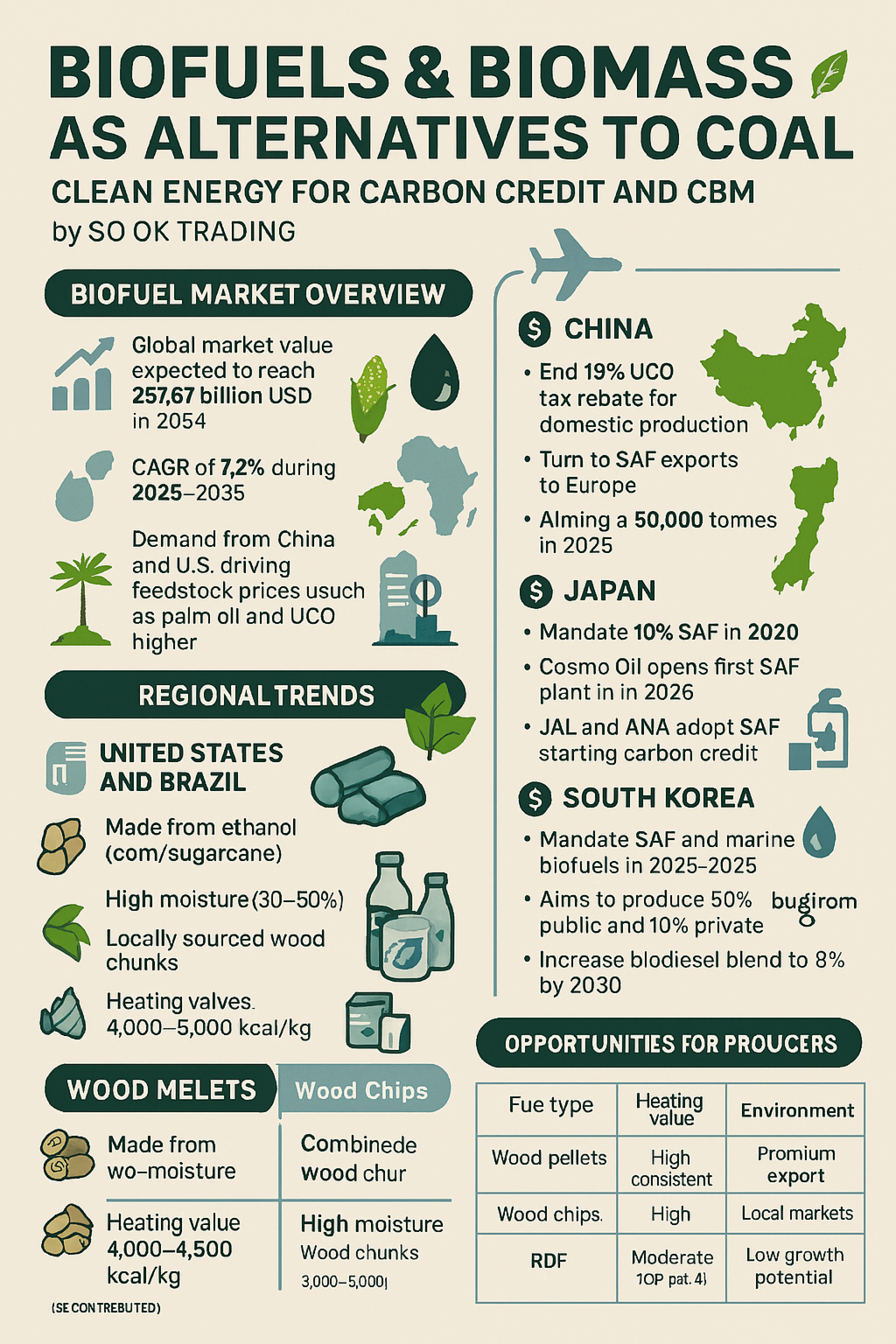
Biofuels & Biomass as Coal Alternatives

CLEAN ENERGY FOR CARBON CREDIT and CBM
By SO OK TRADING


Biofuel Market Overview

Global market value projected to reach USD 257.61 billion by 2034
Average annual growth rate (CAGR) of 7.2% during 2025–2035
Rising demand from China and the U.S. is driving up feedstock prices such as palm oil and UCO (Used Cooking Oil)
 

Regional Trends

United States & Brazil: Leading ethanol producers (corn in the U.S., sugarcane in Brazil)
Europe: Focus on biogas development, strict palm oil sustainability screening
Southeast Asia:
Vietnam: Launching E10 fuel nationwide in 2026
Singapore: Studying biofuel use in heavy industries, aiming for Net Zero by 2050
 

✈️ Rising Stars in East Asia: SAF & Marine Fuels

China:
Ended 13% UCO export tax rebate to prioritize domestic production
Shifted to producing SAF (Sustainable Aviation Fuel) for export to Europe
Domestic SAF consumption target: 50,000 tons by 2025
Export quota: 500,000 tons of B24 marine fuel
Japan:
SAF mandate: 10% of aviation fuel by 2030
Cosmo Oil to open Japan’s first commercial SAF plant in 2025
JAL and ANA adopting SAF, with carbon credit trading platforms
South Korea:
SAF and marine biofuels mandated in 2025–2026
Biogas production target: 50% from public waste, 10% from private sector
Biodiesel blend to increase to 8% by 2030
Note: SAF (Sustainable Aviation Fuel) is produced from renewable feedstocks or waste, chemically similar to Jet A-1, and can be used directly in existing aircraft and infrastructure without engine modifications (“drop-in fuel”).


Biomass Fuels as Coal Alternatives

Main Types

Wood Pellets:
Made from compressed wood/sawdust, moisture <10%
Heating value: 4,000–4,500 kcal/kg
Key markets: Japan, South Korea, EU
Requires FSC, PEFC, SBP certification
Wood Chips:
Moisture 30–50%, low-cost
Suitable for local industries and pulp & paper sector
New trend: Mobile chipping, low-moisture grades
RDF (Refuse Derived Fuel):
Produced from municipal waste (plastic, paper, rubber)
Heating value: 3,000–5,000 kcal/kg
Key markets: Cement plants, waste-to-energy facilities
Premium RDF: strict chlorine and heavy metal control
 

Comparative Attributes (BIO MASS ENERGY)

Wood Pellets
Heating value: High & consistent
Cost per heat unit: High
Transport: Most convenient
Environment: Cleanest
Wood Chips
Heating value: Moderate, inconsistent
Cost per heat unit: Low
Transport: Moderate (light but high moisture)
Environment: Clean, but risk of spoilage
RDF (Grade 3–5)
Heating value: High (depends on grade)
Cost per heat unit: Very low
Transport: Good if compressed
Environment: Polluting, requires emission controls
 

Market Prices (Approximate)

Wood Pellets: USD 160–220/ton (THB 5,500–7,500)
Wood Chips: USD 130–150/BDMT (bone-dry metric ton)
RDF: THB 800–1,500/ton in Thailand (in some European countries, subsidies make RDF nearly free)
 

Business Opportunities

Wood Pellets: Premium export market, ideal for long-distance trade
Wood Chips: Local market, suitable for nearby factories
RDF: High growth potential in Thailand & ASEAN, low-cost fuel for heavy industries
 

Final Summary – SO OK TRADING BIO MASS

Biofuels and biomass are shifting from “supplementary fuels” to “primary fuels.” Companies that adapt to international standards and differentiate through sustainability will secure strong positions in the global Net Zero era.

For inquiries about Wood Pellets, Wood Chips, or RDF, visit www.sooktrading.com → Give Inquiry, or contact us directly at sooktrading@outlook.com.


Related Content
Coconut Shell Charcoal Growing Demand from China and Japan BY SOOK TRADING
Uses of Coconut Shell Charcoal — Based on the Chinese and Japanese Markets Chinese Market According to market data, China is one of the largest importers of coconut shell charcoal. In 2025, import volumes increased significantly, and the average import price rose by more than 75% compared to the previous year. Demand has grown not only from Thailand but also from other major exporters such as Indonesia and Malaysia. Coconut shell charcoal is in very high demand in China, mainly for: - Clean energy industries - Production of Activated Carbon - Water treatment and air purification Japanese Market In Japan, coconut shell charcoal is widely used in both households and industries. It is especially popular in Japanese-style grilling restaurants (Yakiniku, Yakitori, BBQ), which require smokeless charcoal with consistent high heat. Japan also applies coconut shell charcoal in environmental sectors, including: - Biochar production → Contributing to carbon sequestration and reduction of greenhouse gas emissions - Activated Carbon production → Used in water treatment, air purification, and chemical industries Japan places strong emphasis on clean energy and carbon reduction, which drives high demand for high-quality imports from Thailand and Southeast Asia. Contact Information If you are interested in sourcing coconut shell charcoal from Thailand, please contact SOOK TRADING. We supply high-quality export-grade products for both the Chinese and Japanese markets.
8 Jan 2026
BIO MASS ENERGY พลังงานชีวมวล เกร็ดความรู้
Introduction of BIO MASS ENERGY พลังงานชีวมวล
9 Nov 2025
RDF (เชื้อเพลิงชีวมวลจากวัสดุเหลือใช้และขยะ): เชื้อเพลิง RDF คืออะไร และ ทำประโยชน์อะไรกับ Green Energy ได้บ้าง
Refuse Derived Fuel : RDF โดยทั่วไปนิยมเรียกว่า เชื้อเพลิงขยะ แต่สำหรับคณะกรรมาธิการการทรัพยากรธรรมชาติและสิ่งแวดล้อม สนช. เรียกว่า ก้อนเชื้อเพลิงขยะ และได้มีการพิจารณาศึกษา RDF ซึ่งเป็นประโยชน์กับการจัดการขยะชุมชน รวมทั้งขยะอุตสาหกรรมที่ไม่ใช่ขยะอันตราย ซึ่งมีการทิ้งปะปนกันจนแยกออกได้ยาก จึงขออนุญาตสรุปเนื้อหาของผลการศึกษาจากคณะกรรมาธิการพร้อมแนวคิดจากประสบการณ์ เพื่อเป็นแนวทางการจัดการขยะแบบไทยๆ ดังนี้ การผลิต RDF เป็นแนวทางที่ประเทศพัฒนาแล้วใช้อยู่ โดยเฉพาะอย่างยิ่งในภาคพื้นยุโรป เช่น เยอรมนี สวีเดน ฟินแลนด์ ฯลฯ ทั้งขยะใหม่และขยะเก่าที่ตกค้างในบ่อฝังกลบ สามารถนำมาผลิต RDF ได้ดี การผลิต RDF สามารถทำได้โดยเทคโนโลยีคนไทย เครื่องจักรผลิตในไทย ไปจนถึงการนำเข้าเครื่องจักรคุณภาพสูงจากต่างประเทศในกรณีที่ต้องการผลิตจำนวนมากๆ ตั้งแต่ 100 ตันต่อวันขึ้นไป เมื่อปี พ.ศ. 2557 กรมพัฒนาพลังงานทดแทนและอนุรักษ์พลังงาน ได้ศึกษาพื้นที่ศักยภาพเบื้องต้นว่า มีการผลิต RDF ไม่น้อยกว่า 90 แห่งทั่วประเทศ จากการสำรวจพื้นที่ผลิต RDF 21 แห่ง ใน 15 จังหวัด พบว่ามีการลงทุนกว่า 3,000 ล้านบาท เงินทุนหมุนเวียนสู่ชุมชน 570 ล้านบาท สามารถคืนทุนได้ในเวลา 10-13 ปี ราคาขายของ RDF เริ่มต้นตันละ 500-1,200 บาท ขึ้นอยู่กับคุณภาพและค่าความร้อนของ RDF (ปกติอยู่ระหว่าง 3,000-5,000 กิโลแคลอรี่ต่อกิโลกรัม) ปัญหาของการผลิต RDF ก็คือ ตลาด ซึ่งมีผู้ซื้อน้อยราย ความต้องการใช้ RDF น้อยกว่าปริมาณที่มีการผลิต อีกทั้งจุดรับซื้อมีเพียงไม่กี่จุดทั่วประเทศ เท่าที่มีโรงงานผลิตปูนซีเมนต์ จากการที่มีการผลิต RDF จากบ่อฝังกลบและจากขยะใหม่ในปริมาณมาก RDF จึงล้นตลาดจนราคาซื้อขายไม่คุ้มค่าการลงทุน อีกทั้งโรงไฟฟ้าที่ใช้เชื้อเพลิงขยะส่วนใหญ่ก็มีภาระในการจัดการขยะตามสัญญากับองค์กรปกครองส่วนท้องถิ่น เมื่อราคาตํ่ามากๆ ทำให้เชื้อเพลิง RDF ถูกนำไปใช้ในโรงไฟฟ้าประเภทต่างๆ อย่างไม่เป็นทางการ ดังนั้น สมาคมการค้าพลังงานขยะ จึงได้มีหนังสือถึงประธานคณะกรรมการกำกับกิจการพลังงาน ให้มีการสนับสนุนยกระดับเชื้อเพลิงขยะให้เป็นเชื้อเพลิงเชิงพาณิชย์ เพื่อให้เกิดธุรกิจการค้าที่มั่นคงและเป็นที่ยอมรับของสถาบันการเงินต่างๆ พร้อมกันนี้ทางสมาคมการค้าพลังงานขยะ ยังได้มีเสนอแนวทางการจัดประเภทของ RDF ให้เหมาะสมกับสภาพความเป็นจริงของประเทศไทย เพื่อสะดวกต่อการส่งเสริมของภาครัฐและสามารถกำหนดราคาซื้อขายได้อย่างเหมาะสมและเป็นธรรมต่อทุกฝ่าย ประเภท กระบวนการผลิตเชื้อเพลิง (Method of Manufacture) กลุ่มลูกค้าที่ใช้ RDF RDFRDF – 1 RDF เกรดพรีเมียม (Solid Recovered Fuel : SRF) ผ่านการย่อย-คัดแยกชนิด และขนาดด้วยเครื่องจักร มีขนาด RDF 50-100 มิลลิเมตร ค่าความร้อนสูง อุตสาหกรรมปูนซีเมนต์ และโรงงานอุตสาหกรรม RDF – 2 RDF คุณภาพสูง ผ่านเครื่องย่อย-คัดแยกชนิดและขนาด RDF มีขนาด 90-150 มิลลิเมตร ค่าความร้อนสูง โรงไฟฟ้าพลังงานขยะ และเป็นเชื้อเพลิงเสริมโรงไฟฟ้าชีวมวล RDF – 3 RDF คุณภาพปานกลาง ผ่านการย่อยและคัดแยกเบื้องต้น ขนาด RDF 200-300 มิลลิเมตร ค่าความร้อนปานกลาง-สูง โรงไฟฟ้าขยะทั่วไป RDF – 4 RDF จากบ่อฝังกลบ ผ่านการร่อนด้วยเครื่องจักร แยกดินออก RDF มีขนาดใหญ่เล็กตามสภาพ ต้องนำไปปรับปรุงคุณภาพก่อนใช้เป็นเชื้อเพลิง ลูกค้าที่มีระบบปรับปรุงคุณภาพขยะ ขอยกตัวอย่างบทสรุปจากสมุดปกขาว “เชื้อเพลิงขยะ (RDF) ทางออกของการจัดการขยะชุมชน” 1. โรงงานปูนซีเมนต์ทั้ง 4 แห่งในประเทศไทย ที่รับซื้อ RDF ในพื้นที่มีไม่ทั่วถึงเพียงพอที่จะรับขยะชุมชน 2. ภาคตะวันออก ภาคตะวันออกเฉียงเหนือ และภาคใต้ตอนบน ไม่มีโรงงานปูนซีเมนต์ตั้งอยู่ 3. ราคาเชื้อเพลิงจากฟอสซิล มีผลต่อราคาและการรับซื้อ RDF 4. องค์กรปกครองส่วนท้องถิ่นส่วนใหญ่ ไม่รู้วิธีการผลิต RDF ให้ได้คุณภาพ เพื่อให้ได้ราคาดี 5. รัฐบาลควรส่งเสริมและสนับสนุนให้องค์กรปกครองส่วนท้องถิ่น/ชุมชนผลิตเชื้อเพลิงขยะ RDF ที่มีคุณภาพโดยผ่านการทำสัญญาแบบ Supply Chain ในระยะยาว และสร้างระบบประกันคุณภาพและราคาขาย รวมทั้งค่าขนส่งสามารถปรับตามราคาเชื้อเพลิง 6. การผลิต RDF มุ่งเน้นการกำจัดขยะที่ตกค้างและเกิดขึ้นใหม่อย่างเป็นระบบ ควรใช้เป็นโอกาสให้มีผลต่อการคัดแยกขยะ และการเปลี่ยนแปลงพฤติกรรมคนไทยในอนาคต 7. การผลิต RDF มีผลประโยชน์ร่วมหลายด้าน เช่น ลดปัญหานํ้าเสีย การแพร่ระบาดของโรค สร้างรายได้ให้องค์กรปกครองส่วนท้องถิ่นและชุมชน ได้พื้นที่ขยะที่ฝังกลบหรือกองทิ้งมาใช้ประโยชน์ด้านอื่นๆ ลดการนำเข้าเชื้อเพลิง ลดความขัดแย้ง และเป็นการร่วมกับประชาคมโลกในการลดภาวะโลกร้อน “ขยะไม่ใช่ทอง แต่เป็นของเสียที่ต้องช่วยกันกำจัด” RDF 3: Recycling Energy
24 Nov 2025
This website uses cookies for best user experience, to find out more you can go to our Privacy Policy and Cookies Policy
Compare product
0/4
Remove all
Compare
Powered By MakeWebEasy Logo MakeWebEasy